IBM Runs 70 Logical Qubits in 15 Minutes, Claims Verifiable Advantage
November 27, 2026
IBM and the University of Chicago report that an IBM quantum computer completed a computation on 70 error-protected logical qubits in about 15 minutes, a task they say lies beyond the practical reach of leading classical methods. The headline number is not the speed, though.
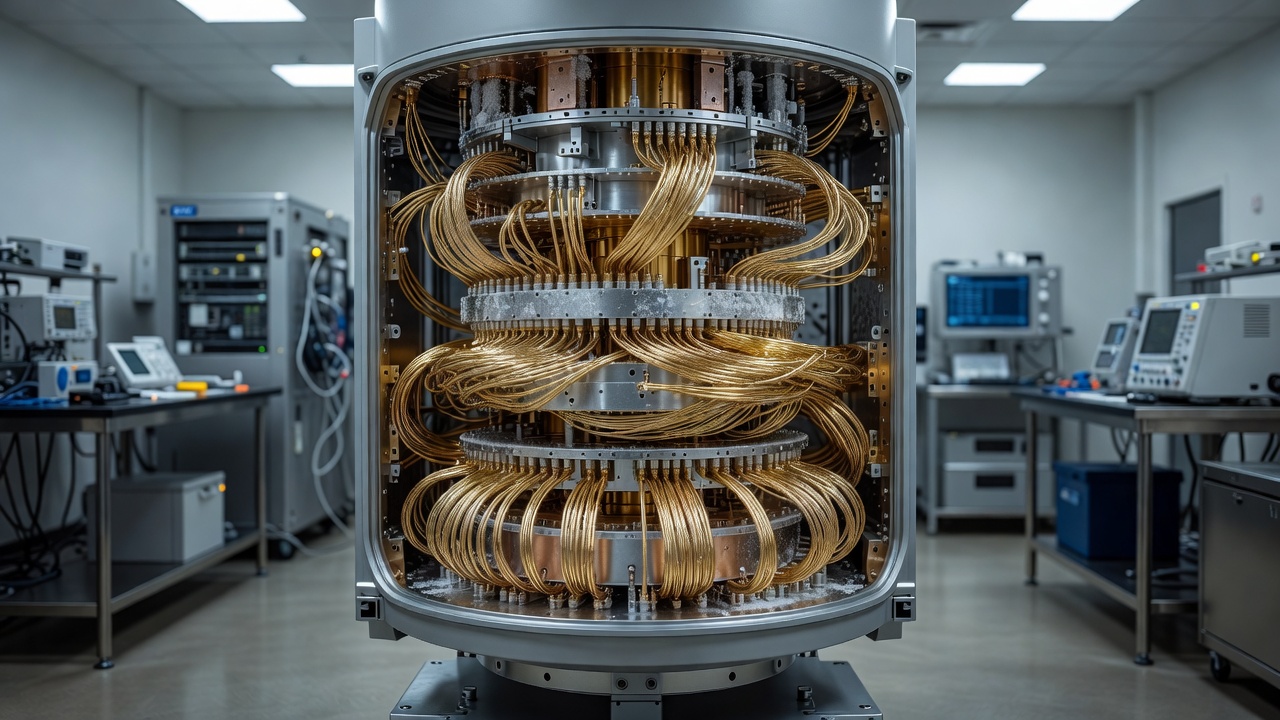
IBM and the University of Chicago report that an IBM quantum computer completed a computation on 70 error-protected logical qubits in about 15 minutes, a task they say lies beyond the practical reach of leading classical methods. The headline number is not the speed, though. The part most roadmaps don't headline is verification: how to show that a machine produced the right answer when no classical computer can check it. For developers and researchers evaluating when quantum hardware becomes trustworthy, that is the claim to scrutinize.
What Happened
IBM Research and University of Chicago researchers describe their work in the paper "Sampling hard circuits with verifiably high fidelity." According to the release IBM provided, the team ran an "extraordinarily complex computational task" in approximately 15 minutes. The experiment used 70 protected logical qubits (error-protected qubits built by encoding information across several physical qubits). The circuit contained 2,415 logical two-qubit operations and 468 logical T gates (a class of quantum operation that is costly to run fault-tolerantly and is needed for universal computation).
The circuits and experimental results were made public on the Quantum Advantage Tracker, so outside groups can inspect them. IBM describes the run as "one of the largest demonstrations of logical quantum computing to date" and "one of the largest known demonstrations of quantum error correction."
The task was also designed "to demonstrate quantum advantage rather than solve an immediate real-world problem."
The Technical Breakthrough
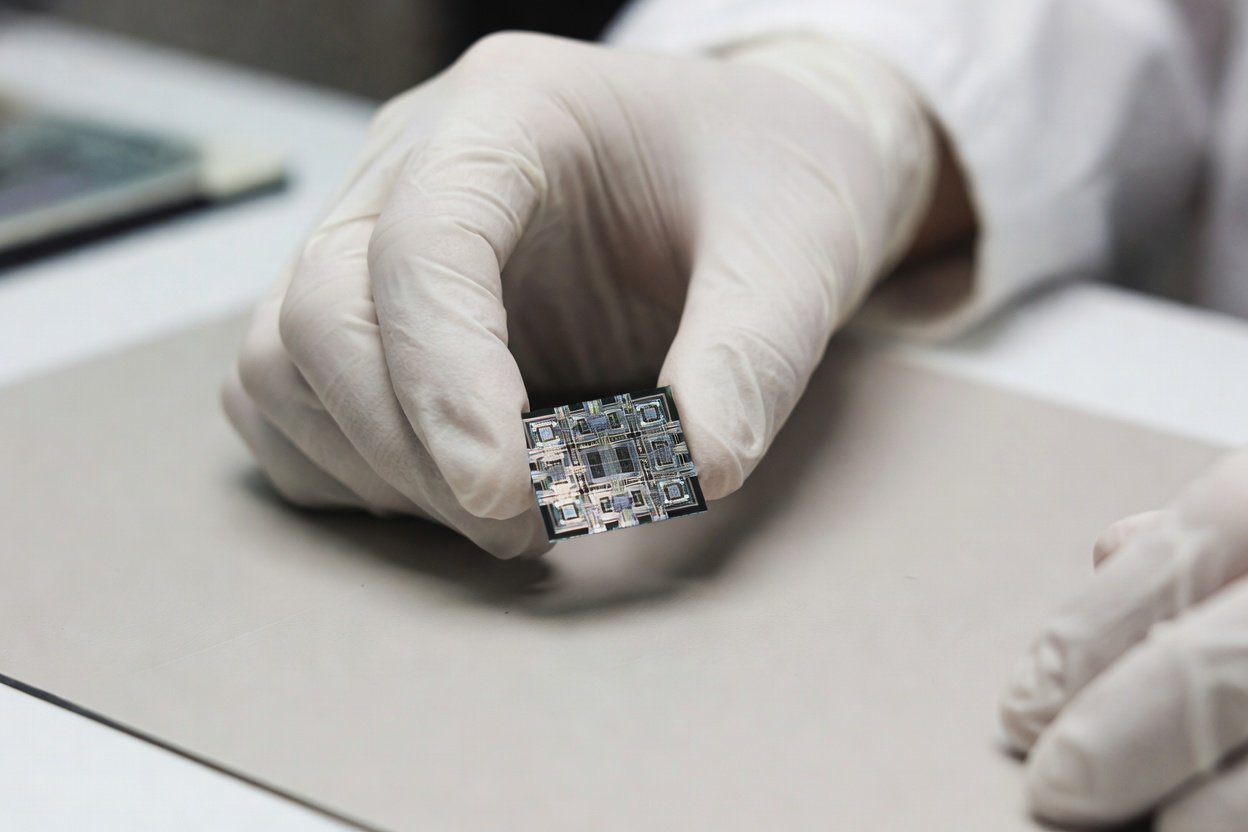
The team built what it calls a "more structured alternative" to random circuit sampling (RCS, a benchmark in which a quantum computer samples outputs from a random circuit that is believed to be hard to simulate classically). The new version uses encoded quantum circuits. The researchers say they "mathematically demonstrated" that it keeps the same computational-hardness criteria as conventional RCS.
The structure is what makes verification possible. Errors can be detected during the computation, which lets the team establish statistical confidence in the results. The underlying problem is simple to state: if a classical computer cannot reproduce the output, confirming the quantum machine got it right normally requires strong assumptions about how accurate the hardware is.
Bill Fefferman, an associate professor at the University of Chicago, put it this way in the IBM-provided release:
"Verification remains one of the biggest challenges in firmly establishing experimental quantum advantage. This experiment develops techniques to better characterize the fidelity of hard quantum states under noise, increasing confidence that the quantum computer is solving a computationally hard problem."
The researchers report effective logical error rates 10 times lower than the underlying physical error rates. Soumik Ghosh, a PhD student in Fefferman's group, added: "Beyond strengthening experimental validation, advances in verification have the potential to unlock practical applications for the next generation of quantum computers."
Why It Matters for Industry
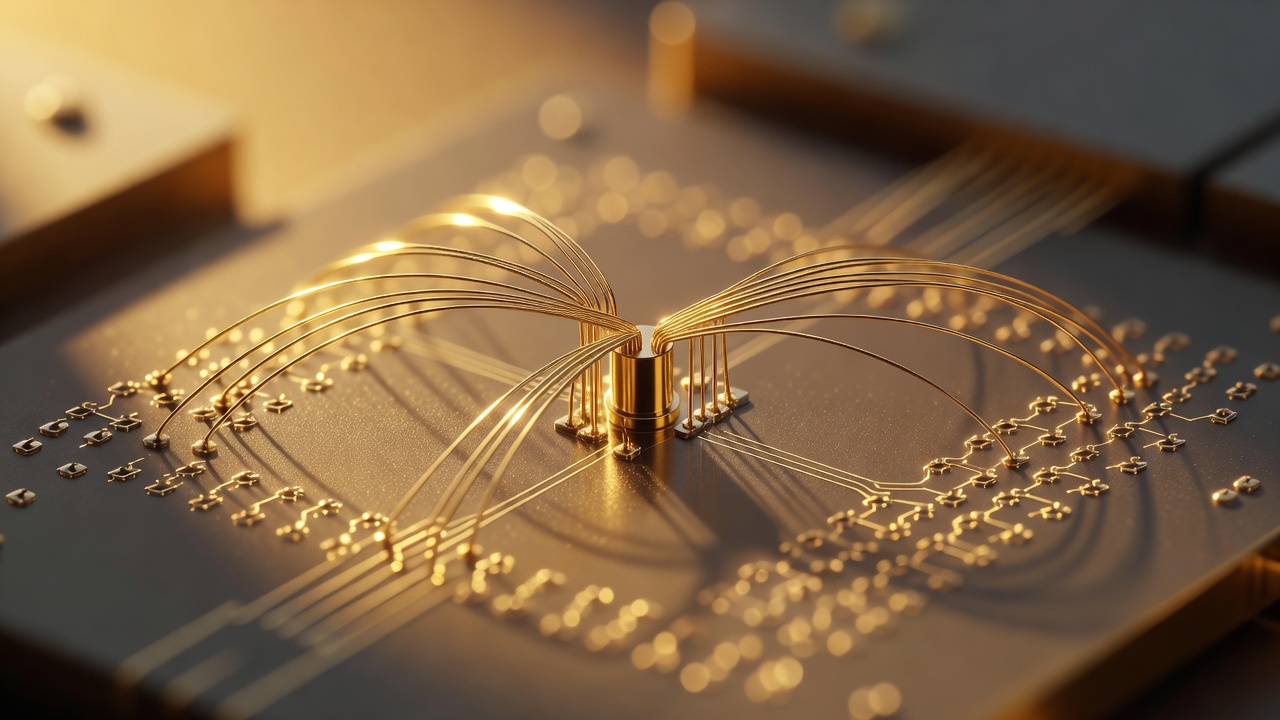
Jay Gambetta, Director of IBM Research and IBM Fellow, framed the result as a turning point. This is a vendor claim and should be read as one: "We are now firmly in the quantum advantage era. We have demonstrated a quantum computation beyond the practical reach of classical computers that establishes, with statistical confidence, a lower bound on how faithfully it was executed. This milestone gives scientists, developers, and businesses a new foundation for trusting quantum computers as they scale to problems far beyond what we can achieve classically."
The phrase "lower bound" carries weight. A lower bound on fidelity is a floor on how well the circuit ran, not a guarantee that the output is correct.
No commercial application is demonstrated here. Ghosh's point is conditional: verification could eventually support practical uses, but the experiment itself was built to show advantage. IBM separately says, in its own materials, that it expects users to deliver quantum advantage by the end of 2026, reportedly based on research with partners including RIKEN, Boeing, Cleveland Clinic, and Oak Ridge National Laboratory. The verification work addresses the trust question that any such claim will face.
Competitive Landscape
The IBM release makes no direct comparison to other vendors. The peer set below comes from a list of leading quantum computing companies in 2026, and the snippets list these firms as major players without positioning claims about any of them.
- IBM: described on an IBM-hosted page as "the current Company to Beat," a self-promotional label.
- Google Quantum AI: named among the leaders. Its team reported surface-code memories operating below threshold, with a 101-qubit distance-7 code at 0.143% logical error per cycle.
- IonQ, Microsoft, Amazon (AWS), D-Wave and Rigetti: listed in the same snippet as major players.
Google's Acharya et al. wrote in their arXiv abstract: "Quantum error correction provides a path to reach practical quantum computing by combining multiple physical qubits into a logical qubit, where the logical error rate is suppressed exponentially as more qubits are added." That is the same logical-qubit principle IBM's experiment relies on, though the two results use different measurements and are not directly comparable.
Other work from the same week is separate from the IBM result. Researchers reported a network entangling 123 qubits that stores information in atoms' positions (Physical Review Letters). The Quantum Insider reports that IQM is due to deliver a 54-qubit Radiance R3 system to QAI Co., Ltd. in Seoul by the end of 2027. SAP, working with planqc, reportedly plans hardware tests in 2027 and expects quantum computers to reach performance levels relevant to its applications before the end of the decade.
The Bigger Picture
Verification has been the weak joint in advantage claims. Wu et al. described Zuchongzhi, a 66-qubit superconducting processor, finishing a sampling task in about 1.2 hours that the authors estimate would take the most powerful supercomputer at least 8 years. They called it "an unambiguous quantum computational advantage that is infeasible for classical computation in a reasonable amount of time." Such claims rest on classical-cost estimates. IBM's contribution is to attach a measurable fidelity bound to the run, with circuits and results posted publicly so others can test them.
Money is moving in parallel. According to Phys.org, the European Commission announced plans to earmark 50 billion euros ($55 billion) for quantum computing and AI. IBM's own roadmap reportedly points at 2029, when it plans to deliver IBM Quantum Starling, a fault-tolerant machine running circuits of 100 million quantum gates on 200 logical qubits. Against that target, 70 logical qubits and 2,415 logical two-qubit gates is an intermediate step.
What's Next
Three things will decide how this claim holds up:
- Replication or challenge: classical-simulation groups can now work from the public circuits on the Quantum Advantage Tracker. A credible classical reproduction would weaken the "beyond practical reach" claim.
- 2027 hardware: IQM's Seoul delivery and the planqc tests that SAP reportedly plans.
The most striking thing here is how little the 15 minutes tells us on its own. IBM's real contribution is treating "how do you know it worked" as part of the experiment. If outside groups cannot break the claim using the public data, verification could become the price of entry for every advantage announcement that follows.
For developers building against logical-qubit hardware, the budget in this experiment is concrete: 2,415 logical two-qubit gates and 468 logical T gates inside a roughly 15-minute run, on 70 logical qubits. That is a useful reference point for circuit-depth planning. It is not yet a guarantee about any workload that matters commercially, because no application was tested.
-- Aria Lin, Enterprise Technology Analyst
Sources: Nsf · Osti · ScienceDaily