Fujitsu, Monash, and CSIRO Sign Quantum MOU Outsourcing Australia's Hardware Gap to JapanFujitsu, Monash, and CSIRO Sign Quantum MOU Outsourcing Australia's Hardware Gap to JapanFujitsu, Monash, and CSIRO Sign Quantum MOU Outsourcing Australia's Hardware Gap to JapanFujitsu, Monash, and CSIRO Sign Quantum MOU Outsourcing Australia's Hardware Gap to Japan
August 4, 2026
Fujitsu, Monash University, and Australia's national science agency CSIRO have signed a three-party Memorandum of Understanding giving Australian researchers and students direct access to Fujitsu's quantum systems and simulators located in Japan, announced August 4, 2026.
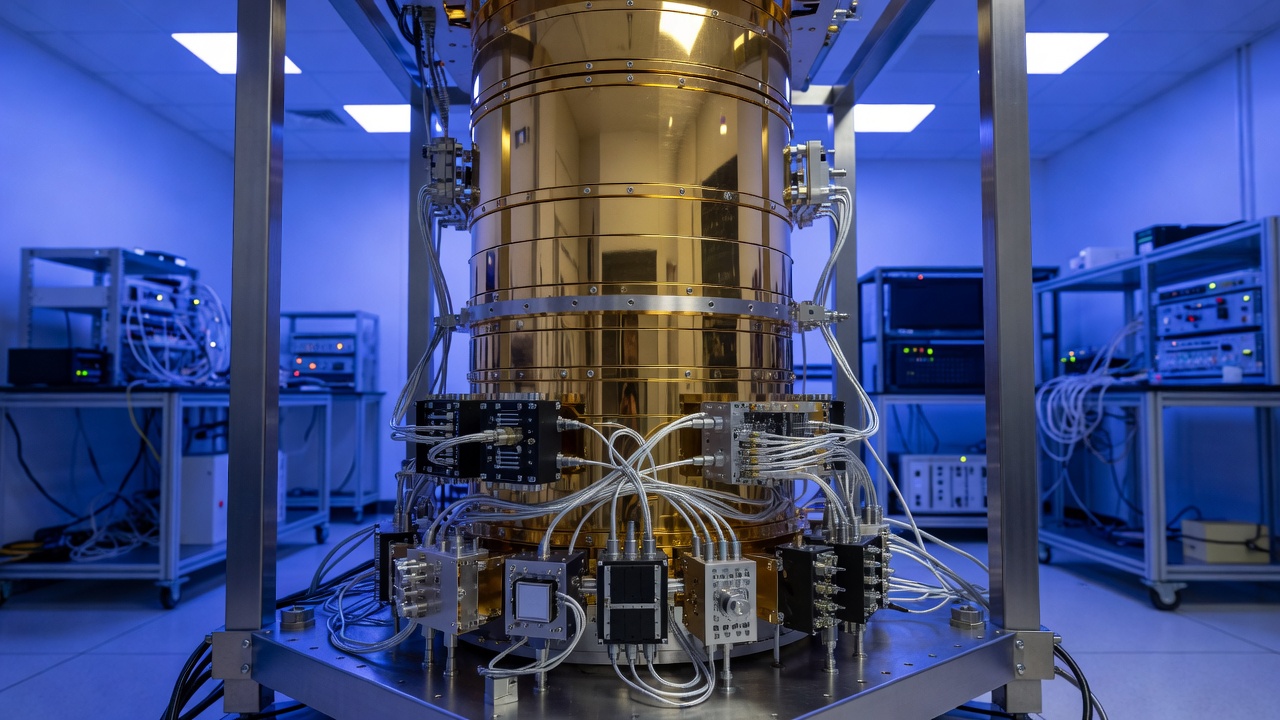
Fujitsu, Monash University, and Australia's national science agency CSIRO have signed a three-party Memorandum of Understanding giving Australian researchers and students direct access to Fujitsu's quantum systems and simulators located in Japan, announced August 4, 2026. Beneath that headline sits a more structural fact: Australia currently has no domestic access to competitive quantum hardware at this scale, and this agreement formalizes what is effectively an outsourcing of that access to Japan under the cover of bilateral diplomacy. The proposed shared quantum research and education facility that "will be explored" at Monash University's Faculty of Information Technology is the buried lead here. If built, it would represent Australia's first physical quantum computing beachhead of this kind, anchored by a Japanese technology partner with over half a century of presence in the country.
The tri-party agreement sits explicitly beneath a government-level Memorandum of Cooperation between Australia and Japan on quantum science, technology, and innovation, framing it not as a commercial arrangement but as an implementation vehicle for national strategy. For enterprise technology leaders, developers, and researchers tracking the global quantum race, the structure of this deal reveals something important: the path to quantum-ready capability for mid-sized economies may run through strategic bilateral agreements rather than domestic hardware investment alone. The three application domains named by the partners are cybersecurity, healthcare, and climate science, though the collaboration's three formally stated key priorities were not publicly disclosed at announcement -- a gap worth monitoring as the partnership matures.
What Happened
The Memorandum of Understanding brings together three institutions with distinct and complementary roles: Fujitsu as a Japan-headquartered global information and communication technology company supplying hardware access and quantum software expertise; Monash University as the research and education anchor; and CSIRO, established in 1916 and operating with a 2024 annual budget of $1.008 billion across more than 50 sites in Australia, France, and the United States, contributing applied science capability and translation expertise.
Under the agreement, Monash and CSIRO researchers and students will gain access to Fujitsu's quantum systems and simulators physically located in Japan. No timeline for when that access begins has been specified, nor has Fujitsu disclosed hardware parameters including qubit counts, system architecture, or error rates.
Peter Grassi, Chief Executive Officer for Fujitsu Oceania, described the partnership's intent: "By bringing together Fujitsu's leading quantum technologies, Monash University's research excellence and CSIRO's applied science expertise, we're creating new opportunities to accelerate innovation, develop future talent and translate quantum breakthroughs into real-world outcomes."
Professor Robyn Ward, Deputy Vice-Chancellor (Research and Enterprise) and Senior Vice-President at Monash University, framed the collaboration as a structural necessity: "Quantum technologies have the potential to transform the way we unlock solutions to some of the world's most pressing issues, and building capability in this field will require deep collaboration between universities, industry and government."
The partnership covers three areas: quantum hardware access, quantum software development, and emerging quantum applications. A shared research and education facility at Monash University's Faculty of Information Technology remains at the exploratory stage, with no confirmed funding or construction timeline disclosed.
The Technical Angle
The announcement is notable for what it does not disclose as much as for what it does. Fujitsu describes its contribution as "leading quantum technologies," but no specific system type, qubit architecture, or error-correction approach has been named. Researchers and students at Monash and CSIRO will gain access to quantum systems and simulators in Japan, a remote-access model consistent with how most major quantum hardware is currently made available to external researchers, including IBM's Quantum Platform cloud-accessible devices.
The collaboration explicitly covers quantum software and algorithms (mathematical instruction sets that tell quantum systems how to process information), not hardware alone. This emphasis reflects where near-term enterprise value is most likely to emerge. Dr. Katja Digweed, Technology Director at CSIRO, was direct: "Connecting deep scientific capability with the right software and algorithms can bring quantum computing closer to practical use in areas like cybersecurity, health, and climate science."
CSIRO's role as a national applied science agency distinguishes this from a purely academic-to-industry pipeline. With 6,618 staff as of 2024 and a mandate spanning both fundamental research and commercial translation, CSIRO brings a translational layer that university-only partnerships typically lack. The agency's history includes commercializing foundational research ranging from essential Wi-Fi components to atomic absorption spectroscopy -- the mechanism most likely to push quantum outputs toward deployable applications.
Why It Matters for Industry

The application domains named by the partners reflect where quantum computing's near-term commercial case is most often argued: cybersecurity, healthcare, and decarbonisation. Each represents a class of computational problem where quantum approaches offer theoretical advantages over classical systems, though practical, fault-tolerant quantum advantage in any of these domains remains a research target rather than a delivered capability as of 2026.
For enterprise technology teams, the relevant signal is not that quantum solutions are imminent. The relevant signal is that a government-backed national science agency with a $1.008 billion annual budget and a top-tier research university have committed institutional resources to building the foundational skills and infrastructure needed to use quantum systems when they mature. Dr. Digweed stated the goal directly: "Together we can build the skills, infrastructure and partnerships across research and industry, and between Australia and Japan."
The domains the partners have identified align with known quantum computing application pathways:
- Cybersecurity: Post-quantum cryptography (encryption algorithms resistant to quantum-enabled attacks) is already a standardization priority for governments worldwide, driven by the long-term threat that sufficiently powerful quantum computers pose to current public-key encryption schemes.
- Healthcare: Quantum simulation of molecular interactions is one of the most cited near-term applications, with implications for drug discovery and protein structure analysis.
- Climate science and decarbonisation: Optimization problems in energy grid management, materials discovery for battery technology, and atmospheric modeling are frequently named as candidate quantum workloads.
Grassi described the goal as translating "quantum breakthroughs into real-world outcomes."
Competitive Landscape
Within Australia's university research ecosystem, Monash operates alongside institutions including UNSW Sydney and the University of Queensland, both active in quantum research and technology development. UNSW in particular has built a significant profile in silicon-based qubit research. The Fujitsu partnership gives Monash a differentiated access point: a direct line to Japanese quantum hardware and software expertise under a nationally sanctioned bilateral framework, rather than competing for access through the same international cloud platforms available to all institutions.
At the national strategy level, the Australia-Japan quantum cooperation pact positions both countries within a broader global investment landscape where allied nations are increasingly structuring access agreements and cooperative research frameworks to pool capability across trusted partners, rather than treating quantum as purely a commercial race. Fujitsu's position as both technology supplier and institutional bridge -- reinforced by Grassi's reference to "over half a century supporting organisations in Australia" -- makes this a strategically unusual arrangement in which a private-sector company serves as infrastructure for a government-level cooperation agreement.
Independent analyst commentary on this announcement was not publicly available at publication time.
The Bigger Picture
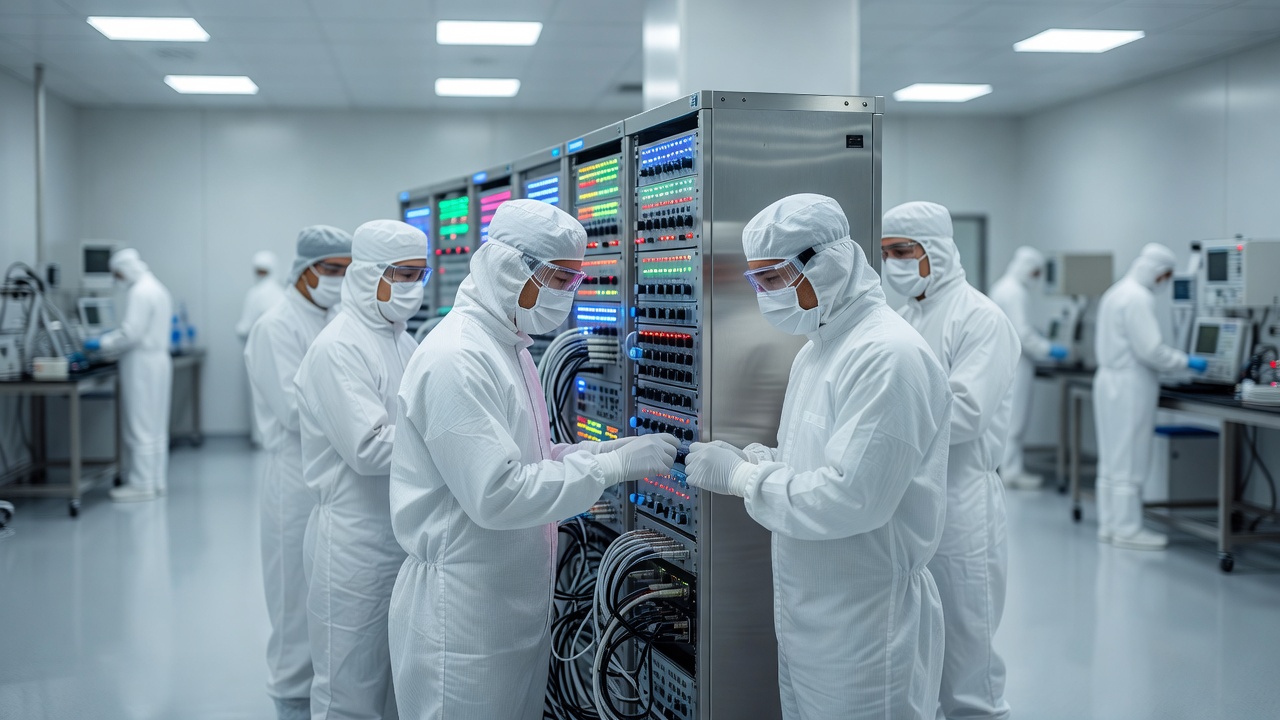
Professor Ward's description of what quantum capability-building requires is worth reading carefully: "deep collaboration between universities, industry and government." This is a precise description of the structural model this MOU instantiates: a national science agency (CSIRO, government), a research university (Monash, education), and a global technology company (Fujitsu, industry), operating under an intergovernmental agreement between Australia and Japan.
The talent development dimension has concrete long-term implications. Ward described the collaboration as bringing "opportunities to train the next generation of quantum researchers and innovators," and the exploration of a shared quantum research and education facility at Monash's Faculty of Information Technology -- if realized -- would provide hands-on exposure to quantum systems for Australian students who currently have no comparable domestic facility.
Grassi's framing of Fujitsu's role as a bridge between two national quantum ecosystems reflects a genuine structural advantage: a company with deep operational roots in Australia and headquarters in Japan is positioned to manage the institutional, regulatory, and cultural translation that purely remote hardware-access agreements cannot address. Ward put the lab-to-market challenge plainly: "ensuring our research has a meaningful pathway from the lab to the real world" -- exactly what CSIRO's applied science mandate is designed to construct.
What's Next
Three forward-looking elements of the collaboration are recoverable from the announcement, though none carry confirmed timelines or funding commitments:
- Researcher and student access to Fujitsu's Japan-based quantum systems and simulators will begin at some point following the MOU signing, with the logistics of remote access yet to be publicly detailed.
- A shared quantum research and education facility at Monash University's Faculty of Information Technology is being explored, described with the qualifier "will explore" rather than any confirmed build or funding decision.
- Three formally stated key priorities of the collaboration were referenced in partnership materials but not publicly enumerated at announcement -- the most significant information gap in the current public record of this agreement.
What the partnership does not include, at least in its announced form, is committed funding, specific hardware deployment, or named research projects. These absences are not unusual for an MOU, a document that by its nature expresses convergence of intent rather than binding legal commitment. The next substantive milestones to watch are confirmation of the Monash facility's funding status, disclosure of the three key priorities, and the first announcement of a specific joint research project with named investigators and quantum hardware access parameters.
For researchers and scientists: The practical near-term implication of this MOU is expanded access to Fujitsu's quantum simulators for Australian academic researchers, potentially including access to system types and software environments not currently available through existing cloud quantum platforms. If you are working on quantum algorithms for optimization, simulation, or cryptographic applications and are based at Monash or affiliated with CSIRO, this partnership creates a formal institutional pathway to hardware that was previously inaccessible from Australia. The proposed Monash facility, if funded, would be the first step toward on-site experimental infrastructure that research groups at UNSW and elsewhere have built around specific qubit technologies.
The honest read on this announcement is that it is a foundation document, not a capability delivery. Australia does not yet have the quantum hardware infrastructure this partnership is intended to help build, and Japan's role as the hardware source rather than a research peer is a candid admission of where the respective national capabilities currently sit. What makes this arrangement worth watching is not the handshake itself but the facility that might follow it: a physical quantum installation at Monash, if funded, would shift Australia's quantum posture from access-dependent to infrastructure-capable. That shift, not the MOU, would be the actual news.
-- Aria Lin, Enterprise Technology Analyst
Sources: The Quantum Insider · CSIRO · Wikipedia: Quantum Computing · Wikipedia: CSIRO · Wikipedia: Memorandum of Understanding