Best Fitness Watches: Apple, Garmin, Amazfit and COROS Compared for Runners
November 18, 2026
Choosing a running watch in November 2026 means weighing a $169.99 value pick against a $649.99 triathlon flagship, with a new Apple Watch and a one-year-old COROS in between. The Apple Watch Series 12 went on sale on 18 September 2026.
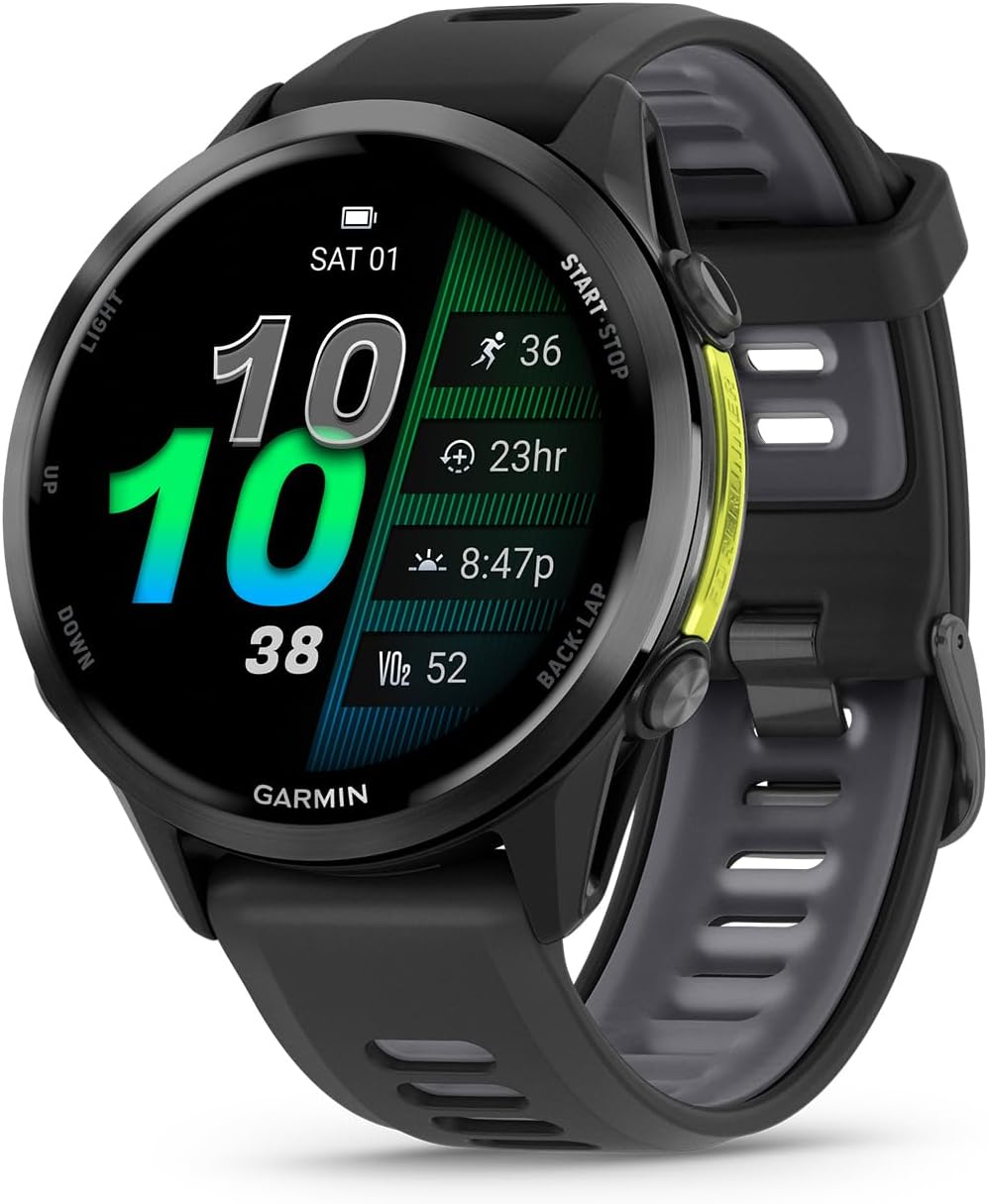
Choosing a running watch in November 2026 means weighing a $169.99 value pick against a $649.99 triathlon flagship, with a new Apple Watch and a one-year-old COROS in between. The Apple Watch Series 12 went on sale on 18 September 2026. The Garmin Forerunner 970 launched in May 2025 and now sells about $100 under its $749.99 MSRP. Prices across these four watches run from $169.99 to $649.99, and the Garmin climbs well above its sticker price once you add the chest strap its best metrics need.
This guide compares four watches that all do the same job: tracking runs and the recovery around them. It is written for runners choosing between a mainstream smartwatch, a budget all-rounder, a premium training tool, and a lightweight AMOLED running watch. Each pick has a clear winner category, honest drawbacks, and a specific buyer in mind.
Why You Can Trust This Guide
Revuzia does not run a lab, and we do not pretend to. This guide is built from published hands-on reviews by independent reviewers who logged real runs, rides and nights of sleep with each watch. We look at what they measured in the areas that matter for a running watch: GPS agreement between watches, heart-rate and HRV sampling, recovery scoring, comfort over a full week, and battery behavior. Revuzia earns affiliate commissions when readers buy through our links, and that never changes a ranking or a verdict. No manufacturer pays for placement or favorable coverage.
Our data comes from three places: independent hands-on reviews, verified retail pricing from Amazon and Google Shopping, and manufacturer spec sheets. When a manufacturer claim and an independent result differ, as with the Amazfit's battery, we report both. Our own voice is reserved for analysis and recommendations. If you spot an error or want a watch considered, email [email protected].
Our Top Picks at a Glance
Here are all four watches in the order they appear below. Ratings are our editorial judgment of how well each watch does its assigned job for its price, and may differ from the Google Shopping review scores quoted in the picks below. Prices are current street prices from Amazon or Google Shopping.
Best Overall: Apple Watch Series 12
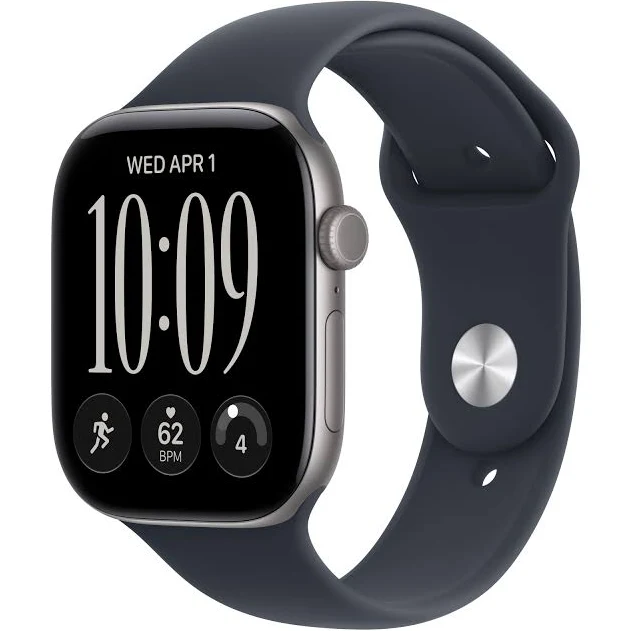
The Apple Watch Series 12 wins because its redesigned Health Sensing System gives runners far denser data than any earlier Apple Watch. It starts at $399 and was listed at $379 at Walmart on Google Shopping. Reviewers report that it samples heart rate every 5 seconds all day, including during movement. The Series 11 sampled roughly every 5 minutes, and only when you were stationary. Heart-rate variability, or HRV, is now captured as often as every 5 minutes at rest, where it was about every 2 hours before. Recovery HRV (RMSSD) is also separated from the SDNN-based overall HRV.
On top of that sits a new 0 to 10 Readiness score. Reviewers note it is clear about what moves the number, and one calls it "terrific" and not paywalled. It took about 2 weeks to populate. One reviewer's first score was a 2 ("Pace Yourself") after a 17 km run and lots of walking, then it rose to a 4 after a 40 km bike ride. The watch's Sleep Score was also compared with the Oura Ring 5 and Garmin Fenix 9 Pro. All three agreed on good versus bad nights, with Apple scoring most conservatively: high 80s where Oura went above 90.
The rest of the package is polished. The chip is the S11, the case is 9.7 mm thick in aluminium and titanium, and aluminium models use Ceramic Shield 2, which Apple says is 60% tougher than Ion-X. Titanium and ceramic models use sapphire crystal. Reviewers call charging "genuinely impressive" and much improved, iPhone integration seamless, and workout tracking easy to start. It is also the most popular wearable on Strava.
Pros
- Heart rate every 5 seconds all day and HRV every 5 minutes at rest
- Readiness score is not paywalled and explains what moves it
- Much faster charging than before
- Seamless iPhone integration and easy workout start
Cons
- Battery life is still short
- The Health, Fitness and Watch apps are fragmented, while Garmin and Oura use one app
- Settings are rigid: removing Sleep Focus on the iPhone broke the watch's sleep mode, and turning off haptics to stop WhatsApp buzzing also disabled workout and alarm haptics
- Double Tap and Wrist Flick gestures cover only a small set of actions
Who should buy it: iPhone owners who want strong recovery data and a watch that also handles everyday life. Reviewers call it the best mainline Apple Watch yet and a worthwhile upgrade from a Series 9 or older. Coming from a Series 10 or 11, the case is weaker: the design barely changed, and several additions, like a recovery score, are catch-up features that Garmin and Oura already had.
Best Budget: Amazfit Active 3 Premium
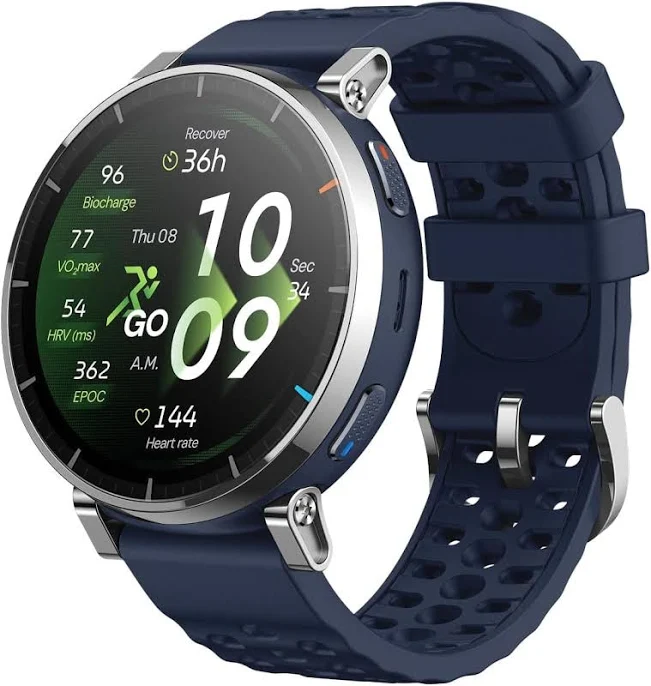
The Amazfit Active 3 Premium is the best budget pick because it costs $169.99, which undercuts the cheapest Apple and Garmin watches here, and still includes sapphire glass, NFC payments and full-color maps. It is also the only model in the Active 3 range, so there is no base version to choose between. It is available in Atlas Blue, Apex Silver and Aero White. Google Shopping shows it at 4.8/5 from 1,100 reviews. Against the Series 12 prices above, the gap is still substantial at street price.
The hardware is better than the price suggests. It has a 1.32-inch AMOLED display, the same size as the Active 2's, under a scratch-resistant sapphire lens. The body is circular with a metallic finish and a polymer strap on a pin system. You get full-color maps with turn-by-turn navigation, NFC payments and basic notifications.
The software side is strong too. The Zepp app is described as much slicker than before. It includes HybridCharge, a readiness metric built from sleep, heart rate, activity, recovery and stress, plus PAI and an Aura sleep section with relaxing music. Importantly, readiness is included rather than sitting behind a subscription. In one review, HybridCharge correctly suggested a rest day after a night of poor sleep.
Amazfit claims up to 12 days of battery life, and reviewers saw about 10 days. That is a large advantage over the Apple Watch.
Pros
- $169.99, far below the $379 Apple and $649.99 Garmin
- About 10 days of battery in testing, against a 12-day claim
- Full-color turn-by-turn maps and NFC payments
- Readiness feature included, no subscription
Cons
- A reviewer would not call it rugged, and it is not suited to ultramarathons
- The strap pin system is slightly fiddly
- The 1.32-inch screen is not large
- One review says it is aimed at women, with few "feminine" style options
Who should buy it: a first-time smartwatch buyer or a casual runner who wants maps, payments and a week-plus of battery without spending much. If you plan to run ultras, step up.
Best for Marathons: Garmin Forerunner 970
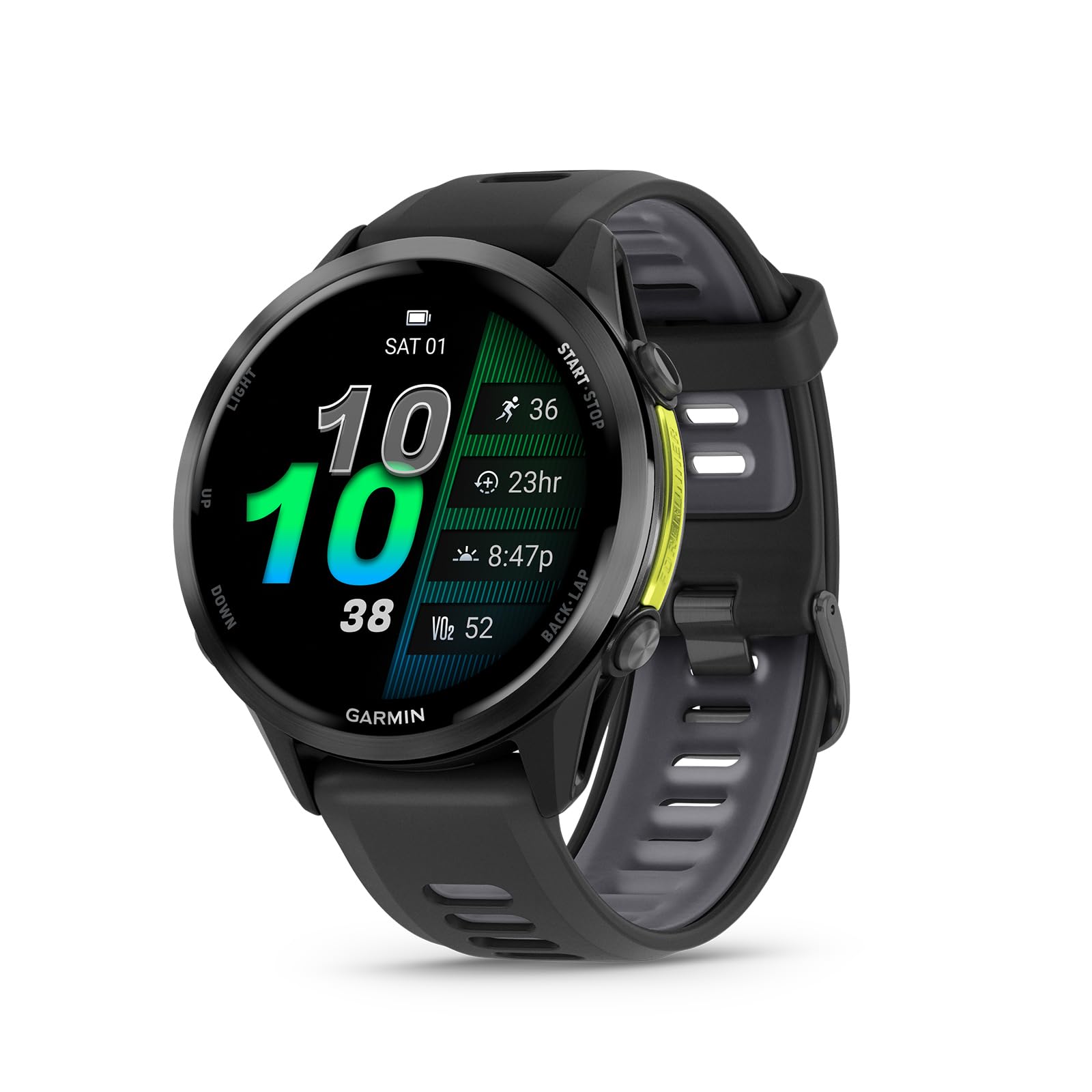
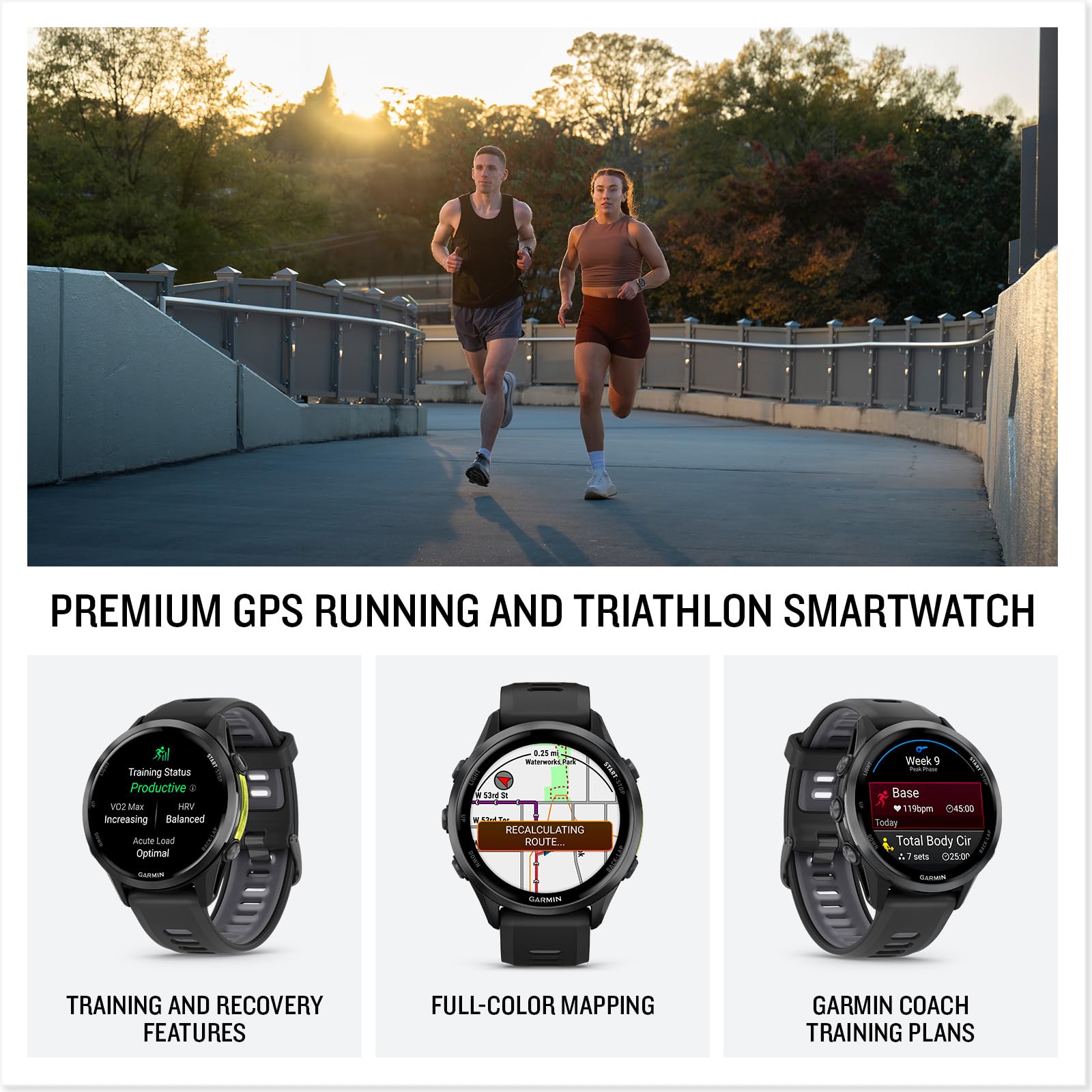
The Garmin Forerunner 970 is the best pick for marathon runners because it has the deepest running-specific toolset here, at $649.99 on Amazon against a $749.99 MSRP. Its three new running-load metrics are Running Economy, Step Speed Loss and Running Tolerance, a mileage-based load measure. It also adds Suggested Finish Line, an Evening Report, skin temperature, sleep breathing disturbances and ECG through the Elevate v5 optical sensor. Reviewers call it the best triathlon watch "on paper".
The build is premium. The 47 x 47 x 12.9 mm case is reinforced polymer with a titanium bezel and a sapphire lens, a step up from the Forerunner 965's Gorilla Glass DX. It weighs 56 g and has a 35.3 mm, 454 x 454 AMOLED touchscreen that is brighter than the 965's. It also has five buttons with function labels on the display rim, a physical flashlight and a built-in microphone and speaker. In a side-by-side test, GPS on the 970 and the COROS Pace 4 was indistinguishable.
Pros
- Running Economy, Step Speed Loss and Running Tolerance for load management
- Sapphire lens, titanium bezel and a brighter AMOLED display
- ECG, flashlight, microphone and speaker
- GPS matched the COROS Pace 4 in one comparison
Cons
- Two of the three new metrics need the $169.99 HRM 600 chest strap
- A reviewer logged 10+ runs with the 970 and HRM 600 and still got no Running Economy estimate, which needs at least five steady runs of 30 minutes or more on flat terrain
- Switching the strap's connection mode means deleting and re-pairing it, which cost one reviewer two sessions of data
- Battery life is shorter than the 965's
Who should buy it: a serious marathoner or triathlete who will use the strap and wants every load metric. Reviewers call it "professionals-only" and say the user experience has changed "little to none" from the 965, so the cheaper 965 is better value for most people, and if you already own one, the 970 is an incremental upgrade.
Best for Battery: COROS Pace 4
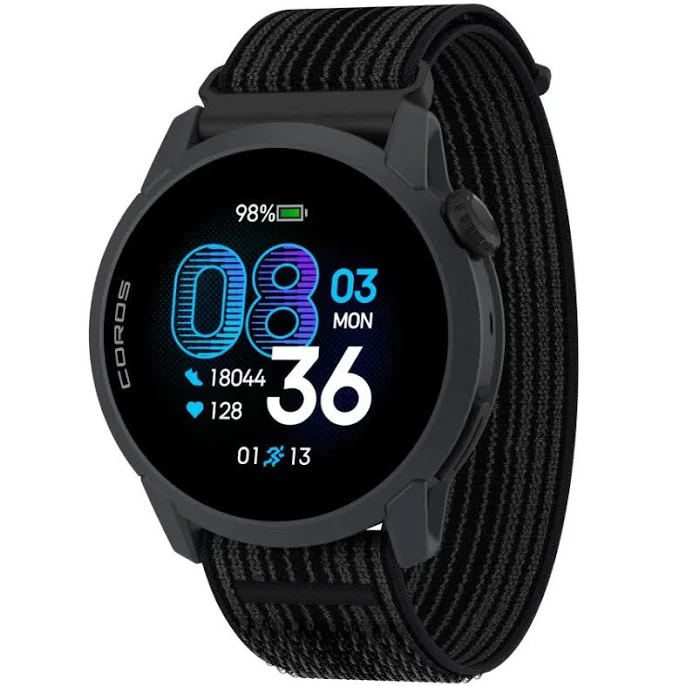
The COROS Pace 4 earns the battery label because reviewers say it lasts longer than any AMOLED watch at its price, while weighing just 27 g for the body alone. It costs $249 and was launched on 10 November 2025, and Google Shopping shows 4.9/5 from 2,100 reviews, the highest among these four. It swaps the Pace 3's low-resolution MIP screen for a 1.2-inch, 390 x 390 AMOLED touchscreen that reviewers find sharp, responsive and easy to read in most lighting.
The case is 43.4 mm wide and 11.8 mm thick without the heart-rate dome, 13.6 mm with it. With a nylon strap it weighs 32 g, and with silicone, 40 g. A reviewer found it comfortable all day for a full week. It has dual-frequency GPS with new satellite-lock optimizations, breadcrumb navigation with turn-by-turn directions, route syncing and waypoints. As noted above, GPS was indistinguishable from the Forerunner 970's in a side-by-side test.
The training tools are serious: EvoLab, a Running Fitness Test, Race Predictor, Effort Pace, Recovery Time, Training Load and personalized marathon plans. It also offers a revised optical heart-rate sensor, SpO2, a temperature sensor, Bluetooth audio with 4 GB of music storage, 5 ATM water resistance, stress tracking and sleep monitoring.
Pros
- Reviewers say battery outlasts any AMOLED watch at its price
- 27 g body weight, about half the Garmin Fenix 8 Pro
- Dual-frequency GPS that matched the Forerunner 970 in one test
- EvoLab, Race Predictor and marathon plans plus 4 GB music storage
Cons
- The action button does nothing outside a workout and cannot be customized
- No offline maps, which the Pace Pro has
- Mineral glass and a polymer case are less premium than the sapphire on the Garmin and Amazfit
- Voice pins feel redundant for everyday runners
Who should buy it: a runner who wants a light, accurate watch for $249 and puts battery and comfort ahead of smartwatch extras. Reviewers call it the easy recommendation and one of their favorite new sports watches of its launch year.
How We Chose
We started with the question a runner actually asks: which watch will track my runs accurately, keep going between charges, and help me train smarter for the money? Each watch was weighed on four things: use case, price, battery and ecosystem fit. We looked at GPS agreement, heart-rate and HRV sampling, recovery scoring, comfort, build materials and the features that sit behind accessories or subscriptions.
Every label goes to the watch with the strongest evidence in that area. The Apple Watch Series 12 takes Best Overall for its sensing upgrades and ecosystem. The Amazfit takes Best Budget for its price. The Garmin takes Best for Marathons for its running-load metrics. The COROS takes Best for Battery on reviewers' verdict that it outlasts any AMOLED watch at its price. Watches were marked down for hidden costs, such as the Garmin's chest strap, and for settings or app problems that get in the way of daily use. We report facts only where reviewers or manufacturers provided them, and we do not fill gaps with guesses.
What to Look For
Battery life. Fast charging helps, but it does not replace endurance. A watch you charge nightly will miss sleep data, while one that lasts about 10 days, like the Amazfit, tracks sleep without a thought. Long runs and race weekends also demand more than a short-lived battery gives.
GPS accuracy. For a running watch this is the core feature. The COROS Pace 4 has dual-frequency GPS, and in one comparison it was indistinguishable from the far pricier Garmin 970, so a higher price does not automatically buy better tracking.
Heart-rate sampling and HRV. Denser sampling gives better recovery data. The Apple Watch Series 12 samples every 5 seconds all day and HRV every 5 minutes at rest, a big jump from earlier generations.
Recovery scores and paywalls. Readiness scores are only useful if you can see them. Apple's and Amazfit's are included, and reviewers note they are not paywalled. Check what a watch needs before the score works, since Apple's took about 2 weeks to populate.
Hidden accessory costs. The Garmin 970's Running Economy and Step Speed Loss need the $169.99 HRM 600. Add that to $649.99 and the real price moves into a notably higher tier.
Ecosystem and apps. The Apple Watch is seamless with an iPhone but spreads data across three apps. Garmin and Oura use one. Amazfit's Zepp app has improved and is described as much slicker than before.
Build. Sapphire lenses, like those on the Garmin and Amazfit, resist scratches better than the mineral glass on the COROS. Ceramic Shield 2 is on Apple's aluminium models, and sapphire on its titanium and ceramic ones.
Last year's model. Reviewers say the Forerunner 965 is better value for most people than the 970. A previous generation is often the smartest buy.
Bottom Line
For an iPhone owner who wants rich recovery data and a watch that does more than track runs, pick the Apple Watch Series 12 at $379. Its 5-second heart-rate sampling and Readiness score give the most complete picture here, and you will charge it often.
For a casual runner who wants maps, NFC payments and a week-plus between charges, pick the Amazfit Active 3 Premium at $169.99. Reviewers saw about 10 days per charge, and it costs far less than the Apple Watch.
For a marathoner or triathlete who will wear the chest strap and wants every load metric, pick the Garmin Forerunner 970 at $649.99, and consider the cheaper 965 as the value alternative. For a runner who wants a light, accurate watch that reviewers say outlasts other AMOLED watches in its price class, pick the COROS Pace 4 at $249. At 27 g, you will barely notice it.
Running watches have rarely offered this much for so little: a $169.99 watch now carries sapphire glass and maps, and a $249 one matched a flagship's GPS in one side-by-side test. The remaining question is not whether a watch can track your run, but whether you want a smartwatch that also tracks it or a tool built for it.
-- Miles Danner, Wearable Technology Analyst
*Disclosure: As an Amazon Associate, Revuzia earns from qualifying purchases. Prices and availability are accurate as of publication and may change.*