Oura Ring 5 Review: Smaller, Lighter and Finally Looks Like JewelryOura Ring 5 Review: Smaller, Lighter and Finally Looks Like JewelryOura Ring 5 Review: Smaller, Lighter and Finally Looks Like JewelryOura Ring 5 Review: Smaller, Lighter and Finally Looks Like Jewelry
October 9, 2026
The Oura Ring 5 starts at $499 for its premium finishes and is about 40% smaller than the Ring 4, at just 6.09 mm wide and 2.28 mm thick. It weighs between 2 g and 2.69 g depending on size.
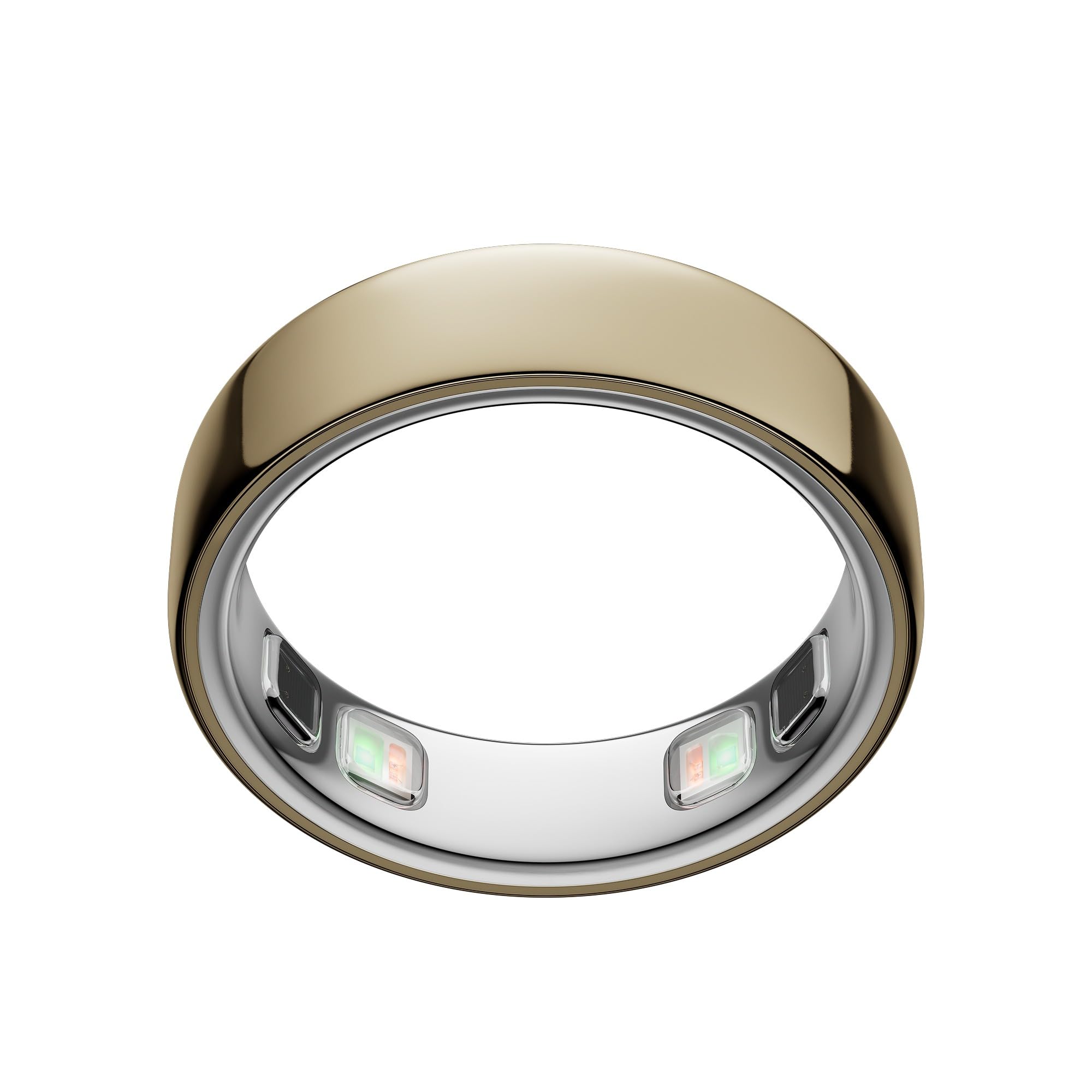
The Oura Ring 5 starts at $499 for its premium finishes and is about 40% smaller than the Ring 4, at just 6.09 mm wide and 2.28 mm thick. It weighs between 2 g and 2.69 g depending on size. After wearing it, my first impression is that the shrink is not a gimmick. The ring disappears on the finger in a way the Ring 4 never quite did. The real question is whether a smaller ring justifies a higher price, and the answer depends on what you want from a wearable.
Quick Verdict
The Oura Ring 5 is a more refined, much smaller ring that finally looks like jewelry instead of a gadget. It costs $499 at the premium tier and more than the Ring 4 at the base tier, it comes in fewer sizes (6 to 13), and the premium finishes are no tougher than the standard ones. Scratch resistance and the accuracy gains Oura claims for the redesigned sensors still need long-term use to prove out. If design and comfort drive your purchase, this is the best smart ring we have worn, so buy it. If you wear a size outside 6 to 13 or hate subscriptions, skip it. It earns an overall 4.0/5.
Our Rating and Pros/Cons
| Aspect | Rating |
|---|---|
| Design and Comfort | 4.5/5 |
| Tracking | 4.0/5 |
| Battery | 4.0/5 |
| App | 4.0/5 |
| Value | 3.0/5 |
| Overall | 4.0/5 |
Pros
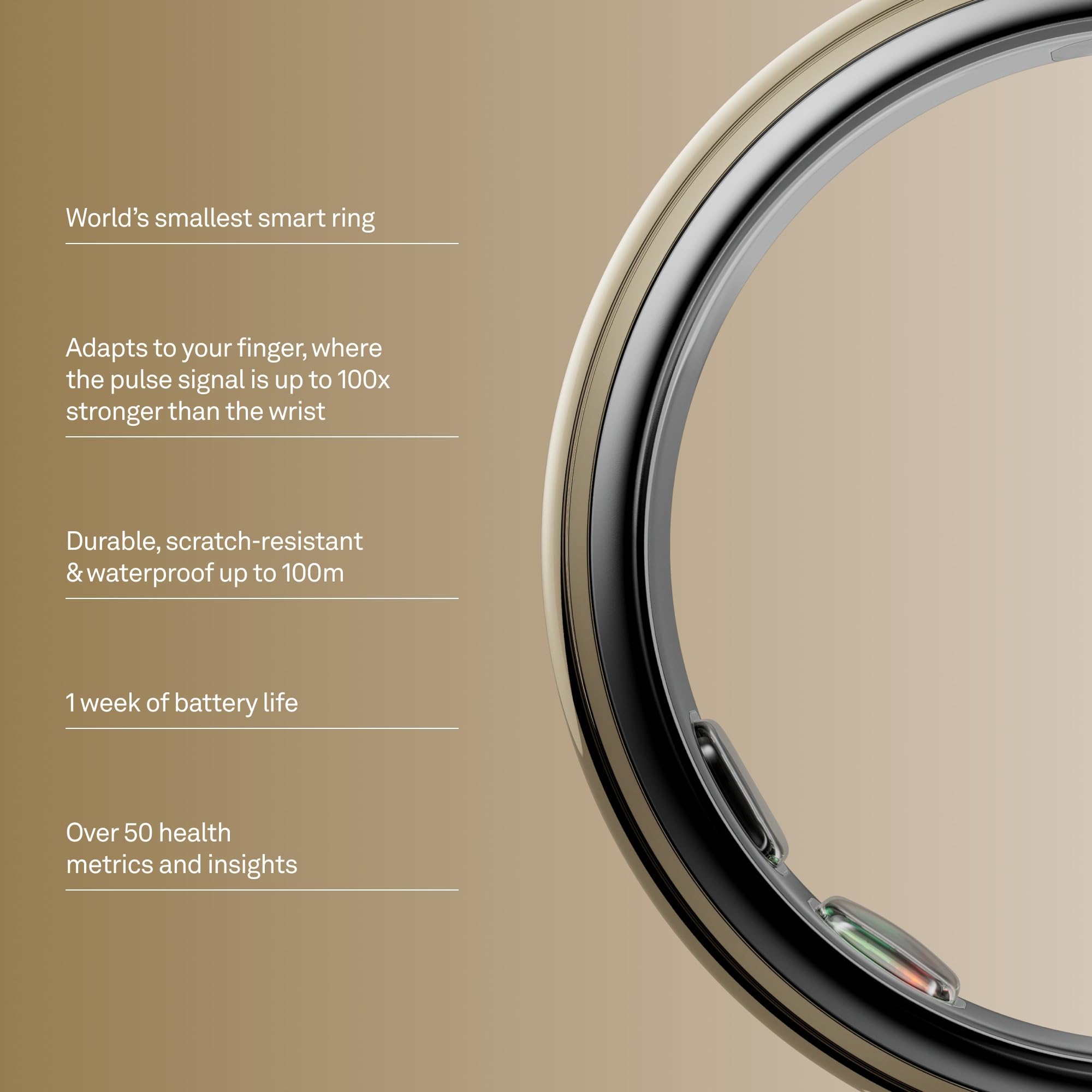
- About 40% smaller than the Ring 4, with a 6.09 mm wide band that looks like ordinary jewelry
- Weighs only 2 g to 2.69 g, so it is easy to forget on the finger, even overnight
- 5ATM water resistance, with swim and dive tracking down to 50 m
- Six finishes, including a redesigned Gold that avoids the yellow tinge of earlier rings
- Stated battery life of 6 to 9 days, up from 5 to 8 on the Ring 4
Cons
- Costs more than the Ring 4, and the premium finishes add no extra durability
- Only sizes 6 to 13 are offered, while the Ring 4 covered 4 to 15
- A monthly subscription is still required, unlike subscription-free rivals such as RingConn and Samsung
- Old Ring 4 charging cases do not fit, and the new wireless case is sold separately
Specs at a Glance
| Specification | Detail |
|---|---|
| Price | From $499 for premium finishes; standard finishes cost less |
| Width | 6.09 mm (Ring 4: 7.90 mm) |
| Thickness | 2.28 mm (Ring 4: 2.88 mm) |
| Weight | 2 g to 2.69 g depending on size (Ring 4: 3.3 g to 5.2 g) |
| Sizes | 6 to 13 (Ring 4: 4 to 15) |
| Material | Titanium |
| Coating | Physical vapor deposition (PVD) |
| Finishes | Gold, Deep Rose, Silver, Brushed Silver, Black, Stealth |
| Sensors | 12 LEDs on the inner side (Ring 4: 18) |
| Water Resistance | 5ATM, tracks swims and dives to 50 m |
| Battery Life | 6 to 9 days (Ring 4: 5 to 8 days) |
| Charging | Standard dock, USB-C powered; optional wireless charging case sold separately |
| Compatibility | iOS and Android app |
| Display | None |
Design & Comfort
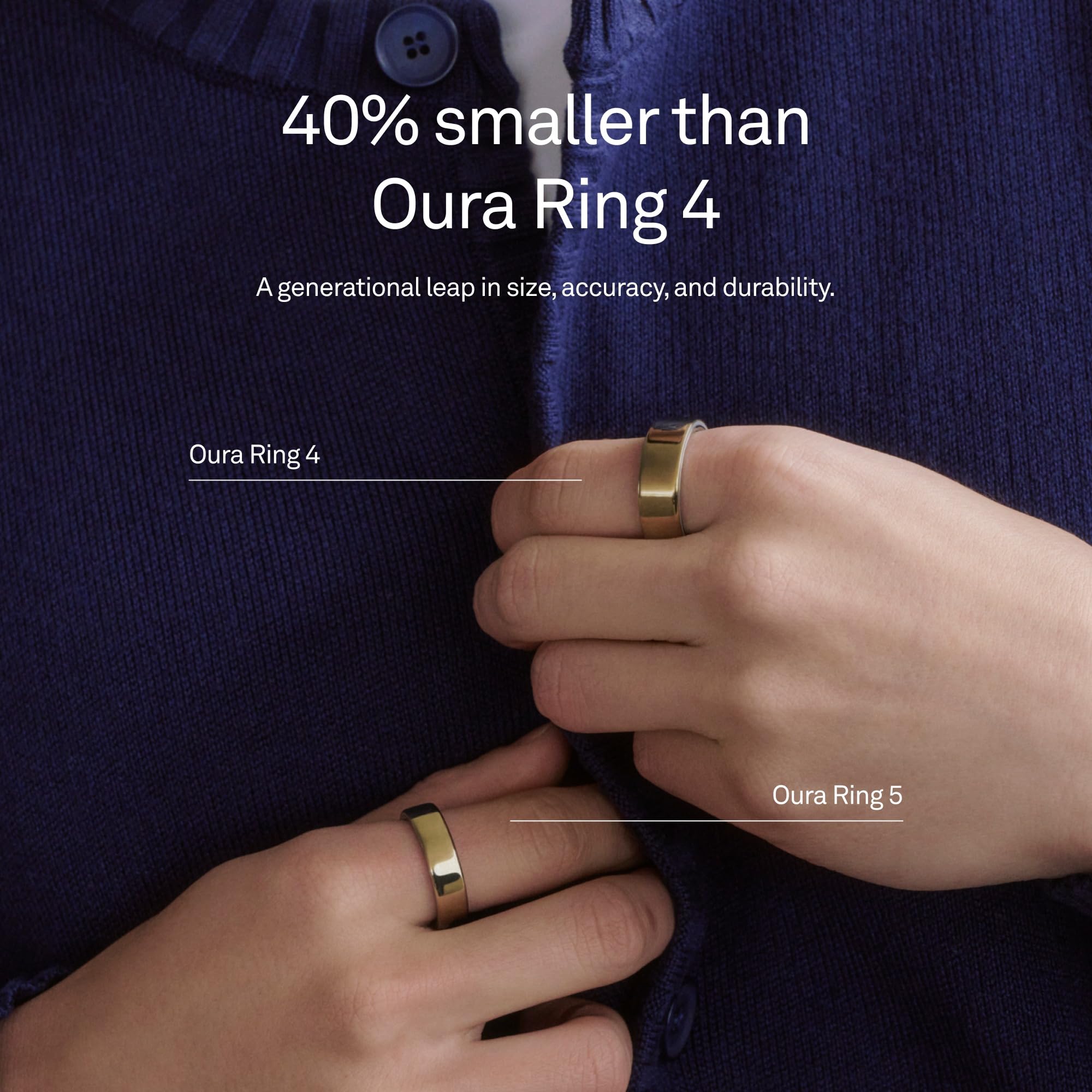
Design is where the Ring 5 earns its place. The headline number is the 40% size reduction Oura quotes, and the measurements back it up. The band is 6.09 mm wide against 7.90 mm on the Ring 4, and 2.28 mm thick against 2.88 mm. Weight drops to between 2 g and 2.69 g depending on size, where the Ring 4 ranged from 3.3 g to 5.2 g. Those differences sound small on paper, but on the hand they change the character of the product. The Ring 4 was a smart ring you wore. The Ring 5 is a ring that happens to be smart.
Comfort followed. During our time with it, the ring often slipped out of mind, which is the best compliment a wearable can get. It felt more comfortable overnight than the Ring 4, which matters because sleep is the main job of this product. The narrower band also changes where you can wear it. The wider Ring 4 tended to press into neighboring fingers, which pushed most people toward the index finger. The Ring 5 is slim enough that other fingers work, so you can put it where it suits your hands and your other jewelry.
Materials and finishes
The body is titanium, finished with a new physical vapor deposition (PVD) coating. Oura says the process keeps the out-of-the-box look longer than before, and that the ring is tougher than the Ring 4, which had a reputation for picking up scratches. We are cautious here. In a short wear period we saw no lasting marks. One apparent scratch from a rusty playground swing chain turned out to be rust that wiped off with a cloth. That is encouraging, but a short wear period cannot confirm a durability claim, and long-term scratch resistance remains something only months of daily use will show.
There are six finishes: Gold, Deep Rose, Silver, Brushed Silver, Black and Stealth. Gold has been redesigned and is the standout. It has none of the yellow tinge that made earlier gold smart rings look like costume jewelry, and it sits much closer to a real gold band. Worn next to a classic wedding band, it blends in. Deep Rose has a copper-like tone that looks distinctive without being loud. Stealth is the understated choice for anyone who wants the ring to attract no attention at all.
Pricing splits across the lineup. Standard finishes cost less, and the premium finishes, including Gold, Stealth and Deep Rose, start at the $499 tier. The extra money buys looks only. The premium finishes are not more durable than the standard ones, which is worth stating plainly because the previous-generation Ceramic ring sat at a similar price point and was genuinely more durable. If you are paying for the Gold or Deep Rose look, pay for it knowingly as a cosmetic upgrade.
Sizes, sensors and the case
The smaller body comes with trade-offs. Sizing now runs from 6 to 13, where the Ring 4 offered 4 to 15. Oura says the narrower range reflects manufacturing challenges at the smaller form factor, and that it is monitoring demand for the dropped sizes. If you wear a size 4, 5, 14 or 15, the Ring 5 is not an option today, and that is a real limitation for a product sold on comfort.
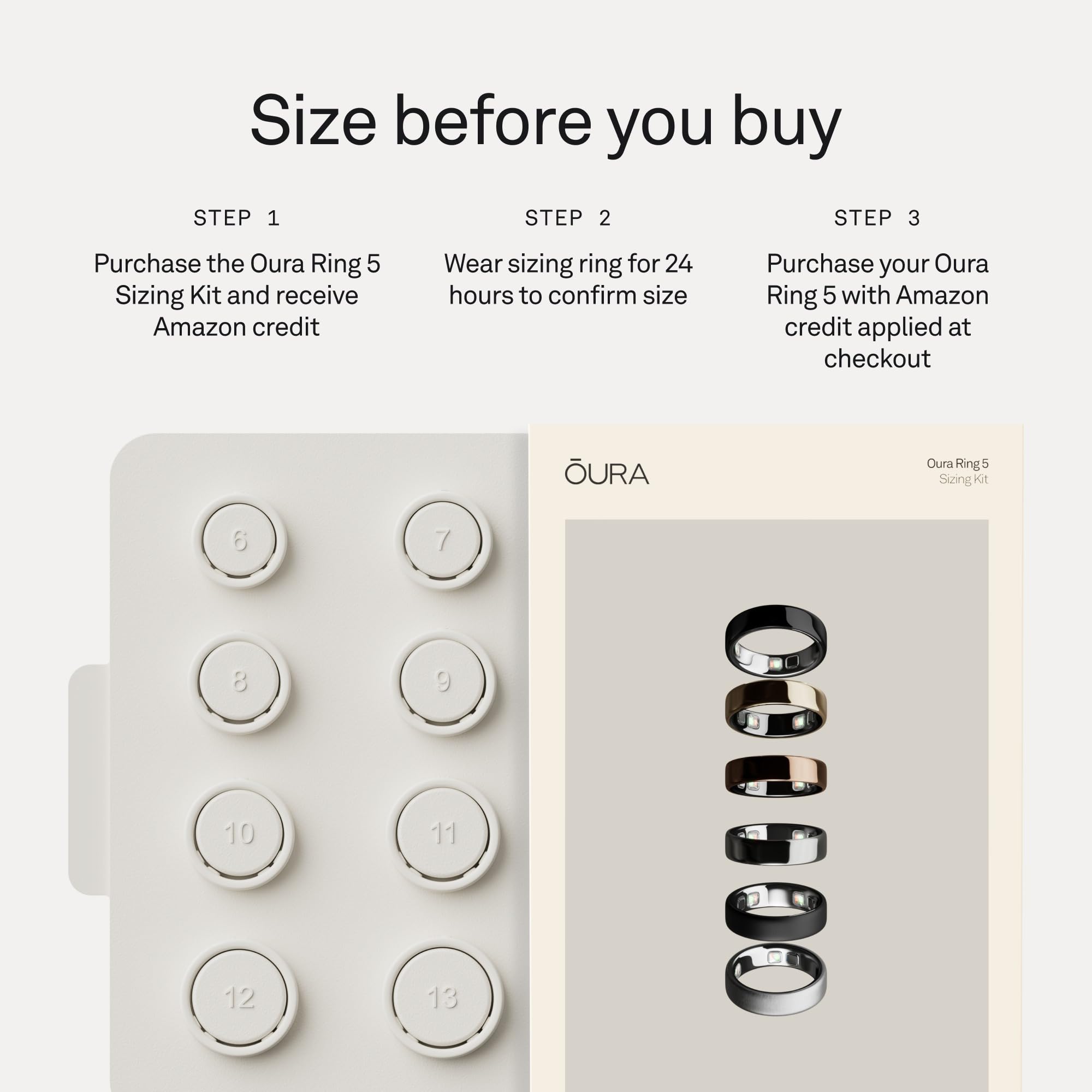
Inside, the sensor domes protrude slightly from the inner surface. On the finger they are not noticeable, and the only visible sign that this is more than jewelry is a small alignment marker on the inside of the band. The other practical trade-off is the charging case. The optional wireless charging case is not bundled with any finish, and cases made for the Ring 4 do not fit because the internals were redesigned. Anyone upgrading from a Ring 4 should expect to retire that old case.
Tracking Accuracy
The most interesting engineering change is on the inside. The Ring 5 uses 12 LEDs, down from 18 on the Ring 4. Fewer LEDs sounds like a step backward, but Oura argues the opposite. Because the sensor dome now sits closer to the finger, the company says each reading is cleaner, and it quotes improvements of 24% on movement, 19% on workouts and 12% on heart rate variability (HRV) compared with the Ring 4. These are manufacturer figures. We have not reproduced them in controlled testing, so treat them as Oura's claims rather than our own measurements.
Sleep
Sleep tracking is the strongest part of the experience and the reason most people buy an Oura. In our testing it set a new benchmark for rings. It does a good job separating actual sleep from simply lying in bed, and it catches disturbances, such as a bathroom trip in the middle of the night, better than most competing wearables. One honest caveat applies to every ring on the market: sleep stage breakdowns are estimates, not EEG readings, so take the deep and REM numbers as useful trends instead of lab results. The Readiness score builds on this data by combining sleep performance, HRV, stress and movement into a single number that tells you how hard to push the next day.
Exercise and water
Dedicated exercise tracking is where a ring shows its limits. Smart rings in general cannot match a smartwatch for workout detail, and the Ring 5 is no exception. It has no display, so there is nothing to glance at mid-run, and it works best as a passive recorder of your day that you review in the app afterward. If you want live pace, route maps and on-wrist coaching, a watch is the better tool, and the ring is better thought of as a companion for recovery.
Water is a clearer win. The Ring 5 carries 5ATM water resistance and tracks swims and dives down to 50 m, so a pool session or a day at the beach does not mean taking it off. For a device meant to be worn around the clock, that matters more than any single feature.
Health Radar features
New software features headline the update. Blood Pressure Signals and Nighttime Breathing arrive under the Health Radar banner. The blood pressure feature is inferred from heart rate and is not medical grade, so it works as a prompt to pay attention rather than a diagnosis. Oura has also said GLP-1 insights and Counsel Health support are on the way. All of this is limited by region: Health Radar is available in the US, the UAE and for some features in India, so buyers elsewhere will see little of it. The ring also supports Symptom Radar for early illness signals, AI food tracking from a photo, and women's health features.
The key point for upgraders is that these software features are not exclusive to the new hardware. The Ring 4 gets all of the new software updates, and the Ring 3 gets many of them, which weakens the case for upgrading purely for health features.
Battery Life
Oura states 6 to 9 days of battery life for the Ring 5, up from 5 to 8 days on the Ring 4. In our testing, the ring arrived about 50% charged. After setup, roughly 30 minutes on the charger brought it to around 75%. After five days of continuous wear it sat at about 25% and had not yet needed a top-up, which fits comfortably inside the stated range. For a ring this small, that is an impressive result, and it means charging is a once-a-week task you can fold into a routine.
Charging uses a standard dock powered over USB-C, which is convenient because you probably already own the cable. There is also an optional wireless charging case. It is not included with any finish, including the premium ones, so you are buying a separate accessory if you want it. Because Oura redesigned the internals, Ring 4 cases are not compatible.
Day-to-day, the stated range is more than enough for most people, and the long gap between charges is part of why sleep tracking works so well. A ring you have to charge nightly is a ring that misses nights. A ring that lasts most of a week records them all. A longer run of real-world use would sharpen the picture further, particularly as the battery ages, but the early results are strong.
App & Ecosystem
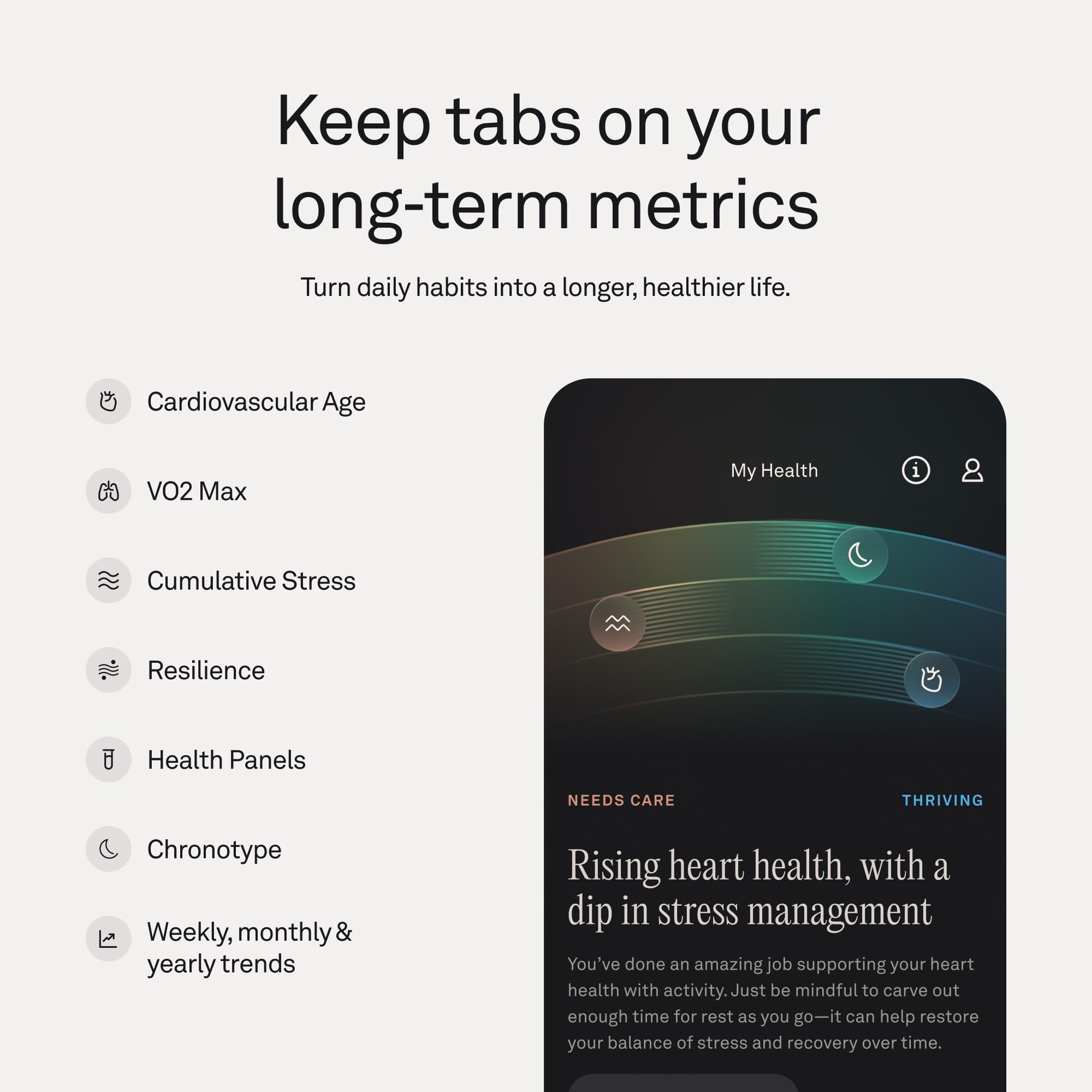
The Oura app runs on both iOS and Android, and it remains the most polished companion software in the category. It is restrained where some rivals are noisy. Ultrahuman's app, for example, throws a lot of data at you on the home screen, while Oura keeps the home view calm and lets you dig deeper when you want to. The Vitals tab is customizable, and the My Health tab shows long-term trends, which is where the value of months of data shows up.
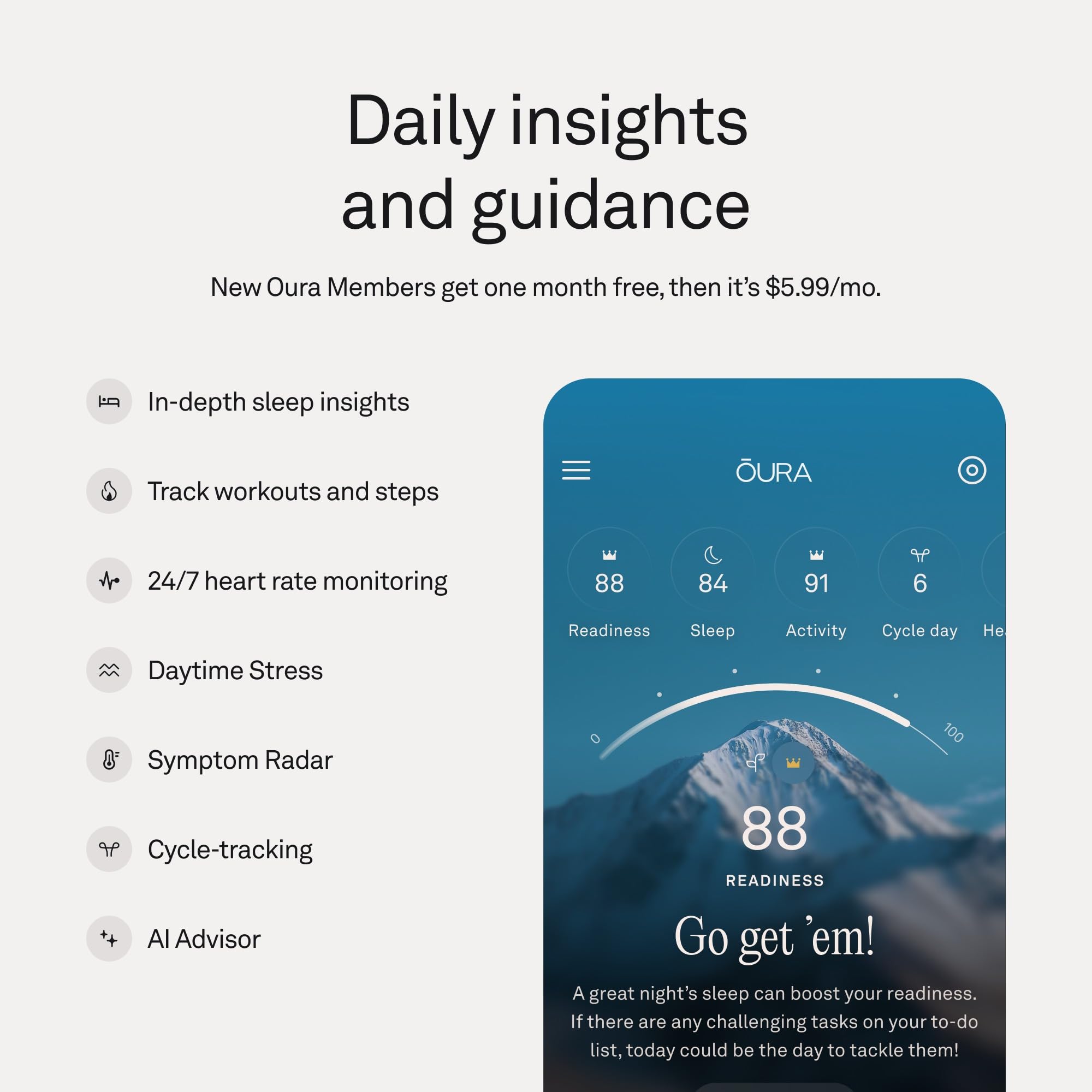
The core scores are sleep, activity and readiness, plus a stress monitor. They are easy to read and, more importantly, they tell you what to do next. AI-powered food tracking from a photo is a nice addition, and Symptom Radar adds an early-warning layer for illness. Women's health features round out the package.
The Advisor, Oura's AI assistant, is the weakest part of the app. It is reactive, meaning you have to go looking for it in a sub-menu and ask a question, whereas Google's Fitbit Air Health Coach is proactive and speaks up on its own. Oura has room to grow here.
The subscription
Oura still requires a monthly subscription to unlock the full experience, and the Ring 5 includes a one-month trial. That is the product's biggest philosophical weakness. Samsung and RingConn rings carry no subscription, and Ultrahuman has no set monthly price, though it charges for extra niche data. If you dislike recurring fees, that matters. You are paying a premium for hardware and then paying again to use it.
Value for Money
At $499 for the premium finishes, the Ring 5 is a premium product, and standard finishes cost less. The jump over the Ring 4 buys a smaller, lighter ring with longer stated battery life, but it does not buy meaningfully new health features, since those reach older rings through software. The extra money for premium finishes buys appearance only. Add the ongoing monthly subscription and the optional wireless charging case, and the total cost of ownership climbs quickly. Subscription-free rivals sit in a lower cost tier over time, though none match the Ring 5's polish. For most buyers, the standard finishes are the smarter spend.
Who Should (and Shouldn't) Buy This
Buy it if you want the smallest, lightest smart ring available, wear a size between 6 and 13, and accept a monthly subscription. It is the best option for anyone who wants a wearable that looks like ordinary jewelry, especially in Gold.
Skip it if you wear a size 4, 5, 14 or 15, need GPS or a display, or want to avoid subscriptions. Ring 4 owners should think hard before upgrading, since the new software features come to their ring anyway and the old charging case will not carry over. Anyone tempted by a premium finish should know it is not tougher than the standard ones.
Bottom Line
The Oura Ring 5 is a well-engineered shrink of the Ring 4 at a higher price. The standard finishes offer the better value, and the premium finishes are a cosmetic upgrade. If sleep tracking and an invisible design matter most, it is the easiest smart ring to recommend so far.
I have worn plenty of smart rings, and this is the first one that friends did not notice was a gadget. That alone is a real step forward for the category. My main hesitation is the subscription and the fact that much of what is new in the software reaches older rings too.
-- Miles Danner, Wearable Technology Analyst
*Disclosure: As an Amazon Associate, Revuzia earns from qualifying purchases. Prices and availability are accurate as of publication and may change.*