CERN's LHCb Finds Evidence of One-in-10-Billion Particle Decay After 40 Years
November 11, 2026
After more than 40 years of searching, the LHCb experiment at CERN has found 3.2-standard-deviation evidence of the decay B⁰ → μ⁺μ⁻, a process expected to occur only once in approximately 10 billion beauty particle decays. That makes it about 30 times rarer than its
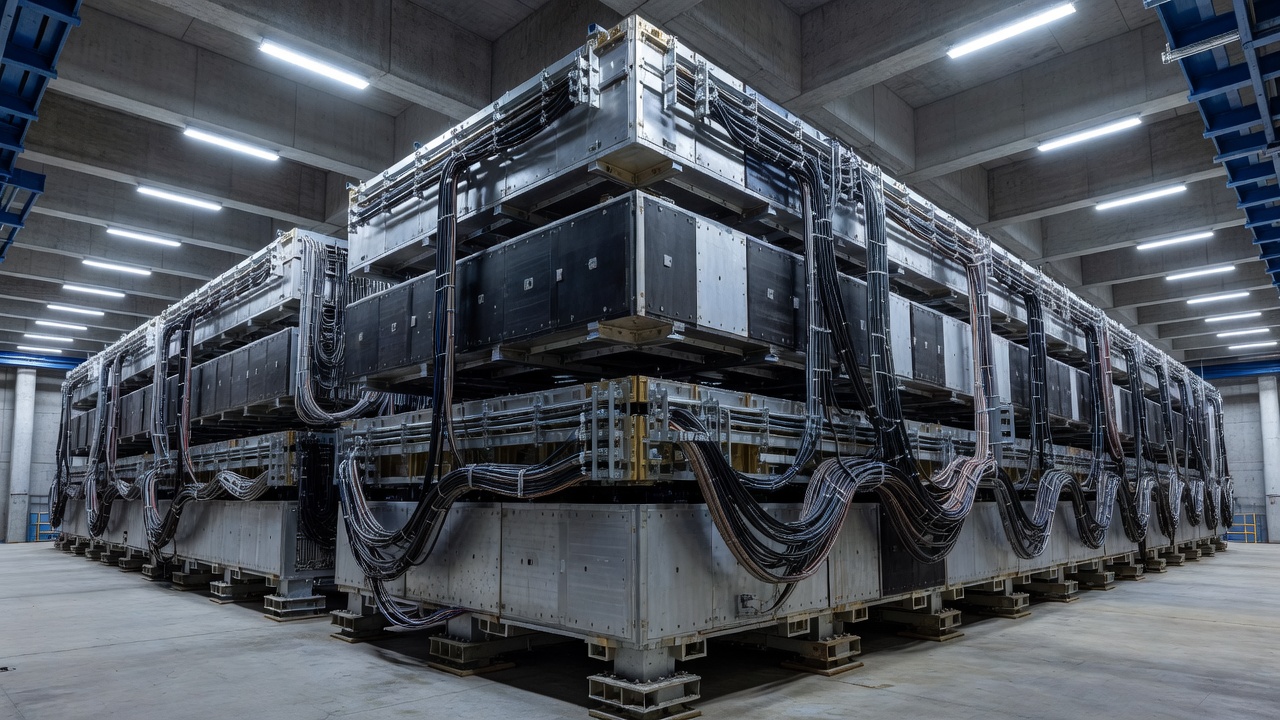
After more than 40 years of searching, the LHCb experiment at CERN has found 3.2-standard-deviation evidence of the decay B⁰ → μ⁺μ⁻, a process expected to occur only once in approximately 10 billion beauty particle decays. That makes it about 30 times rarer than its already-scarce sibling decay, B_s → μ⁺μ⁻, which turns up roughly 3 times per billion beauty decays. The result agrees with the Standard Model, which is the quieter half of the story: the physics is unchanged, but the measurement that was missing for four decades now has a foothold. A decay this rare can expose particles too heavy for the Large Hadron Collider to produce directly, so even a "boring" match to theory shrinks the places new physics can hide. Here is what was measured, how, and why 3.2 is not yet 5.
What the Researchers Found
The LHCb collaboration reports evidence for the decay of the B⁰ meson (a particle made of a beauty quark and a down antiquark) into a muon and an antimuon. Muons are heavier cousins of the electron, and the antimuon is its antimatter twin. The significance is 3.0 standard deviations from the 2024 and 2025 data alone, and rises to 3.2 standard deviations when those data are combined with the 2011 to 2018 data.
Standard deviations, often called "sigma", measure how far a result sits from what pure chance would produce. In statistical terms, 3 standard deviations corresponds to roughly a 0.3% chance that a random fluctuation would produce a signal at least this extreme. That is enough for physicists to use the word "evidence." The word "observation" is reserved for 5 standard deviations, a bar this result has not reached.
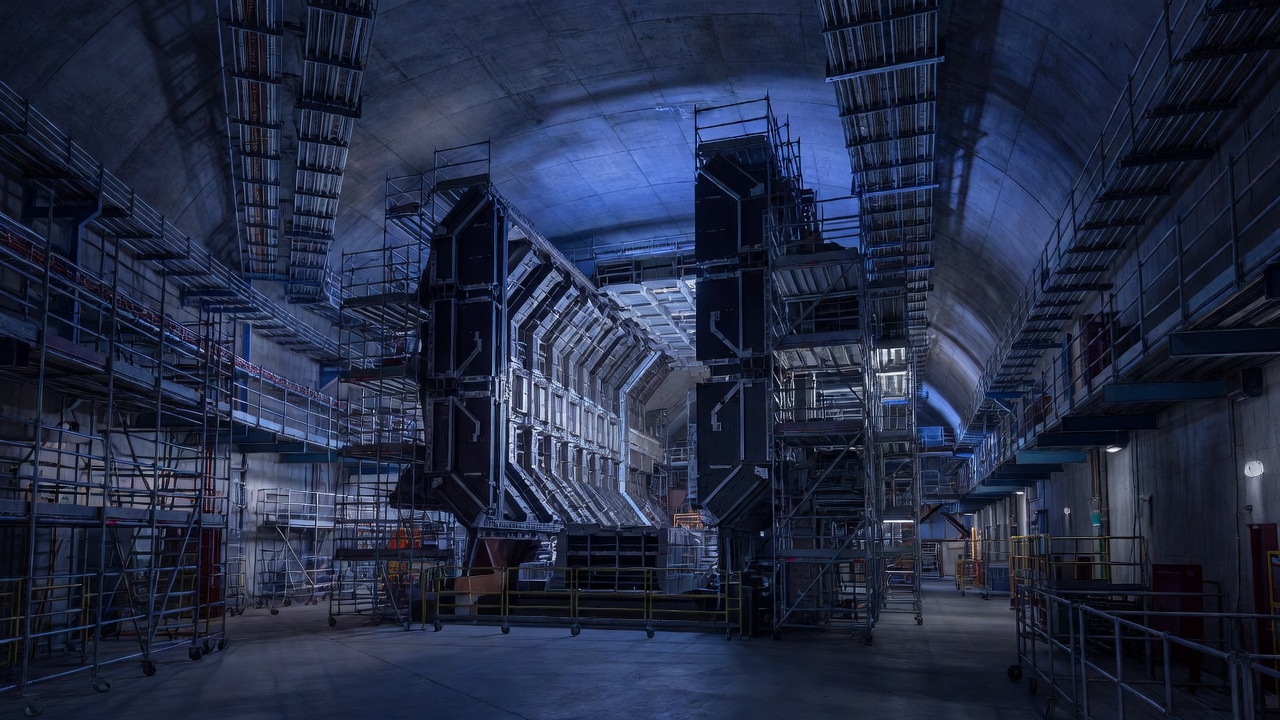
The search spans more than four decades. "Physicists have been chasing this decay for more than forty years," said Marco Santimaria, who co-led the analysis team.
According to LHCb, the same analysis also produced the most precise measurements yet of the sibling decay B_s → μ⁺μ⁻, and this is the first time a single experiment has gathered sufficient evidence for the B⁰ decay. The materials describing the result were supplied by CERN.
The Methodology
The decay happens when the beauty quark and the antiquark of opposite charge inside the B⁰ annihilate, and their energy reappears as a muon and an antimuon. Because the process is so rare, the signal is buried. At roughly one occurrence per 10 billion beauty decays, almost everything the detector records is something else. "Extreme precision is required to pick the muons out of the overwhelming background," Santimaria said.
Three changes made the difference, according to LHCb:
- More data, faster. The upgraded detector began taking data in 2024 and has collected it at five times the rate of 2010 to 2018.
- Better particle identification. Detector upgrades improved the ability to tell muons from other particles.
- Machine learning. Algorithms (software trained to separate patterns in data) distinguished the rare signal from background processes.
An international team of 19 scientists carried out the analysis.
Why It Matters
B⁰ → μ⁺μ⁻ is called a "golden channel" for physics beyond the Standard Model (the theory that describes three of nature's four fundamental forces and has explained almost all experimental results). The Standard Model still leaves open questions, including the nature of dark matter and what happened to antimatter after the big bang.
The logic is indirect. Quantum effects allow particles too heavy for the LHC to produce to leave subtle traces in decay rates, and the rarer the decay, the more sensitive it is to those influences. A measured rate that differed from the prediction would point to undiscovered particles. A rate that matches, as this one so far does, tells physicists those particles are not shifting this decay by much.
"Seeing evidence of this rare decay is incredibly exciting, opening up new possibilities to probe beyond the direct reach of the LHC," said Harry Cliff, LHCb Rare Decays Convener and Analysis Co-lead.
So far, the measured rate agrees with Standard Model predictions.
Competitive Landscape
The earlier benchmark came in 2015, when a joint analysis by LHCb and the CMS collaboration (a second LHC experiment, co-author of that analysis) made the first confirmed observation of B_s → μ⁺μ⁻ and gave initial evidence for B⁰ → μ⁺μ⁻. The new result is the first time a single experiment has produced sufficient evidence for it.

The two decays differ sharply in rarity. B_s → μ⁺μ⁻ occurs about 3 times per billion beauty decays, and the B⁰ version is predicted to be about 30 times rarer. Editor's arithmetic: 3 per billion divided by 30 is about 0.1 per billion, or roughly 1 in 10 billion, matching the headline figure.
Limitations and Caveats
This is evidence, not observation. Particle physics reserves "observation" for 5 standard deviations, and this result stands at 3.2, which leaves a gap of 1.8 standard deviations to close.
A common misreading deserves correcting. For a result at roughly 3 sigma, the chance that background alone would fluctuate to look this signal-like is roughly 0.1 to 0.3%, depending on whether a one-sided or two-sided convention is used. It is not the chance that the result is wrong.
Further caveats on sourcing: the quotes above come from CERN and LHCb spokespeople in a CERN-supplied release, not from independent commentary.
What Comes Next
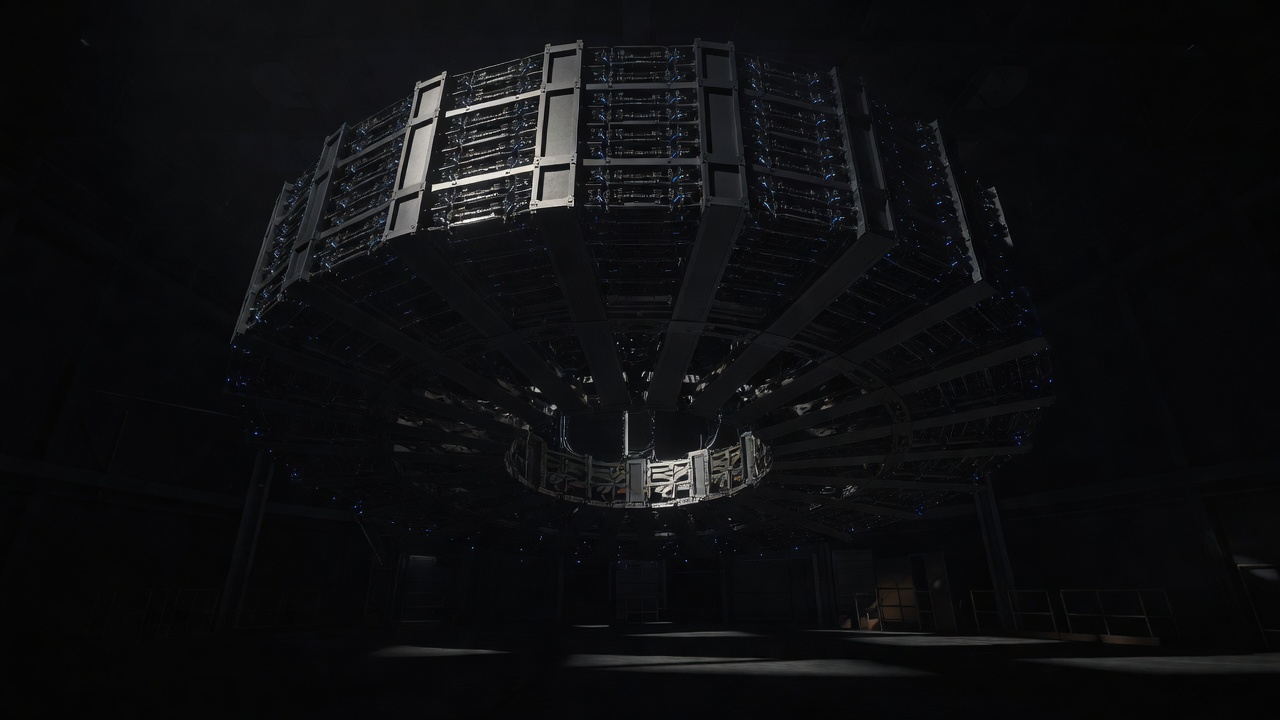
The High Luminosity LHC (an upgrade that raises collision rates) is scheduled to start in 2030. Combined with the next LHCb upgrade, planned for the middle of the following decade (the mid-2030s, by this editor's reading), data rates could rise by a further factor of up to 10.
"The future LHCb upgrade will allow us to observe many more of these decays, providing even greater sensitivity to undiscovered particles," Cliff said. More data will show whether the current signal strengthens or fades, as the 2015 hint did.
Forty years of looking for a one-in-10-billion event has produced a signal, and the real test is whether it stays. A decay this rare is a long wait for every extra standard deviation, which is why the data-rate increases matter as much as any clever analysis.
For academic researchers working on rare decays, the practical consequence is a target: the Standard Model prediction for B⁰ → μ⁺μ⁻ is now one that experiments can begin to test with a measurement of the rate itself rather than only an upper limit. Theorists refining that prediction will matter as much as the detectors, because the sharper the prediction, the smaller the deviation a future 5-sigma result could reveal.
-- Zara Velez, Emerging Technology Editor
Sources: SEC · PubMed Central · CERN / LHCb release (materials provided by CERN)