Princeton Chemist Argues Biology's Quantum Tricks Are Just Classical MathPrinceton Chemist Argues Biology's Quantum Tricks Are Just Classical MathPrinceton Chemist Argues Biology's Quantum Tricks Are Just Classical MathPrinceton Chemist Argues Biology's Quantum Tricks Are Just Classical Math
September 24, 2026
Photosynthetic light-harvesting complexes, the pigment-protein structures that capture sunlight in plants and bacteria, convert almost every photon they absorb into usable chemical energy, an efficiency close to 100 percent. The Princeton chemist who did more than almost anyone
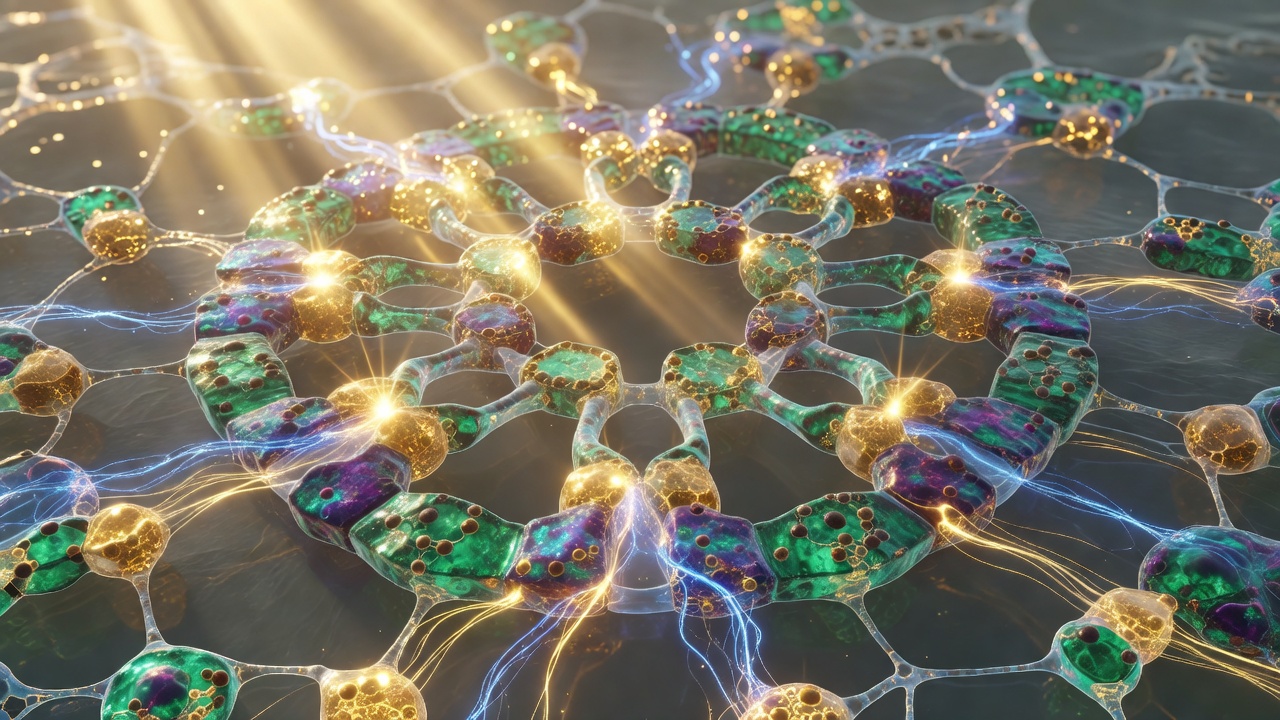
Photosynthetic light-harvesting complexes, the pigment-protein structures that capture sunlight in plants and bacteria, convert almost every photon they absorb into usable chemical energy, an efficiency close to 100 percent. The Princeton chemist who did more than almost anyone to convince the field that real quantum coherence explains that number, Gregory Scholes, has spent the past three years building the opposite case: that biology's "quantum" behavior may not involve quantum mechanics at all, just classical systems whose math happens to look identical. Physicists have chased the quantum-coherence explanation since the 1930s; Scholes now argues evolution never needed it, just classical oscillator networks whose equations come out the same. The distinction sounds academic until Scholes asks his own question about it: does it matter if you cannot tell the difference?
What the Researchers Found
The efficiency puzzle starts with photosynthesis. When a light-harvesting complex absorbs a photon, the energy forms an exciton (a quasiparticle created when absorbed light energy migrates through a molecule rather than an electron physically moving), which travels to a reaction center and gets converted into chemical energy. Almost every photon absorbed ends up powering that process, an efficiency researchers have tried to explain since the 1930s.
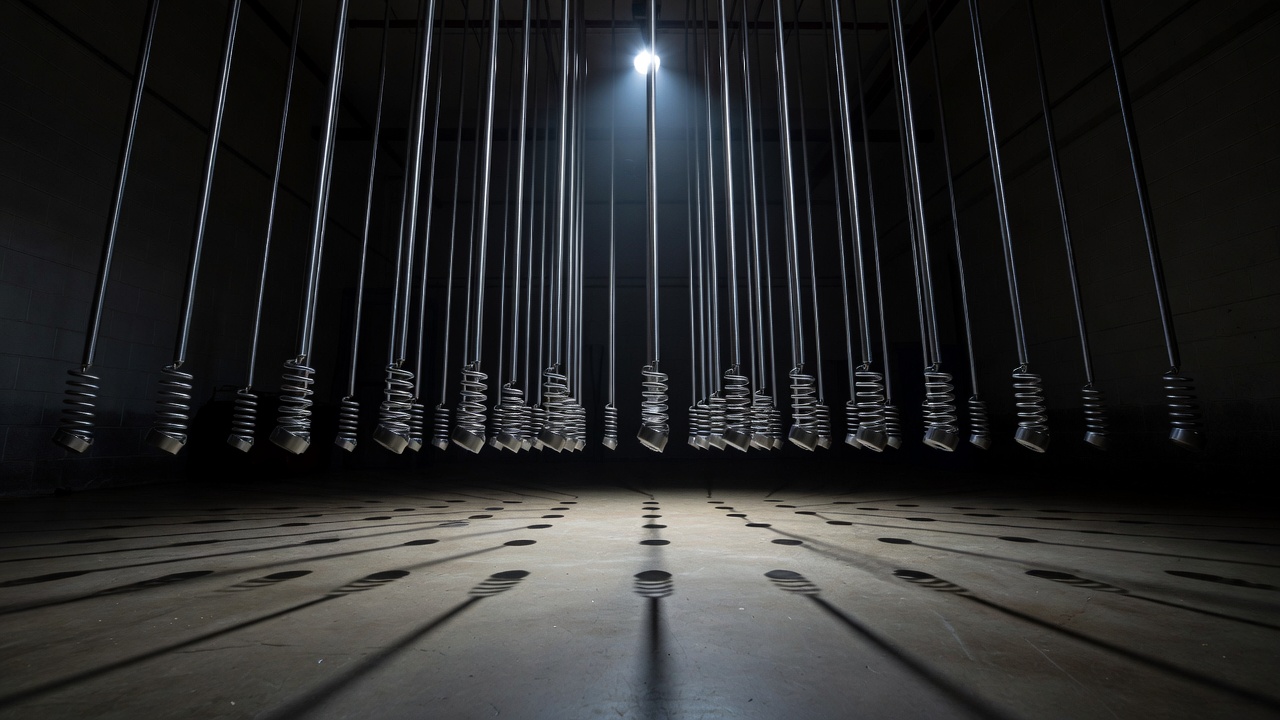
Scholes' recent work does not try to explain that efficiency with quantum coherence. Instead, starting in 2024, he published a method for designing networks of classical, interacting oscillators (simple repeating systems, like weights bouncing on springs) whose collective, synchronized behavior can be described mathematically as vectors in a Hilbert space, the same mathematical space used to describe a qubit (the basic two-state unit of quantum information, capable of superposition). Scholes and colleagues have since shown these "quantumlike bits" can be wired into larger networks that remain quantumlike, including one that mimics a quantum logic gate (a basic circuit element used in quantum computation). None of it requires actual quantum superposition or entanglement, just classical oscillators arranged so the underlying math comes out the same. In 2026, Purdue University computer scientist Ethan Dickey published a follow-up extending Scholes' framework, identifying network properties that produce a broader range of quantumlike states than Scholes' original model allowed. "This strictly arises from the mathematical structure of the graph," Dickey said. "If you build graphs in certain ways which are not that unreasonable, they happen to pop up with this very nice, very elegant mathematical object that simulates, or almost approaches, a quantum object."
The Methodology
The idea that biology might be exploiting quantum coherence dates to 1929, when Niels Bohr floated in a lecture that quantum mechanics "may perhaps be of decisive importance, particularly in the discussion of the position of living organisms in our picture of the world." The modern version of that claim traces to 2007, when Graham Fleming's team at the University of California, Berkeley fired ultrafast laser pulses at a bacterial light-harvesting complex and detected synchronized "beats" in the resulting signal, interpreted at the time as evidence of long-lived quantum coherence between excitons. Scholes was among the researchers who replicated the result. Later re-examination showed the beats reflected resonance between wiggling molecular bonds, not quantum coherence.
Scholes conceived his classical-network alternative in his hotel room at a conference in December 2023, and has since published several papers on quantumlike classical networks. In 2025, neurophysiologist Wolf Singer of the Ernst Struengmann Institute of the Max Planck Society and colleagues showed that adding oscillations to a simple neural network made it more efficient and more robust, using each oscillation's phase to encode relative timing information. Singer said he came away "impressed by the fact that some real-world phenomena are maybe better described using the description techniques they use in quantum physics" after attending a related workshop.
Why It Matters
If Scholes is right, 3 1/2 billion years of evolution did not need to discover quantum coherence to get quantum-like efficiency out of light-harvesting complexes, neurons, or other biological networks. It only needed to stumble onto graph structures and oscillator arrangements that reproduce the same math. "Maybe quantum biology, at the biggest scales, means using 3 1/2 billion years of evolution to work out how to get the functionality that you could get from quantum systems," Scholes said.
That reframing matters for two reasons. First, it resolves a tension that has run through the field since 2007: quantum biology researchers have long sought ways that organisms could sustain fragile quantum effects, such as superposition, entanglement, and coherence, at the time, temperature, and spatial scales relevant to life, and a purely classical explanation sidesteps that requirement entirely. Second, it opens a practical door. Sabre Kais, a quantum chemist at North Carolina State University who develops quantum computing algorithms and co-supervised Dickey's doctoral work, said classical systems mimicking quantum information represents "an exciting new direction" with "strong potential for practical applications," a phrase he and Dickey used jointly, in areas like quantum-inspired machine learning that could run on ordinary hardware. Scholes put the implication most bluntly: "I'm now convinced that you could get transformative effects, but they would come from classical systems mimicking what you can do with quantum systems. Does it matter if you can't tell the difference?"
Competitive Landscape
No directly comparable commercial peers exist for Scholes' quantumlike-network framework, since this is fundamental research rather than a product race, but the intellectual landscape around it is crowded, and the field carries a fraught history that makes many researchers cautious about the label "quantum biology" in the first place.
- Markus Muller is a physicist at the Institute for Quantum Optics and Quantum Information in Vienna.
- Sabre Kais, at North Carolina State University, develops quantum computing algorithms for complex systems; Ethan Dickey, at Purdue University, built on Scholes' work rather than starting from biology.
- Andrei Khrennikov, a mathematician at Linnaeus University in Sweden, has since the 1990s borrowed quantum mathematics to model probabilities in fields as far from physics as neuroscience and economics, a parallel track to Scholes' oscillator networks.

The field's history explains some of the caution. Physicist Pascual Jordan wrote about "Quantenbiologie" for decades but joined the Nazi Party and its paramilitary forces in 1933, an association that damaged early quantum biology's credibility by proximity. Geneticist J.B.S. Haldane's 1934 paper echoed Jordan's ideas about scaling up quantum indeterminacy. Ebrahim Karimi, a physicist at the University of Ottawa, cautions against overusing quantum vocabulary to describe systems that are ultimately classical, a caution Scholes' own "quantumlike" terminology is partly designed to answer by being explicit about the distinction.
Limitations and Caveats
The 2007 photosynthesis result that started this line of research no longer holds up. "People were disappointed," said photobiologist Richard Cogdell of the University of Glasgow, recalling the reaction when the coherence explanation was debunked. "It would be exciting if there really was something to this, and there was something special about biology that no one had realized before." Fleming's original "beats" turned out to reflect molecular bond resonance, not the kind of long-lived quantum coherence needed to explain photosynthetic efficiency.
Penrose's proposal that consciousness arises from quantum effects in microtubules remains unproven and is not widely accepted among neuroscientists. Neuroscientists Christof Koch and Klaus Hepp wrote that "the empirical demonstration of slowly decoherent and controllable quantum bits in neurons connected by electrical or chemical synapses, or the discovery of an efficient quantum algorithm for computations performed by the brain, would do much to bring these speculations from the 'far-out' to the mere 'very unlikely.'" That demonstration has not arrived. Scholes' own framework carries a hard mathematical limit too: perfectly mimicking a quantum logic gate with a classical network would require, in his words, "infinite resources, physical resources," since the complexity of the network blows up as more quantumlike bits get wired together. "Quantumlike" describes a mathematical resemblance, not literal quantum mechanical effects operating inside cells.
What Comes Next
Dickey's 2026 paper already expands the space of quantumlike states beyond what Scholes' original oscillator framework allowed, and Dickey is now working on computationally efficient ways to generate those states. Scholes is separately investigating whether classical systems can meaningfully mimic entanglement (the quantum property that links two particles' states so that measuring one reveals information about the other), an open question the field has not resolved. Whether the quantumlike framework extends usefully into other biological systems, including the kind of neural processing Singer's 2025 study touched on, remains to be tested at larger scale. The underlying lesson is one the article itself illustrates with an analogy: a shared mathematical form does not imply a shared physical mechanism. A baseball's parabolic arc and a cactus spine's parabolic tip obey the same quadratic equation despite arising from completely different physics. Scholes' bet is that biology's apparent quantum tricks are the cactus spine, not the baseball, though from where researchers currently stand, the two remain mathematically indistinguishable.
The baseball and the cactus spine share an equation, not a cause, and that is starting to look like the honest summary of quantum biology's last two decades. Scholes helped build the 2007 result that made everyone believe biology had found a shortcut through quantum mechanics; he is now building the more interesting possibility, that evolution found a different shortcut entirely, one classical enough to build in a lab and strange enough to still be called quantumlike.
For engineers building machine-learning or signal-processing hardware, the practical translation is this: a network of ordinary, room-temperature oscillators, wired the way Scholes and Dickey describe, can approximate specific behaviors of a qubit without cryogenic cooling, superconducting circuits, or any of the infrastructure a real quantum computer needs. The catch is Scholes' own limit: exactly reproducing a quantum logic gate this way requires infinite physical resources as the network scales, so the realistic payoff is narrow, task-specific speedups on classical hardware, not a general-purpose quantum computer substitute.
-- Zara Velez, Emerging Technology Editor
Sources: Quanta Magazine | U.S. Department of Energy