AGCO Finishes Olmedo Solar in Spain, but the Deal's Price Stays Secret
November 20, 2026
AGCO has finished building and commissioning Project Olmedo, a solar installation in Valladolid province, northwest Spain, whose output is expected, once grid delivery begins, to cover about 150 gigawatt-hours (GWh) a year for the farm-equipment maker under a 10-year agreement.
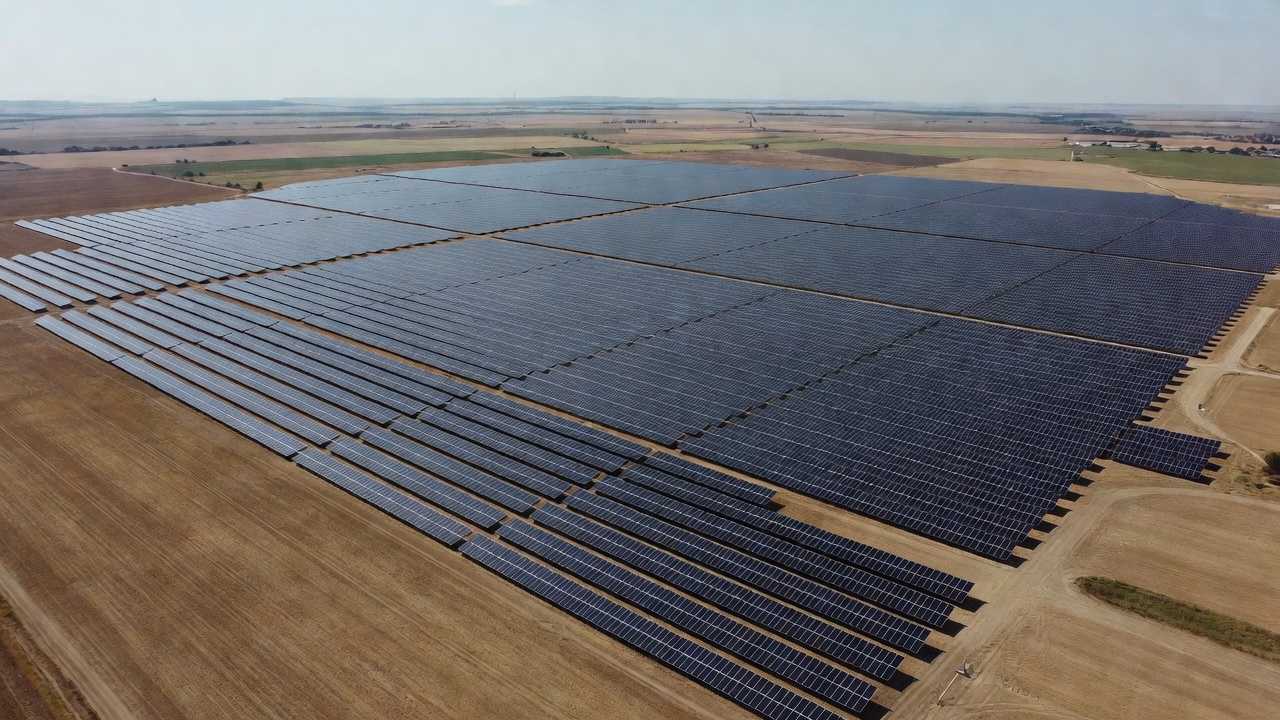
AGCO has finished building and commissioning Project Olmedo, a solar installation in Valladolid province, northwest Spain, whose output is expected, once grid delivery begins, to cover about 150 gigawatt-hours (GWh) a year for the farm-equipment maker under a 10-year agreement. The headline number hides a quieter fact: AGCO will not take delivery of those electrons at a factory, because a virtual power purchase agreement is a financial contract, not a power line. For sustainability professionals and engineers, the project is a live test of what a corporate buyer actually gets from "additionality" (funding new generation rather than buying existing supply).
What's New
AGCO (NYSE: AGCO), the agricultural machinery and precision-ag company behind the Fendt, Massey Ferguson, PTx and Valtra brands, marked a construction milestone at Project Olmedo in November 2026, according to its press release dated November 19. The ribbon-cutting at the site was attended by BRUC leaders and by two local mayors: Jose Emilio Escudero Garcia of Bocigas and Ursino Vara Perez of Almenara de Adaja.
Olmedo is not a single plant but two solar projects, Los Silos and El Granero. Together they cover about 300 hectares (741 acres) and carry roughly 150,000 solar panels. BRUC, described in the release as "one of the largest renewable energy groups in Spain," built the installation. Schneider Electric provided technical advisory support to AGCO.
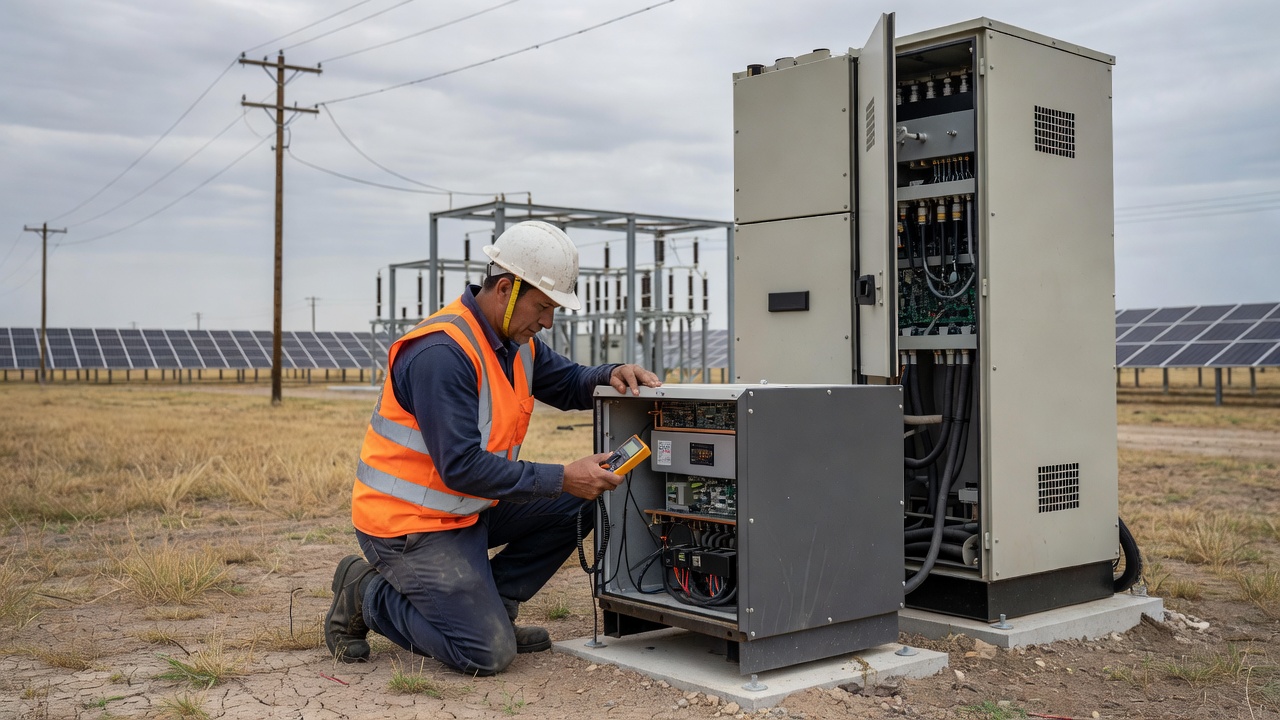
Construction and commissioning are complete, but power is not yet flowing to the grid. Delivery is "expected in the coming months, pending final regulatory approvals," per AGCO.
- Sites: Los Silos and El Granero, Valladolid province
- Footprint: about 300 hectares (741 acres), about 150,000 panels
- Builder and counterparty: BRUC
- Status: constructed and commissioned, awaiting final regulatory approvals for grid delivery
How It Works
The commercial backbone is a 10-year virtual power purchase agreement (VPPA, a contract that lets a company support new renewable projects without taking direct delivery of the electricity) between AGCO and BRUC, announced in September 2025. According to the release, it is AGCO's first such agreement, and it targets Scope 2 emissions, the emissions tied to purchased electricity, in the company's Europe/Middle East region.
AGCO's pitch rests on additionality (the principle that a purchase causes new generation capacity to exist, rather than reshuffling ownership of existing output). Roger Batkin, AGCO's Senior Vice President for Corporate Affairs and General Counsel, put it this way in the release: "Additionality is what makes this agreement truly meaningful... We did not simply buy renewable electricity that already existed; we supported the construction of a brand-new renewable solar project." He added that the work "required over two years of involvement from many teams, functions, and areas of expertise across AGCO, along with technical advisory support from Schneider Electric and a strong partnership with BRUC."
Accounting rules give the distinction weight. According to the GHG Protocol (the widely used corporate emissions accounting standard), its Scope 2 Guidance sets quality criteria that contractual instruments must meet to count as a reliable data source under the market-based method.
The Economics
AGCO's share of the installation's annual production is expected to be approximately 150 GWh, which AGCO says equals the yearly consumption of about 40,000 European households, based on Eurostat data.
The financial logic is stability. Tim Millwood, AGCO's Senior Vice President and Chief Supply Chain Officer, said: "Project Olmedo will give AGCO long-term price certainty for the majority of the electricity certificate cost in Europe... In volatile energy markets, securing that stability for 10 years strengthens the resilience of our supply chain while supporting new renewable generation."
That sentence raises more questions than it answers. The release does not define the "electricity certificate cost" being hedged. Nor does it say what share of AGCO's European electricity footprint the 150 GWh covers. Those terms decide how much volatility AGCO has actually removed.
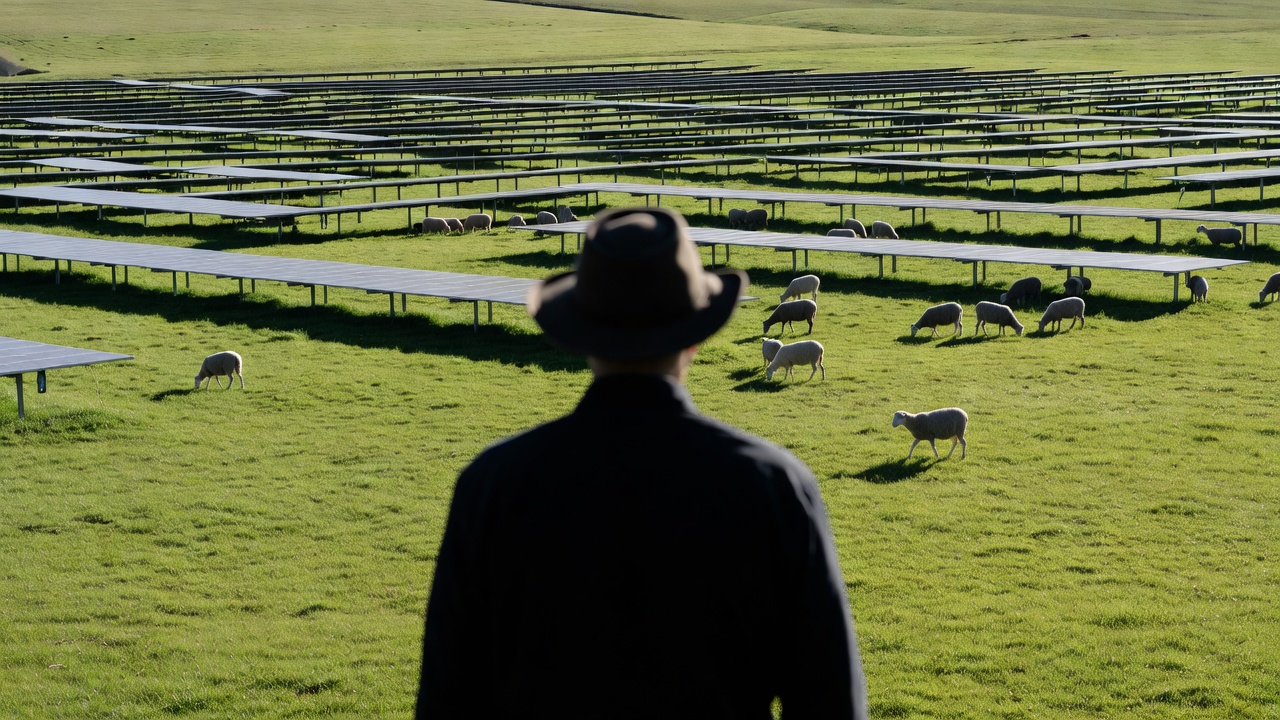
One physical detail is clear from the release. The land is leased from local farmers, who can keep livestock grazing among the panels, and grazing replaces mechanical vegetation maintenance.
Competitive Landscape
No directly comparable commercial peers were publicly identifiable at publication time for this specific deal. Every source reviewed was a re-post of AGCO's own release, and none compared the agreement with other manufacturers' VPPAs or with benchmark prices. A ranking would require disclosures not yet released.
What the record does support is context on the two parties. BRUC is the builder and the counterparty, a partner rather than a rival. AGCO has committed to a 55% absolute reduction in Scope 1 and 2 emissions (direct emissions from company-owned sources plus emissions from purchased electricity) by 2033, against a 2022 baseline. Corporate buyers of this kind sit in a wider ecosystem: according to its own materials, RE100, led by Climate Group, counts over 400 businesses across over 150 markets, all committed to 100% renewable electricity by 2050 at the latest.
Independent analyst commentary specifically on this announcement was not publicly available at publication time.
What's Next
The next milestone is operational, not ceremonial: final regulatory approvals and the start of grid delivery, which AGCO places in "the coming months." Once the plant is delivering, AGCO's roughly 150 GWh a year share is expected to run over the 10-year term and count toward the 2033 Scope 1 and 2 target.
Three things are worth watching. First, which approvals are outstanding and when they clear. Second, whether AGCO or BRUC discloses the contract structure and price. Third, how AGCO reports the resulting Scope 2 reduction against its 2022 baseline.
The most telling detail here is the sheep. A solar project sold on global climate accounting ends up leased from local farmers and mown by livestock, which suits a company that sells tractors. The unanswered question is the price, and until AGCO or BRUC discloses it, the strongest claim in the release is the one about construction, not savings.
For a procurement lead at a European manufacturer weighing a similar deal, the practical takeaway is the checklist. A 10-year term, a new-build project and a quantified volume (here about 150 GWh a year) are the headline terms. Strike price, shape (pay-as-produced or baseload) and the certificate-cost definition determine whether the contract is a hedge or a gamble, and Olmedo's public record does not yet answer them.
-- Aria Lin, Enterprise Technology Analyst
Sources: AGCO Corporation SEC filing · Google · AGCO Corporation press release (Nov 19, 2026)