Geely Xingyuan Sets Record as Plugins Reach 27% of August Car SalesGeely Xingyuan Sets Record as Plugins Reach 27% of August Car SalesGeely Xingyuan Sets Record as Plugins Reach 27% of August Car SalesGeely Xingyuan Sets Record as Plugins Reach 27% of August Car Sales
October 5, 2026
Global plugin vehicle registrations rose 5% year over year to about 1.8 million units in August 2026, a 27% share of all new-car sales, according to CleanTechnica's monthly global EV sales report. The headline hides the real change.
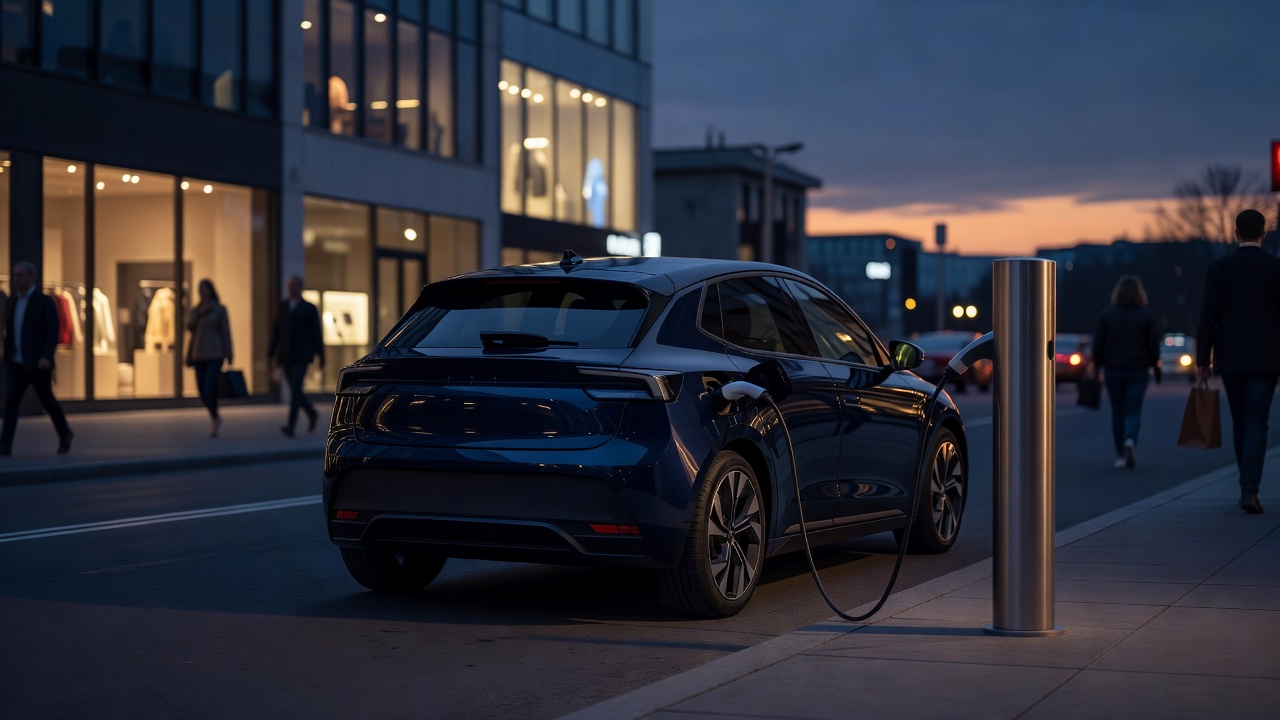
Global plugin vehicle registrations rose 5% year over year to about 1.8 million units in August 2026, a 27% share of all new-car sales, according to CleanTechnica's monthly global EV sales report. The headline hides the real change. The second-best-selling plugin model on the planet was not a flagship or a pickup. It was the Geely Xingyuan, which set a record 52,058 units, with exports to Brazil, Thailand, Indonesia and Australia adding to the total. For engineers and climate-tech investors, that matters because the Tesla Model Y, still #1, saw deliveries fall 12% while models built in China sell in volume well beyond China's borders.
What's New
The August split shows battery-electric vehicles pulling away from plug-in hybrids. BEVs (battery-electric vehicles, which run only on a battery) grew 13% year over year. PHEVs (plug-in hybrids, which pair a battery with a combustion engine) fell 12%. BEVs made up 73% of August plugin sales, roughly 1.3 million units, which the report calls "one of the best results of the past few years."
Year to date, plugin registrations are up 4%. BEVs are up 12% to about 9.2 million units, a 71% share of plugin sales, while PHEVs are down 11%. That 71% is the best BEV share since 2022, when it reached 72%.
At the model level, the Tesla Model Y was #1 for the month, though its deliveries fell 12% year over year. The Geely Xingyuan took #2 at a record 52,058 units, and the BYD Song was #3 with 48,944 registrations, up 21%.
The model ranking counts BEVs and PHEVs together, so a plug-in hybrid such as the Toyota RAV4 PHEV competes in the same table as pure battery cars.
A note on terms: the report uses both registrations (cars formally recorded as sold to an owner) and deliveries (cars handed to customers), so the figures are best read as direction rather than exact counts.
How It Works
The 27% figure covers BEVs and PHEVs together: BEVs were 20% of all global car sales in August, so PHEVs made up the remaining 7 percentage points. In other words, a little more than one in four new cars sold worldwide that month could be plugged in. That leaves roughly half a million PHEVs in August, the difference between the 1.8 million total and the roughly 1.3 million BEVs.
Year to date, BEVs hold 17% of global car sales and PHEVs 7%, for an EV share of 24%. Adding the 15% held by HEVs (conventional hybrids that cannot be plugged in) gives 39% for "some kind of electrification."
Within the plugin pool, the mix is tilting. The year-to-date split is 71% BEV to 29% PHEV. The report says a 75% BEV share by year end is "probably not" going to happen, and that it would be the best result since 2012.
Share matters because it measures direction, not just volume: plugin registrations grew only 5% in August, but BEVs grew 13% while PHEVs shrank 12%, so BEVs are doing all the growth.
The Economics
Demand outside China and the USA is growing quickly. In that group, EVs were up 53% year over year and BEVs up 62%, though the report labels both figures as July, so treat the timing with caution.
Exports are visible across the model data. The Xingyuan's export highlights were Brazil 5,804, Thailand 1,770, Indonesia 1,595 and Australia 1,279, while the BYD Song's were Brazil 6,724, Italy 1,477 and Germany 1,466.
BYD's Seagull hit about 31,000 registrations, a year-best. Brazil took 8,299, close to China's 10,103, and Indonesia took 5,560, so China accounts for only about a third of the total. The Dolphin logged 28,388, its best month since December 2023, including 6,740 in Brazil and 1,202 in South Korea. Brazil appears in the export breakdown of all four of these models, and those four Brazil figures alone add up to 27,567 units in the month.
That spread matters for risk. A model that sells in China, Brazil and Indonesia, as the Seagull does, is less exposed to one market's policy or demand swing than a model sold mainly at home. The numbers also carry a caution: the report gives export highlights, not full country totals, so they show where models are landing rather than the size of each market.
Competitive Landscape
Year to date, the Model Y has twice as many units as the new runner-up, the BYD Song, but the gap below that is tight: the Geely Xingyuan is only about 3,500 units behind the Song. The Xingyuan beat the Song by 3,114 units in August (52,058 against 48,944), yet the Song is still ahead year to date, so the two are closely matched.
Further down, the BYD Seagull (about 31,000) and Dolphin (28,388) rank above the BYD Fang Cheng Bao Ti 7, which was #9 with close to 24,000, a new year-best. The Wuling Bingo "Pro" reached about 15,000, that nameplate's best in 15 months, while the Chery QQ3 EV, at 12,579, fell outside the top 20.
Among EVs not made in China, Tesla holds #1 and #2. The Model 3 is down 16% year to date and the Model Y is up 14%, with the German plant offsetting US weakness. The Toyota bZ4X is #3 with sales and production up 116% year over year. The report gives no absolute unit figure for the bZ4X or for the Model Y, so for those two the percentages are all there is to compare.
The Toyota RAV4 PHEV was #19 in the plugin ranking with close to 14,000 units, almost double the previous generation's peak, and the report says the RAV4 ranks 5th overall across all powertrains in August.

Independent analyst commentary specifically on this data was not publicly available at publication time.
What's Next
The report makes specific bets for the rest of the year. The Song holds #2 year to date, the Xingyuan stays #3 (it trails the Song by about 3,500 units) and the Model 3 finishes #4. Those are forecasts, not results.
The BEV share is the other number to watch: August's 73% sits above the 71% year-to-date figure, so if monthly shares hold near that level the year-to-date number should drift up, even if 75% stays out of reach.
Electric pickups remain a thin niche. The Toyota Hilux EV delivered 1,038 units globally, and the BYD Shark averages about 3,500 registrations a month, which the report calls "the only decent seller" among electric pickups.
For an investor tracking the EV makers, the useful read is where volume is moving. BYD's Song grew 21%, the Seagull had a year-best month, the Dolphin its best since December 2023 and Geely's Xingyuan set a record, while Tesla's Model Y deliveries fell 12% and PHEVs fell 12% as a group. One month is a data point, not a trend. The most telling detail is that the world's #2 plugin model is a Geely nameplate selling into Brazil, Thailand, Indonesia and Australia, while the PHEV is the segment shrinking. The 75% BEV mark may stay out of reach this year, but the direction of travel is already visible.
-- Aria Lin, Enterprise Technology Analyst
Sources: SEC · Congress · CleanTechnica