Sulfur-Based MOF Makes Hydrogen From Water Using Light, No Added Metal CatalystSulfur-Based MOF Makes Hydrogen From Water Using Light, No Added Metal CatalystSulfur-Based MOF Makes Hydrogen From Water Using Light, No Added Metal CatalystSulfur-Based MOF Makes Hydrogen From Water Using Light, No Added Metal Catalyst
October 6, 2026
Oregon State University chemists have built a sulfur-based metal organic framework, BVR-19, that uses light to make hydrogen from water without an added expensive metal catalyst. The work targets a cost gap: green hydrogen runs about $5 per kilogram, while hydrogen from
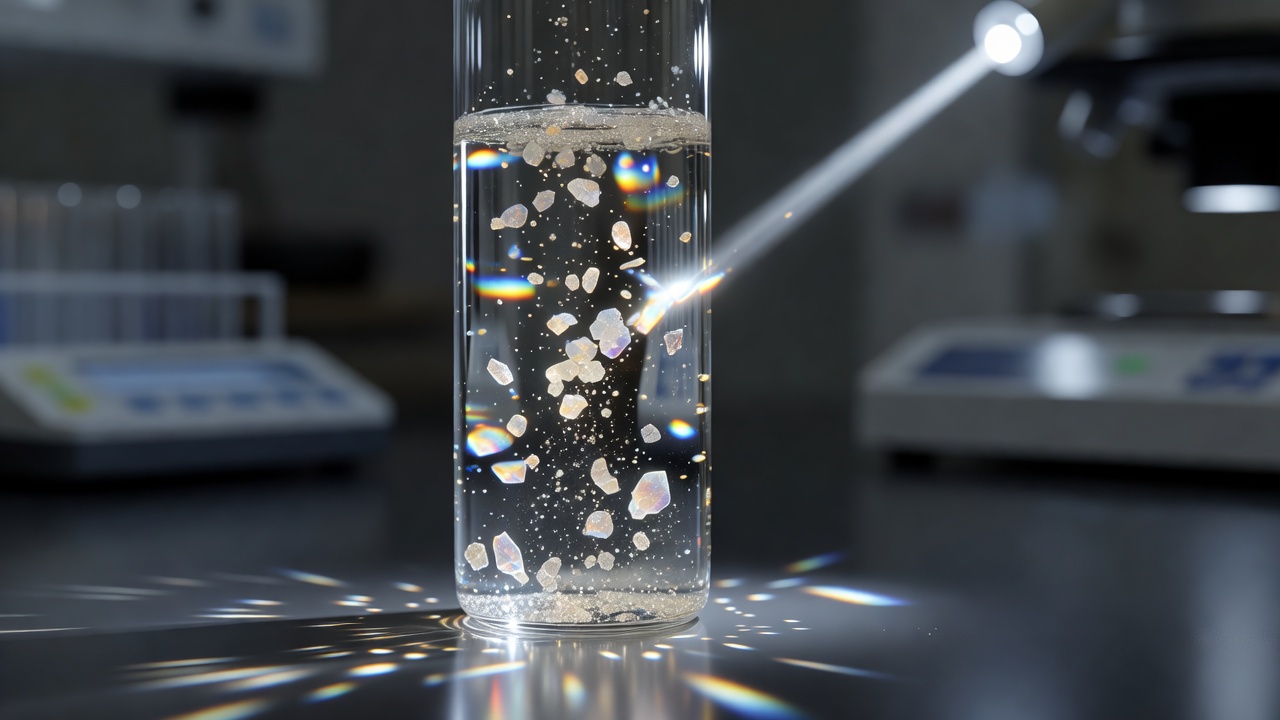
Oregon State University chemists have built a sulfur-based metal organic framework, BVR-19, that uses light to make hydrogen from water without an added expensive metal catalyst. The work targets a cost gap: green hydrogen runs about $5 per kilogram, while hydrogen from methane-steam reforming costs about $1.50. The headline material matters less than where the light-harvesting happens. In BVR-19 the sulfur-containing organic linkers do that job, not the metal atoms most photocatalyst designs lean on. The team swapped the metal while keeping the rest of the framework essentially the same, and that experiment produced design rules. For scale, chemists have synthesized nearly 100,000 MOFs and predicted roughly 500,000 more that have not been made.
What the Researchers Found
BVR-19 is a metal organic framework (MOF: a crystalline, porous material built from positively charged metal ions held in place by organic "linker" molecules). It was developed in the Materials Discovery Laboratory, known as the MaD Lab, at Oregon State University's College of Science, directed by Kyriakos Stylianou. It works as a photocatalyst (a material that speeds up a reaction and is activated by light, reaching a higher energy state after absorbing it). Here the reaction is making hydrogen from water.
The chemistry is unusual. BVR-19 contains a disulfide (S–S) bond (a link between two sulfur atoms) that temporarily breaks under light and produces highly reactive sulfur species. The sulfur-containing organic linkers capture the light and shuttle electrons toward hydrogen production. Stylianou, who led the study, put it this way:
"The organic component does the important work. Instead of relying primarily on the metal atoms, our material uses its sulfur-containing organic building blocks to capture light energy and move electrons where they are needed to produce hydrogen. This represents a different way of thinking about how these materials should be designed."
According to Stylianou, BVR-19 also does not require an additional expensive metal catalyst. It forms spontaneously in aqueous solutions at room temperature.
The Methodology
The study centers on one material, BVR-19, and one comparison. The team changed the metal in the framework while leaving the rest of the structure essentially the same, then compared how the variants performed. Some versions worked much better than others, and the team says the comparison showed why. The work was published in the Journal of the American Chemical Society (JACS).
Stylianou's MaD Lab members on the work include Emmanuel Musa, Dylan Pyle, Jacob Lessard, Andrzej Gladysiak, Ankit Yadav, Silas Blessed and Prayash Mohanty. Other OSU co-authors are Logan Lancaster, Taylor Krueger, Min Soo Jung, Galen Fritz, Jacob Hirschi, Hongliang Huang, William Stickle, Xiulei "David" Ji, Chong Fang and Tim Zuehlsdorff.
| Parameter | Source-stated value |
|---|---|
| Material | BVR-19, a sulfur-based metal organic framework |
| Venue | Journal of the American Chemical Society |
| Lead | Kyriakos Stylianou, Oregon State University |
| Funders | Murdock Charitable Trust, National Science Foundation, OSU College of Science |
| Synthesis conditions | Spontaneous formation in aqueous solution at room temperature |
| Metal-variation approach | Metal swapped, rest of framework essentially the same |
| Coverage date | October 4, 2026 (the paper's own date is not stated) |
Why It Matters
Hydrogen is used for vehicle fuel cells, ammonia production, metal refining and plastics manufacturing. The dominant way to make it is methane-steam reforming, which uses natural gas and releases carbon dioxide. Hydrogen made that way costs about $1.50 per kilogram. Green hydrogen costs roughly $5 per kilogram. By the editor's arithmetic, from those two figures alone, green hydrogen is about 3.3 times the reforming price, a gap of about $3.50 per kilogram.
Stylianou frames the study as a route to narrowing that gap:
"Our work provides a blueprint for designing better materials that can bring down the cost of green hydrogen. By changing the metal while keeping the rest of the material essentially the same, we discovered why some versions of the MOF work much better than others. These findings provide new design rules for creating more effective materials for solar fuel production."
He also says the findings could give researchers another tool for reducing greenhouse gas emissions and addressing climate change. The contribution is a design principle, not a finished product: if the organic linkers carry the light-harvesting load, chemists can tune the linkers and treat the metal as a separate variable.
That fits how the field's most recent honors describe MOFs. Announcing the 2025 Nobel Prize in Chemistry for the development of metal-organic frameworks, Heiner Linke, Chair of the Nobel Committee for Chemistry, said: "Metal-organic frameworks have enormous potential, bringing previously unforeseen opportunities for custom-made materials with new functions." BVR-19 is one such custom-made function, tested at laboratory scale.
Competitive Landscape
No directly comparable commercial peers were publicly identifiable at publication time in light-driven MOF hydrogen production. Adjacent activity in other hydrogen routes suggests the broader space is active, but a direct ranking of BVR-19 against rivals would require disclosures not yet released. The source names no competing photocatalysts and gives no benchmark figures.
The useful comparison is against the routes already producing hydrogen:
- Methane-steam reforming (incumbent, about $1.50/kg): uses high-temperature steam, 700 to 1,000 degrees C, per the U.S. Department of Energy, and accounts for 95% of U.S. hydrogen production.
- Electrolysis (water-splitting with electricity): the source says its environmental benefit depends heavily on where the electricity comes from, and it needs low-cost renewable power to compete. Green hydrogen sits near $5/kg.
- Photocatalysis (BVR-19's route): light drives the reaction directly. According to Stylianou, BVR-19 does not require an additional expensive metal catalyst.
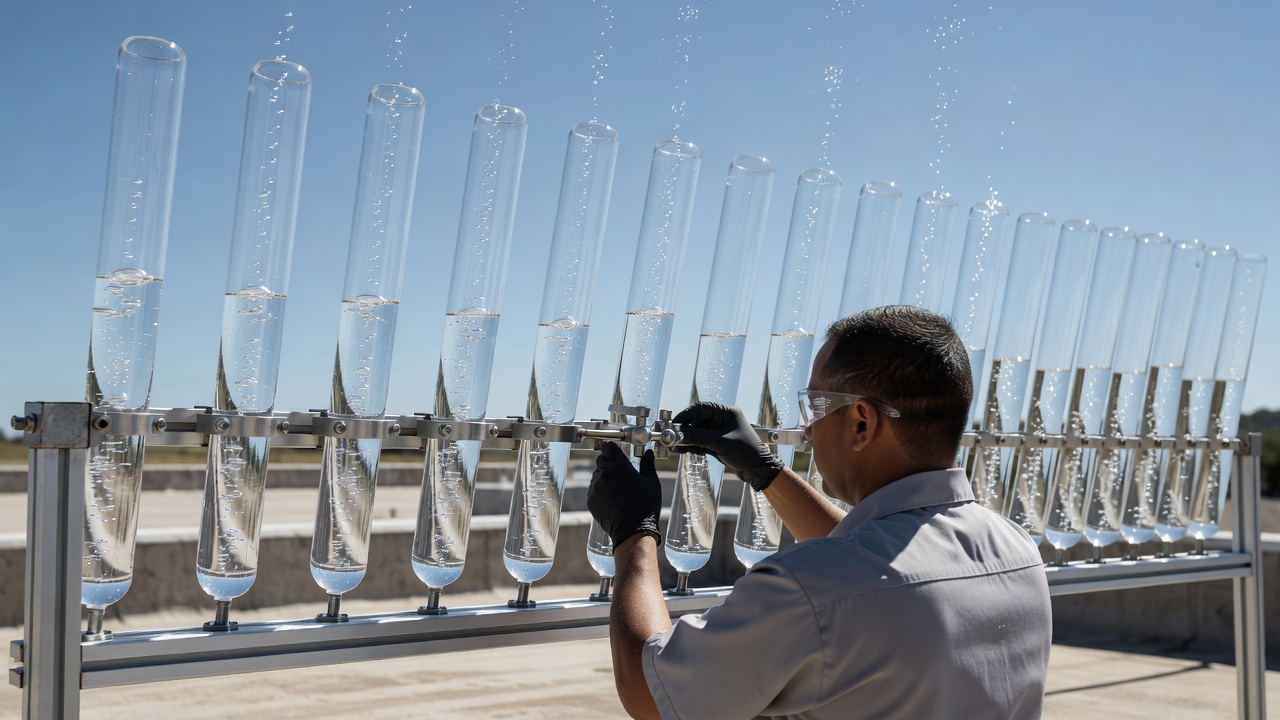
A related DOE pathway, photoelectrochemical water splitting, is described by the agency as "a promising solar-to-hydrogen pathway, offering the potential for high conversion efficiency at low operating temperatures using cost-effective thin-film and/or particle semiconductor materials." DOE also says efficiency, durability and cost must still improve for that pathway to reach market viability, a bar BVR-19 has not yet been shown to clear.
Independent analyst commentary specifically on this announcement was not publicly available at publication time.
Limitations and Caveats
The source gives no efficiency, hydrogen yield, production rate, quantum yield, durability or wavelength figures. "Quickly and efficiently" is a qualitative description with no number behind it. Only one MOF, BVR-19, was studied, and the metal-swap comparison is the only stated experimental variable.
Several details that bear on the "from water" claim are missing. The source does not say whether a sacrificial electron donor (a chemical consumed to supply electrons) was needed, or whether the water was pure or a buffered solution. It also gives no data on stability or reusability over repeated cycles. It offers no scale-up or cost analysis for BVR-19 itself, so any cost reduction is a stated aspiration, not a demonstrated result. The 3.3x gap is derived arithmetic from two cost figures, not a claim by the researchers.
Finally, the quotes and details here come from an Oregon State University press release, not from the paper. The paper's own publication date is not stated, and the release was covered on October 4, 2026. No outside group has validated the results in the material reviewed.
What Comes Next
Stylianou's design rules point to two plausible paths: testing more metal variants of the BVR-19 framework, and applying the organic-centered principle to the large pool of predicted MOFs, about 500,000 that have not been made. The synthesis route helps, since BVR-19 assembles in water at room temperature.
To move beyond a design principle, the work would need to show quantified efficiency and hydrogen yield, durability over repeated cycles, whether a sacrificial donor is required, and a comparison against benchmark photocatalysts. A cost-per-kilogram analysis would be needed to test the claim that this approach can narrow the $5 versus $1.50 gap. The source gives no timeline, scale-up plan or commercialization path. The lead worth following is the organic component: if sulfur-based linkers can be tuned independently of the metal, screening becomes a more tractable problem.
For a materials chemist screening photocatalysts, the practical takeaway is a change in what to vary. Of the roughly 500,000 predicted MOFs, the ones with sulfur-containing linkers that can be made at room temperature in water are the obvious first filter. The metal becomes a second-round variable, and a co-catalyst loading step drops off the experimental list. That narrows the search, though only measured yield and durability will show whether the narrowed list contains winners.
The most telling detail here is what the paper did not make the hero. For years the metal has been the star of these frameworks, and the quiet sulfur in the linkers turns out to carry the light. A $3.50-per-kilogram gap will not close on a design principle alone, but redirecting attention to the overlooked half of the crystal is how many materials stories begin.
-- Zara Velez, Emerging Technology Editor
Sources: U.S. Department of Energy · Osti · relayed via ScienceDaily