SpaceX Launches 21 Northrop Grumman Data Satellites for Space Development AgencySpaceX Launches 21 Northrop Grumman Data Satellites for Space Development AgencySpaceX Launches 21 Northrop Grumman Data Satellites for Space Development AgencySpaceX Launches 21 Northrop Grumman Data Satellites for Space Development Agency
October 12, 2026
SpaceX launched a Falcon 9 from Vandenberg Space Force Base at 12:39 a.m. PDT (3:39 a.m.
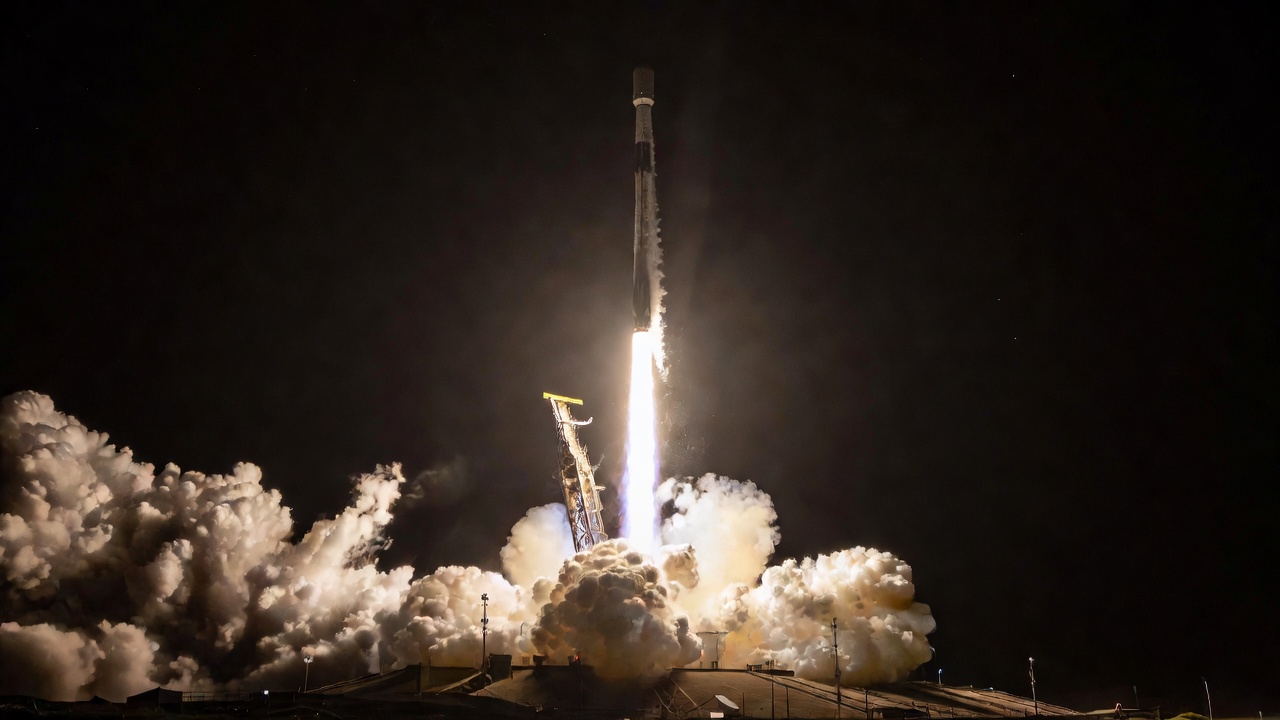
SpaceX launched a Falcon 9 from Vandenberg Space Force Base at 12:39 a.m. PDT (3:39 a.m. EDT, 0739 UTC) on Saturday, Oct. 10, 2026, carrying 21 Northrop Grumman-built data satellites for the Space Development Agency (SDA). The flight came five days after an automatic abort with 58 seconds left on the countdown. The rocket is the routine part of this story: booster B1103 flew for the sixth time and landed for the 668th Falcon booster landing. The hard part is the network the payload joins, a mesh meant to deliver data to warfighters "nearly instantaneously." For aerospace professionals, the mission shows how fast a proliferated military constellation (many small satellites rather than a few large ones) can grow once the launch pad cooperates.
What Happened
The mission, designated T1TL-A (Tranche 1 Transport Layer, mission A), lifted off from Space Launch Complex 4E at Vandenberg, which is described as SpaceX's only West Coast launch facility. The satellites had been delivered to the base on Sept. 28, twelve days before liftoff.
The first attempt, on Monday, Oct. 5, ended when the vehicle auto-aborted (the launch computers halted the countdown on their own) with 58 seconds left. SpaceX attributed the hold to "some off-nominal data on Stage Two," the rocket's upper stage. The root cause and the fix have not been disclosed, so it is not known what was changed before the second try.
SpaceX launch commentator Atticus Vadera said the extra days were used for checks: "Additional time throughout the week allowed for double checks on vehicle systems and range deconfliction." Range deconfliction means making sure the launch window does not collide with other activity on the shared Vandenberg range.
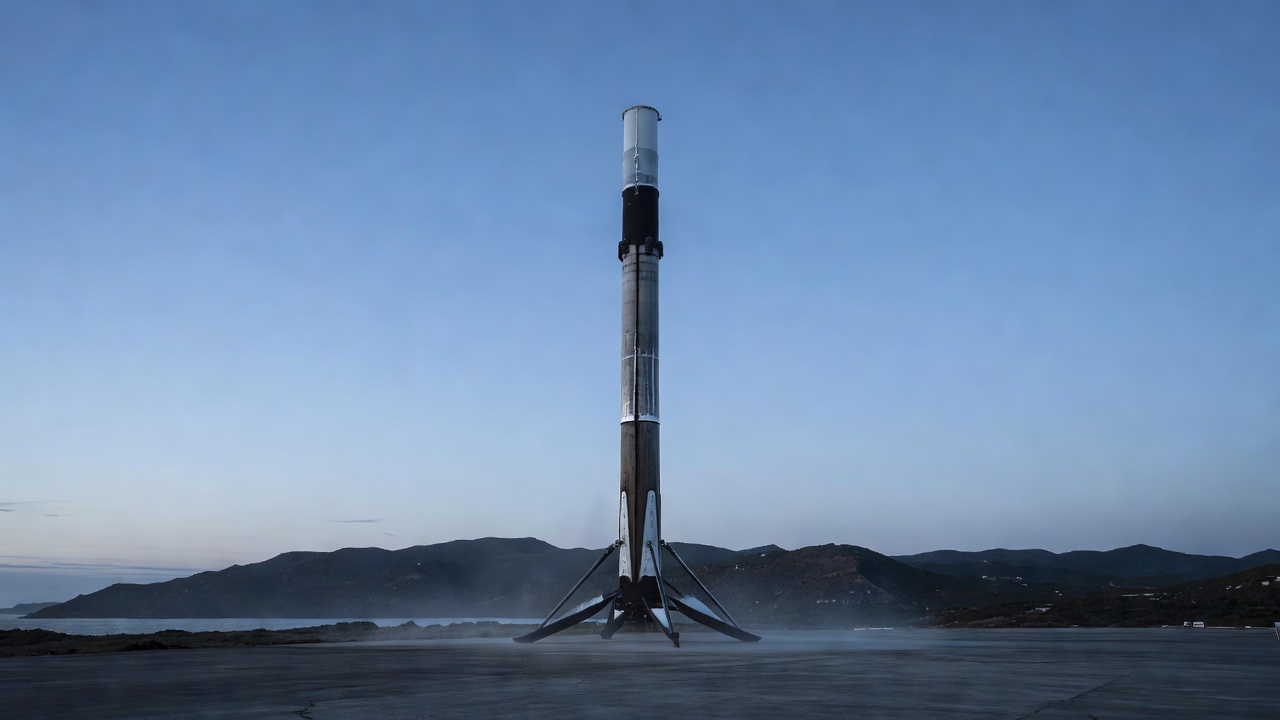
B1103 landed at Landing Zone 4 about 7.5 minutes after liftoff. It was the 37th landing at that site. The booster's earlier flights were SDA T1TL-E, NROL-179 and three Starlink batches, so this single first stage has now carried military data satellites, a national security payload and commercial internet satellites.
The Science Behind It
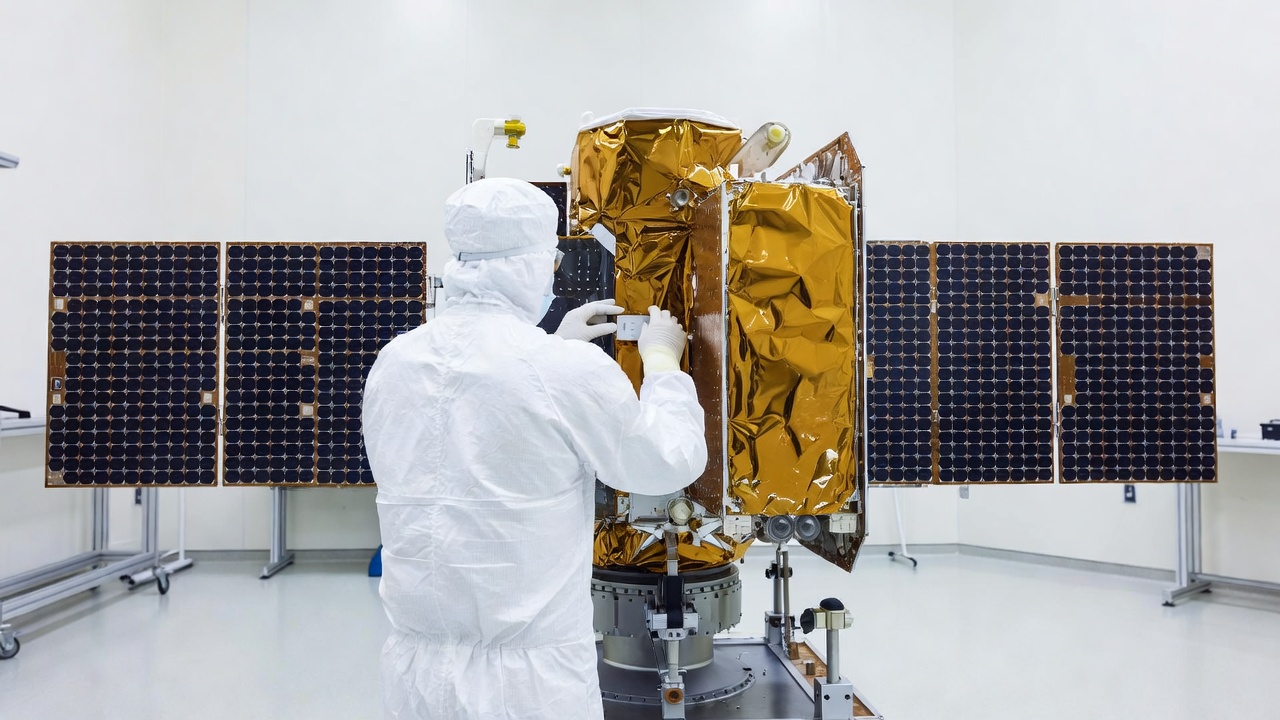
The 21 satellites belong to the SDA's Transport Layer (a data-relay network in low Earth orbit that moves information between sensors and users). The planned full layer is 300 to 500 satellites at altitudes of 750 km to 1,200 km. The SDA says 95 percent of the globe will be in view of at least two T1TL satellites at any time, which is what lets data hop across the network instead of waiting for a single ground station.
The satellites link to one another with Optical Inter-Satellite Links, or OISLs (laser connections between spacecraft rather than radio beams). The SDA states that OISLs have "significantly increased performance over existing radio frequency crosslinks" and that "LEO orbits in conjunction with OISLs will reduce path loss issues but more importantly offer much lower latencies, which are deemed critical to prosecute time sensitive targets in today's wartime environment." Latency here means the delay between a sensor seeing something and a user receiving the data.
The satellites are also designed to integrate with Link-16 and the Integrated Broadcast System, or IBS, two existing military data networks that carry tactical and threat information to aircraft, ships and ground units. The SDA says this will provide "timely threat warnings and situational awareness information." The available information does not say whether the T1TL-A satellites have deployed or made contact, nor what orbit and inclination they reached.
Why This Mission Matters
T1TL-A is the fourth SDA mission carrying production satellites. The three earlier launches put 63 satellites in orbit, a figure inferred as 3 x 21 and not stated outright. Tranche 1 (the first production batch of the constellation) will total 126 Transport Layer satellites, 28 Tracking Layer satellites (spacecraft that follow missile threats) and 4 missile defense demonstration spacecraft. The SDA expects operational capability for Tranche 1 "beginning in 2027."

GP Sandhoo, SDA Director and Space Force Portfolio Acquisition Executive for Missile Warning and Tracking, spoke after the T1TL-E launch. "In close coordination with Space Systems Command (SSC) and Space Launch Delta 30, the deployment of Tranche 1's proliferated capability will soon deliver continuous overwatch-neutralizing any first-mover advantage by delivering data to warfighters around the world, nearly instantaneously," he said.
Col. Ryan Hiserote, the Space Systems Command division chief for Assured Access to Space, has said, in a paraphrase and not a verbatim quote, that the initial T1TL missions could be launched in any order. That flexibility shows in the record: T1TL-E, whose booster B1103 later flew T1TL-A, launched before T1TL-A, so the launches have not followed the lettering of the mission names.
Competitive Landscape
The Transport Layer is deliberately spread across vendors. The brief names three satellite builders for Tranche 1:
- Northrop Grumman: builder of the 21 T1TL-A satellites.
- York Space Systems: builder for T1TL-B and T1TL-E.
- Lockheed Martin: builder for T1TL-C.
On the launch side, T1TL-A is one of 23 missions awarded to SpaceX under National Security Space Launch Phase 2 (the program through which the Space Force buys launches for sensitive government payloads), which was awarded in August 2020 and is managed by Space Systems Command. The reuse record is the visible edge: B1103 has now flown SDA, National Reconnaissance Office and Starlink missions. The available information does not compare SpaceX with other launch providers.
Independent analyst commentary specifically on this announcement was not publicly available at publication time.
What Comes Next
The remaining Tranche 1 work is the rest of the 126 Transport Layer satellites, the 28 Tracking Layer satellites and the 4 demonstration spacecraft, all aimed at operational capability beginning in 2027. Beyond Tranche 1, the full Transport Layer is planned at 300 to 500 satellites. No launch dates for the next missions, no description of T1TL-D, and no cost or schedule-risk figures are available.
Range coordination is a recurring factor. Space Launch Delta 30 operates the range at Vandenberg, and the week's deconfliction work shows how a single pad and a shared range can shape a launch date.
For defense and aerospace procurement teams, the practical metric is satellites on orbit against the 126 planned for the Transport Layer. If the earlier 63 were all Transport Layer satellites, adding 21 puts the count at 84 of 126, or two-thirds, with 42 remaining (two more 21-satellite batches). That is this article's arithmetic and not an SDA figure. Planners can track that fraction against the 2027 target, and the three-vendor build means a slip at one supplier does not necessarily hold up the whole layer.
The easy story is the rocket, a sixth-flight booster returning to a pad after 7.5 minutes. The harder one is the week it sat on the ground, because a constellation built to be launched in any order only works if the launches actually happen. This one did, and the real test arrives when the full layer has to pass a message across the world faster than a human could notice.
-- Zara Velez, Emerging Technology Editor
Sources: SEC · Teslarati · SpaceX launch coverage of the T1TL-A mission