SpaceX Falcon 9 Landing Team Wins First Neil Armstrong Space PrizeSpaceX Falcon 9 Landing Team Wins First Neil Armstrong Space PrizeSpaceX Falcon 9 Landing Team Wins First Neil Armstrong Space PrizeSpaceX Falcon 9 Landing Team Wins First Neil Armstrong Space Prize
September 17, 2026
Five SpaceX employees, standing in for the much larger team that turned rocket landings into routine operations, became the first recipients of the Neil Armstrong Space Prize on September 15, 2026, at a ceremony in Washington, D.C. The prize's own history contains the more
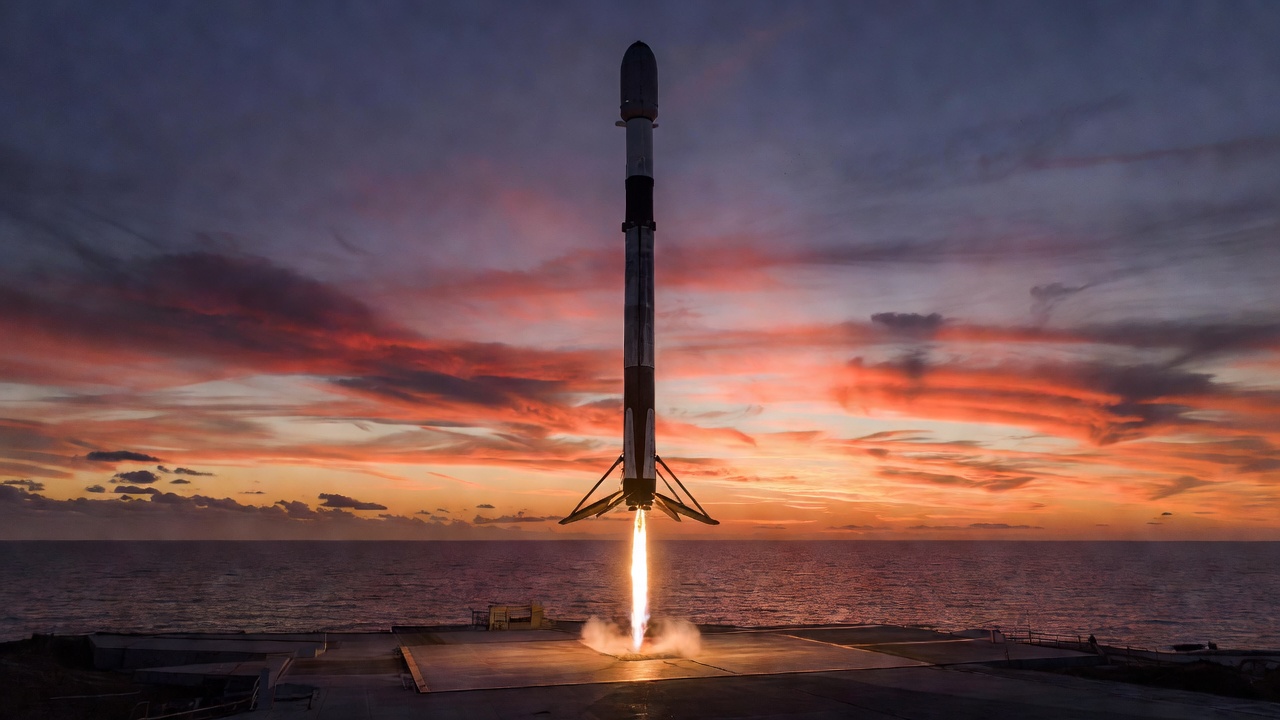
Five SpaceX employees, standing in for the much larger team that turned rocket landings into routine operations, became the first recipients of the Neil Armstrong Space Prize on September 15, 2026, at a ceremony in Washington, D.C. The prize's own history contains the more interesting number: on a simple hand calculation, engineers thought booster reuse would take about six months to work out on paper. It took three to four years to actually fly. That gap between arithmetic and hardware is now repeating itself inside SpaceX's Starship program, on a harder version of the same problem.
What Happened
Purdue University, which created and named the award, honored the Falcon 9 Booster Landing Team at a ceremony at the Cosmos Club in Washington, D.C. The five inaugural honorees are SpaceX employees who represent the wider engineering group responsible for landing the company's Falcon 9 first stages.
The university named the prize for Neil Armstrong, its most famous alumnus and the commander of Apollo 11, which launched July 16, 1969, and put the first humans on the Moon four days later. Purdue counts 30 of its graduates who have either flown in space or been selected as NASA astronaut candidates, a record the school cites as the basis for its "cradle of astronauts" identity.
Mark Lundstrom, the John A. Edwardson Dean of Purdue's College of Engineering, framed the connection directly in a statement issued the Tuesday of the ceremony: "Neil Armstrong's achievement rested on extraordinary engineering, teamwork and the courage to attempt what had never been done before." He continued: "The Falcon 9 Booster Landing Team carries that spirit forward. By making rocket reuse practical at unprecedented scale, they changed the economics of spaceflight and opened new possibilities for science, exploration and commerce. It is especially fitting that they are the first recipients of the Neil Armstrong Space Prize."
The Science Behind It

Falcon 9, SpaceX's two-stage rocket, debuted in June 2010. Its first stage was designed from the start with reuse in mind, but the engineering took years longer to mature than initial estimates suggested. The breakthrough came on December 21, 2015, when a Falcon 9 first stage completed the first-ever vertical touchdown (a controlled, engine-powered landing on solid ground rather than a parachute descent into the ocean) at what is now Cape Canaveral Space Force Station. It was the rocket's 20th flight, carrying 11 satellites to orbit for the communications company Orbcomm. A second landing mode followed on April 8, 2016, when a Falcon 9 first stage landed for the first time on a SpaceX drone ship (an uncrewed, ocean-based landing platform) in the Atlantic.
SpaceX engineer Kuwata, who joined the company in 2012, described the distance between the drawing board and the launch pad to Space.com: "On a simple hand calc, I thought, 'Oh, this would work.'" The reality proved harder. "But then the difficult part is going from this hand calculation to the reality, and there are a lot of nuances that we learned on the way," Kuwata said. "And on paper, I think it would have been done in like six months. But it took like three, four years to actually get it to work."
That multi-year gap between a plausible calculation and a working system is the throughline of the landing team's decade of work, and it is now the same gap SpaceX is trying to close again with a different vehicle.
Why This Mission Matters
The practical payoff of that engineering slog shows up in SpaceX's current flight cadence and hardware reuse figures. The company has landed boosters more than 650 times during orbital missions to date, a volume that has let individual first stages fly repeatedly rather than being discarded after a single launch. The reuse record includes:
- Six different Falcon 9 first stages that have each logged more than 30 launches and landings
- Booster 1067, the most-flown Falcon 9 first stage, which has logged 37 flights
- 165 Falcon 9 missions flown in 2025 alone, roughly half of the global launch total that year, with all 165 successful
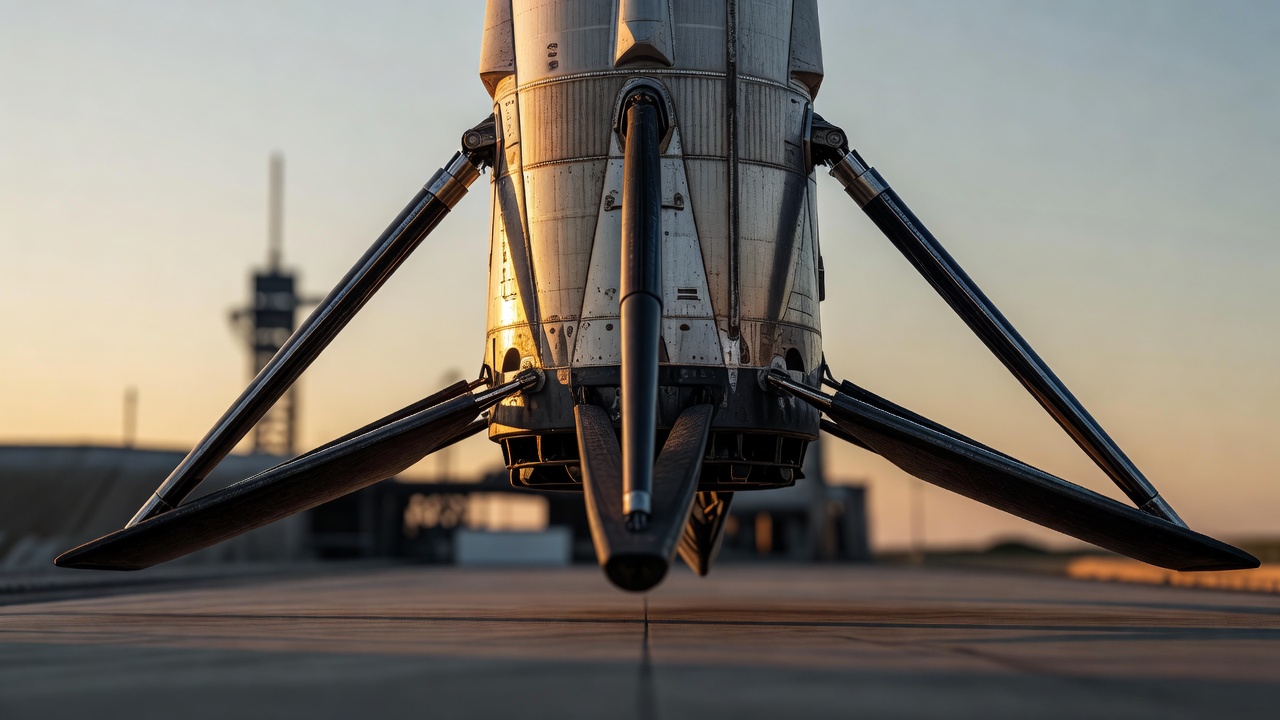
Falcon 9's upper stage, by contrast, remains expendable (built to be used once and not recovered), which is part of why the landing team's work has concentrated on the first stage: it is the part of the rocket that returns to be reflown. The scale of that reuse, hundreds of landings feeding a launch rate that now accounts for roughly half of worldwide orbital missions in a given year, is the economic case Lundstrom pointed to in crediting the team with changing "the economics of spaceflight."
Competitive Landscape
SpaceX's booster-landing lead has not gone unanswered. Velazquez, a SpaceX engineer on the landing team, addressed rival landing attempts directly in comments to Space.com: "I think this is great. I mean, we didn't start from scratch, right? If you look at a cross section of our engines and the engines from the '60s, they're all very similar. So we're all kind of cribbing from the same place. But the fact that we are able to advance the bar so that everybody else is landing first stages is just great. I think we all move forward together, and we need more entrants in the field to really have a big kind of spacefaring economy and civilization."
Independent analyst commentary specifically on this announcement was not publicly available at publication time.
What Comes Next
SpaceX's next reusability target is harder than the one being celebrated in Washington. The company's Starship program has flown 13 suborbital test flights to date, and on three of those occasions SpaceX has recovered the vehicle's Super Heavy first stage by catching it in mid-air with the "chopstick" arms of the launch tower at Starbase, its South Texas facility, rather than landing it on legs.
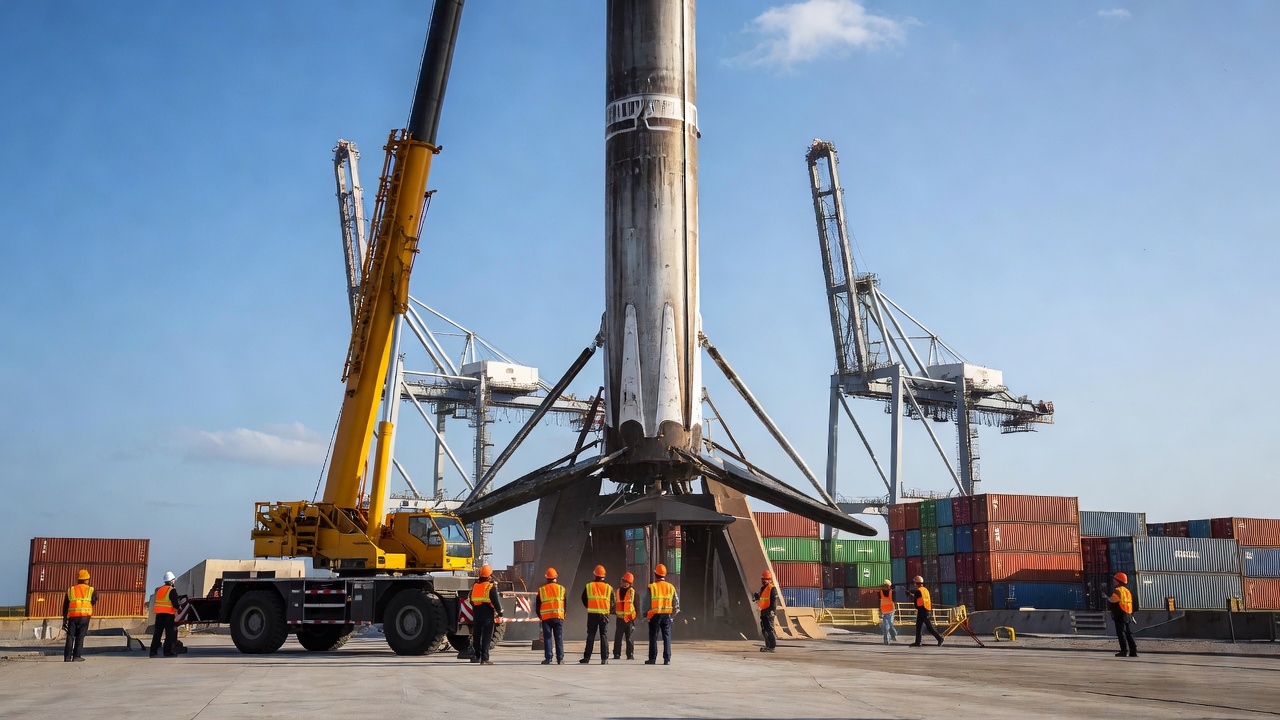
Kuwata described the next, unsolved piece of that puzzle as the upper stage, known as Ship: "The bigger step change for Starship is the stage two, Ship upper stage, reusability." He said the underlying physics looks solid but the flight record is still thin: "In Monte Carlo simulations [computer models that run thousands of randomized trial scenarios], [Ship landings] work well. And then we kind of demonstrated that pinpoint landing, precision landing, on the ocean many times. But I feel we will find out more things along the way by trying many times." Velazquez, asked about progress toward an eventual Ship catch, agreed that repetition is the deciding factor: "Yeah, the 'trying many times' I think is kind of key. And I think we're getting pretty close to catching a Ship."
The prize is named for a man who took one careful step onto untested ground. The team it honors took hundreds of them, most while trying to land a rocket on a boat, and each of the 650-plus successes was still built on the same six-month estimate that actually took years. Armstrong's own words on the Moon, "one small step for a man, one giant leap for mankind," were about a single irreversible act. Falcon 9's landing team built its giant leap out of repetition instead, and the next one, catching Ship, is still being tried "many times" at Starbase.
For engineers building on top of SpaceX's launch manifest, the practical translation is scheduling reliability rather than raw thrust numbers: a fleet where six boosters have each flown more than 30 times, and one has flown 37, means payload customers can book a slot on hardware with a multi-year flight history behind it rather than a first-flight risk premium. That is the same trust equation Ship still has to earn one landing at a time.
-- Zara Velez, Emerging Technology Editor
Sources: Space.com - Purdue University College of Engineering statement