ITESO Team Builds RoboMeshA, a Portable Robotics Lab Run From a BrowserITESO Team Builds RoboMeshA, a Portable Robotics Lab Run From a BrowserITESO Team Builds RoboMeshA, a Portable Robotics Lab Run From a BrowserITESO Team Builds RoboMeshA, a Portable Robotics Lab Run From a Browser
September 29, 2026
A group of 15 engineering students, faculty advisors and IEEE volunteers at ITESO has built two units of RoboMeshA, a portable robot that turns a classroom into a robotics and AI lab. Students only power it on, join its network and open a browser.
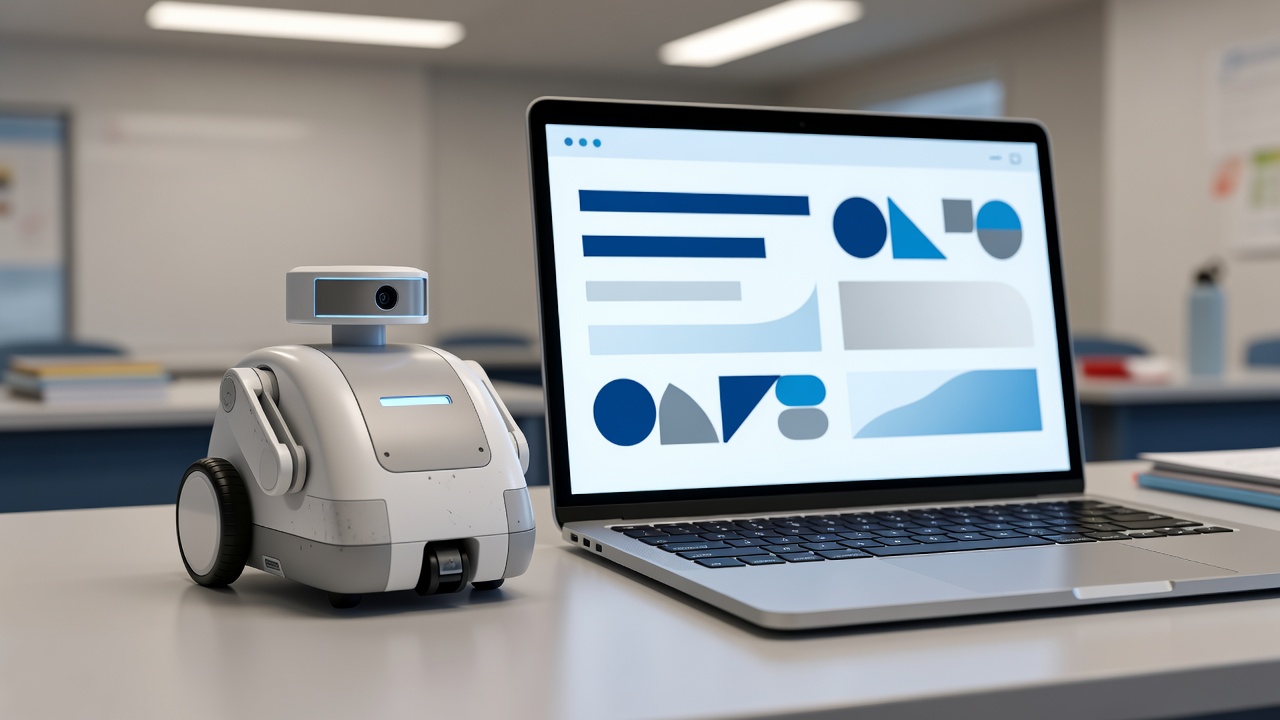
A group of 15 engineering students, faculty advisors and IEEE Guadalajara Section volunteers at ITESO, the Jesuit University of Guadalajara, has built two units of RoboMeshA, a portable robot that turns an ordinary classroom into a robotics and AI lab with no computer lab and no preinstalled software. The individual hardware components are not the interesting part. The team went after a quieter bottleneck, school IT setup, so a student only has to power the robot, join its network, and open a web browser. That matters because the project is aimed at students who lack access to specialized facilities or preinstalled software. The project was detailed in IEEE Spectrum on September 24, 2026, and it arrives with two units built and no published results.
What It Does
RoboMeshA is a portable, self-contained platform that the team describes as an "all-in-one mobile learning network." Students connect to the robot directly from a web browser. Its control modes let them drive it manually, watch it move, and see it detect and avoid obstacles.
Fernando Vidal Luna, an IEEE student member and mechatronics engineering major (a field combining mechanics, electronics, and software) at ITESO, states the purpose plainly: "RoboMeshA brings robotics and AI to students who don't have access to specialized facilities or preinstalled software." Faculty advisor Jorge A. Lizarraga describes the design goal: "The project combines mechanical design, embedded systems, control engineering, computer vision, and AI into a single robotic system that functions as a mobile learning laboratory."
Each of those five disciplines is normally a field of its own:
- Mechanical design (the chassis, mounting, and weight distribution that hold everything together)
- Embedded systems (small computers built into the robot that run its low-level functions)
- Control engineering (feedback logic that governs how the robot moves and responds)
- Computer vision (software that extracts information from images)
- AI (software that learns patterns rather than following fixed rules)
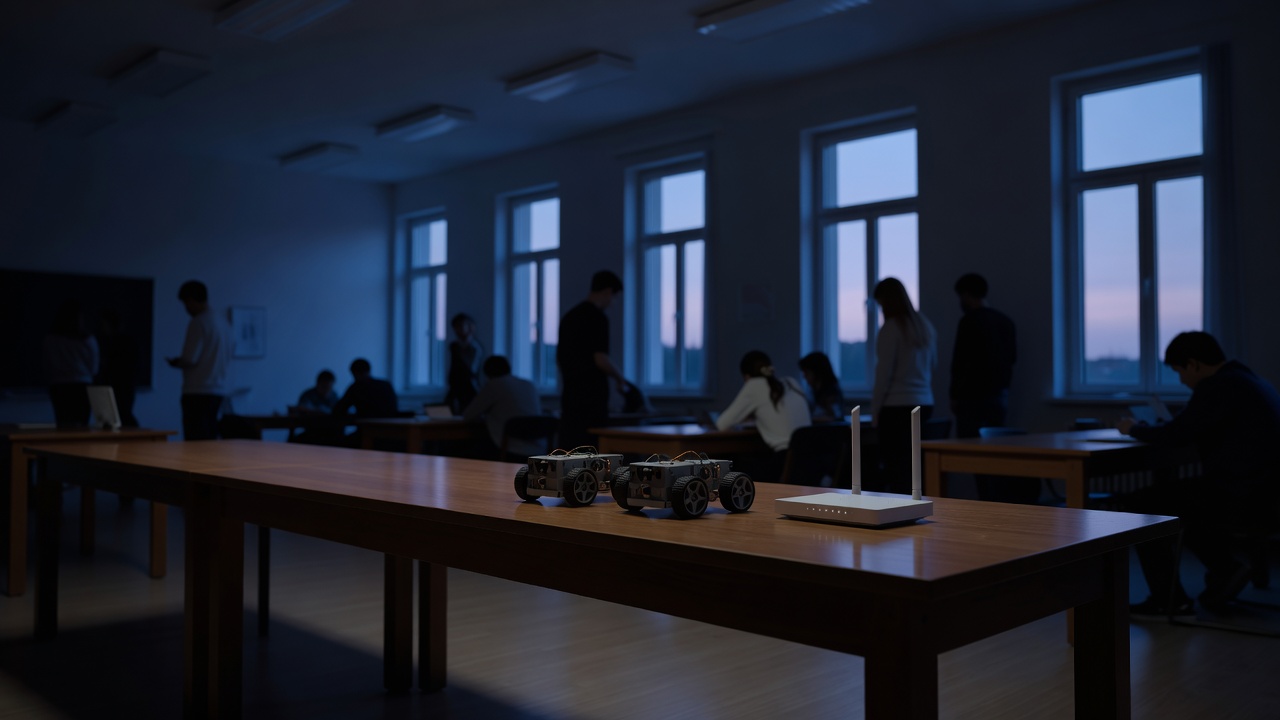
The team behind it is multidisciplinary: 15 engineering students, faculty advisors, and volunteers from the IEEE Guadalajara Section. Luis Fernando Luque-Vega, an IEEE member, is the project lead. Two units have been built so far. The work is supported by EPICS in IEEE, an initiative administered by IEEE Educational Activities and funded by the IEEE Robotics and Automation Society.
The Technical Achievement
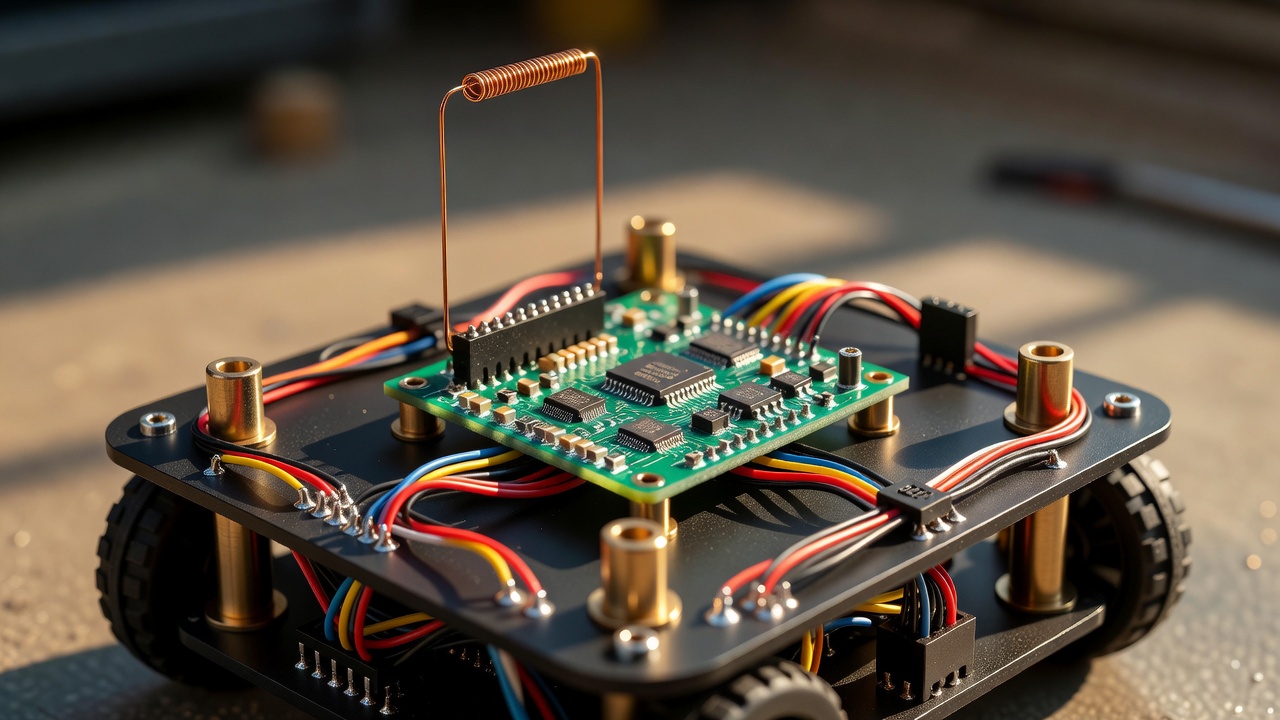
The hard part was not any single subsystem. It was making them coexist in one body. Luna says the structural design was a key challenge: "It wasn't only about making a chassis where all the components fit and the design had sufficient stability, rigidity, and weight distribution. It was also about ensuring that the electronics were protected while still being accessible for maintenance, testing, and modifications." Those goals pull against each other, since a sealed, rugged shell resists classroom abuse but makes repair and experimentation harder.
The second constraint was the user. José S. González, also a mechatronics engineering student, says it was "challenging to design a platform that could be used by students with different levels of experience." His answer was to shrink the first interaction: "We wanted the first interactions with the robot to be simple and intuitive... such that students could simply power the robot, connect to its network, and begin interacting with it, rather than having to deal with software installation, extensive configuration, or troubleshooting." González adds that the design lets students "see how all these disciplines work together in a tangible and understandable way."
On the software side, the team uses a "structured system design approach" that connects independent components while minimizing dependencies between them. That approach is what enables multi-robot operation. A modular coupling framework (the source does not explain how it works) is under development for research and classroom demonstrations, so that four RoboMeshA robots can operate together, according to the source. Only two units have been built, and no multi-robot demonstration is described. For scale, the SWARM-BOTS project, funded by the European Commission from 2001 to 2005, used small robots that could physically connect to each other.
The team's account publishes no performance figures: no battery life, unit cost, payload, sensor specifications, or latency. It also does not say whether the AI runs on the robot or over the local network.
Real-World Impact
The platform is meant to be validated in classrooms with two partner high schools, CETI Colomos and Prepa ITESO. Many of the participating ITESO students came from the university's Applied Professional Projects program. The team presented a paper and poster in May at the Engineering Congress of the Jesuit University System. The source does not state the year.
Development and handling tests took place "before its deployment," according to a photo caption in the account, which suggests classroom deployment is planned rather than complete. No classroom results, dates, or student-reach numbers have been published, so the educational impact is currently a stated aim, not a measured outcome.
González says the build changed how the team thinks: "Seeing a design move from a digital model to a physical system was invaluable. Working with students from different backgrounds taught us to listen to end users and design for their actual needs." Luque-Vega frames the wider goal: "When students realize the technology they develop can inspire others and improve lives, engineering becomes far more meaningful."
Competitive Landscape
No directly comparable commercial peers were publicly identifiable at publication time in browser-controlled, self-networked educational robotics. Adjacent activity from academic multi-robot research, such as the SWARM-BOTS project, suggests the underlying field is mature, but a direct competitive ranking of classroom platforms would require disclosures not yet released. The source names no competing products and makes no benchmark comparisons.
What the source does offer is a contrast in approach. RoboMeshA is positioned against education that depends on a dedicated lab or preinstalled software, which the team says its target students lack. As a reference point for what spec disclosure looks like elsewhere, the TurtleBot 4 lists an iRobot Create3 base (a wheeled robot platform), a Raspberry Pi 4 (a credit-card-sized computer) running ROS 2 (Robot Operating System, open-source robotics software), a LiDAR scanner (a laser-based distance sensor), and an OAK-D spatial AI stereo camera (a depth-sensing camera). RoboMeshA's compute and sensors are unpublished, so no like-for-like comparison is possible.
Independent analyst commentary specifically on this announcement was not publicly available at publication time.
What's Next
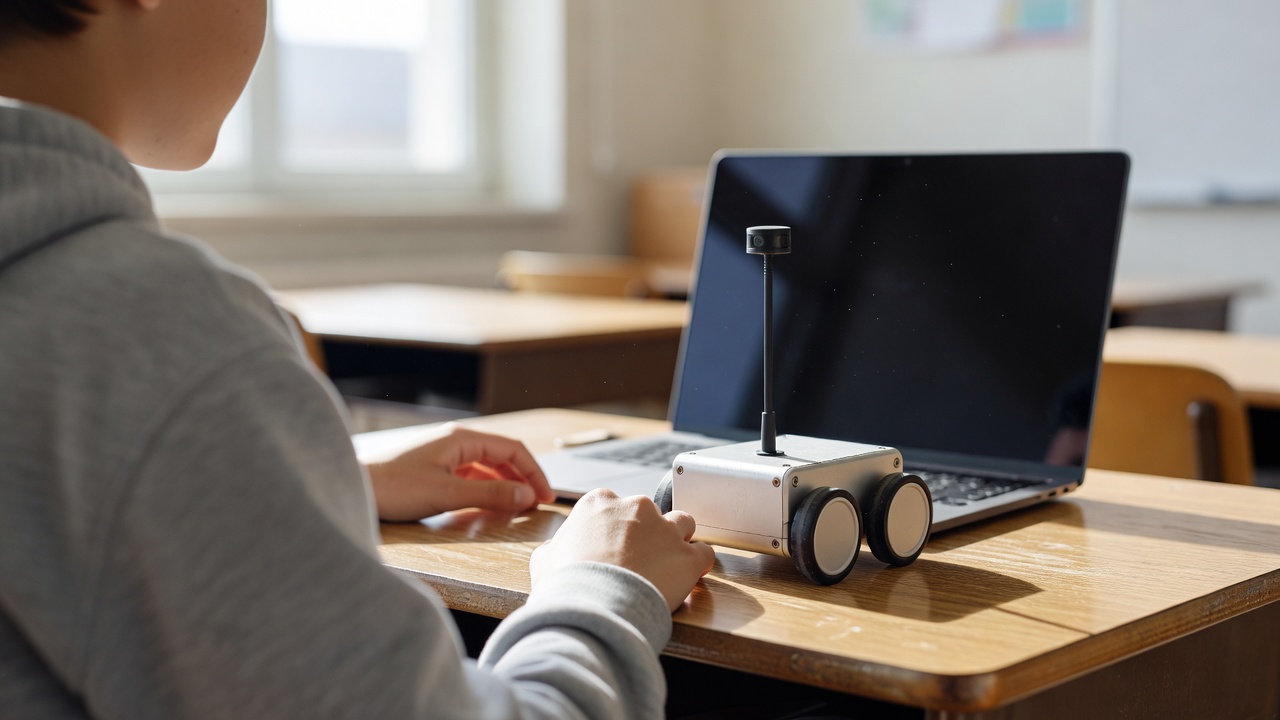
According to the account, the modular coupling framework is still under development, so that four RoboMeshA robots can operate together, up from the two units built today. Classroom validation at CETI Colomos and Prepa ITESO is the other stated step, following the development and handling tests. Luque-Vega is the project lead.
Luque-Vega's stated hope is adoption beyond Guadalajara: "I hope RoboMeshA is adopted by schools, universities, and IEEE student branches across Mexico and internationally as a model for integrating technical innovation with community engagement." The account gives no deployment timeline, and it does not say whether designs will be distributed or open-sourced.
Several questions remain open. What does a unit cost? How many students will use it? What did the classroom validation show? The IEEE Spectrum account was written by the EPICS in IEEE program manager, Ashley Moran, and EPICS in IEEE is the initiative behind the project, so the coverage is a self-published program account with no outside critique. Evidence of whether it works would have to come from the CETI Colomos and Prepa ITESO trials, not from the announcement.
The most telling detail here is how ordinary the finish line is: a browser tab. Robotics education has long been gated by the lab around the robot, and this team built the lab into the robot.
For a school administrator weighing a robotics purchase, the number to track is the setup burden. RoboMeshA's pitch is three steps: power on, join the network, open a browser. That could mean no lab build-out, no software licenses to install, and no IT tickets before the first lesson. The number that decides whether it fits a budget, cost per unit, has not been published, and neither have the maintenance demands of the electronics the team worked to keep accessible. Whether the trade holds up with real students is still unmeasured, but it aims at the right constraint.
-- Zara Velez, Emerging Technology Editor
Sources: IEEE Spectrum, EPICS in IEEE RoboMeshA account · ITESO / EPICS in IEEE RoboMeshA team paper and poster, Engineering Congress of the Jesuit University System · IEEE Robotics and Automation Society