QUiCKR Claims 20-Minute CRISPR Edit Checks, But Robots Do the WorkQUiCKR Claims 20-Minute CRISPR Edit Checks, But Robots Do the WorkQUiCKR Claims 20-Minute CRISPR Edit Checks, But Robots Do the WorkQUiCKR Claims 20-Minute CRISPR Edit Checks, But Robots Do the Work
October 14, 2026
QUiCKR Bio, a New York biotech, says its pre-plated assays can quantify CRISPR edits "with NGS-level accuracy in just 20 minutes," and that, using INTEGRA Biosciences liquid handlers, it can set up the whole workflow and confirm accuracy on 200 edited samples within 5 hours. The
QUiCKR Bio, a New York biotech, says its pre-plated assays can quantify CRISPR edits "with NGS-level accuracy in just 20 minutes," and that, using INTEGRA Biosciences liquid handlers, it can set up the whole workflow and confirm accuracy on 200 edited samples within 5 hours. The 20-minute number is the headline, but the 5-hour figure is the more telling one: the quiet bottleneck in gene editing is verifying an edit, and much of the claimed speed-up comes from automating the pipetting rather than from new chemistry. For labs developing gene-editing therapies, the question is whether a plate-based assay can replace sequencing for routine edit checks. No validation data has been published in the source to answer it.
What the Research Found
The claims appear in a case study credited to INTEGRA Biosciences, a liquid-handling vendor, and republished by News-Medical on October 14, 2026. It is vendor-supplied content, not independent reporting. Every performance claim comes from one source: Charles Blanluet, co-founder and CEO of QUiCKR, in a piece that promotes INTEGRA's products.
QUiCKR sells pre-plated assays (reagents already dispensed into plates, ready to use) and cloud-platform analysis for DNA quantification. Its plates use a 384-well format (a plate with 384 tiny sample wells) and run on existing lab readers and automation platforms. Blanluet describes the offer this way: "We offer end-to-end kit and software solutions tailored to customers' specific throughput and regulatory needs."
The headline numbers, as stated in the source:
- 20 minutes: time for the assays to quantify DNA sequences with "NGS-level accuracy."
- 5 hours: time to "set up the entire QUiCKR workflow and confirm its accuracy on 200 edited samples."
- 30 days: length of INTEGRA's trial period for onboarding.
The source gives no concordance figures (how often the assay agrees with sequencing), no limits of detection (the smallest amount of an edit it can reliably see) and no list of edit types covered. Each of those is a number a lab would want before trusting a new method, and none is offered.
How the Science Works
CRISPR edits modify, delete or correct DNA regions. Confirming what an edit actually did has traditionally relied on next-generation sequencing (NGS, which reads DNA sequences in bulk) or droplet digital PCR (ddPCR, which splits a sample into thousands of droplets and counts target molecules). The source calls both "costly and time-consuming." QUiCKR says its assays "eliminate key bottlenecks of sequencing-based confirmation."
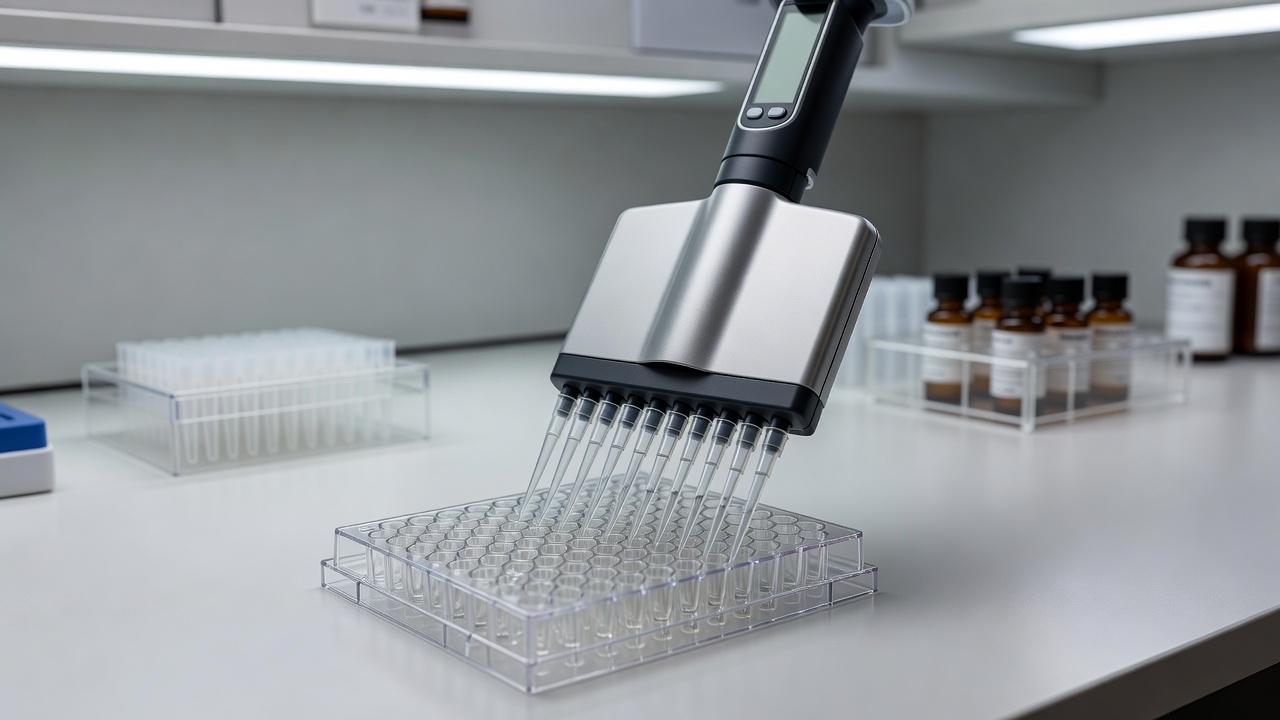
The workflow is mostly liquid handling. In the highest-throughput version, INTEGRA's VIAFLO 96, an electronic pipette that handles 96 samples at once, runs serial dilutions (a series of stepwise dilutions of each sample) and plate transfers "in just a few clicks using preloaded scripts." The MINI 96 also pipettes 96 samples simultaneously, and INTEGRA credits it with saving time and reducing variation.
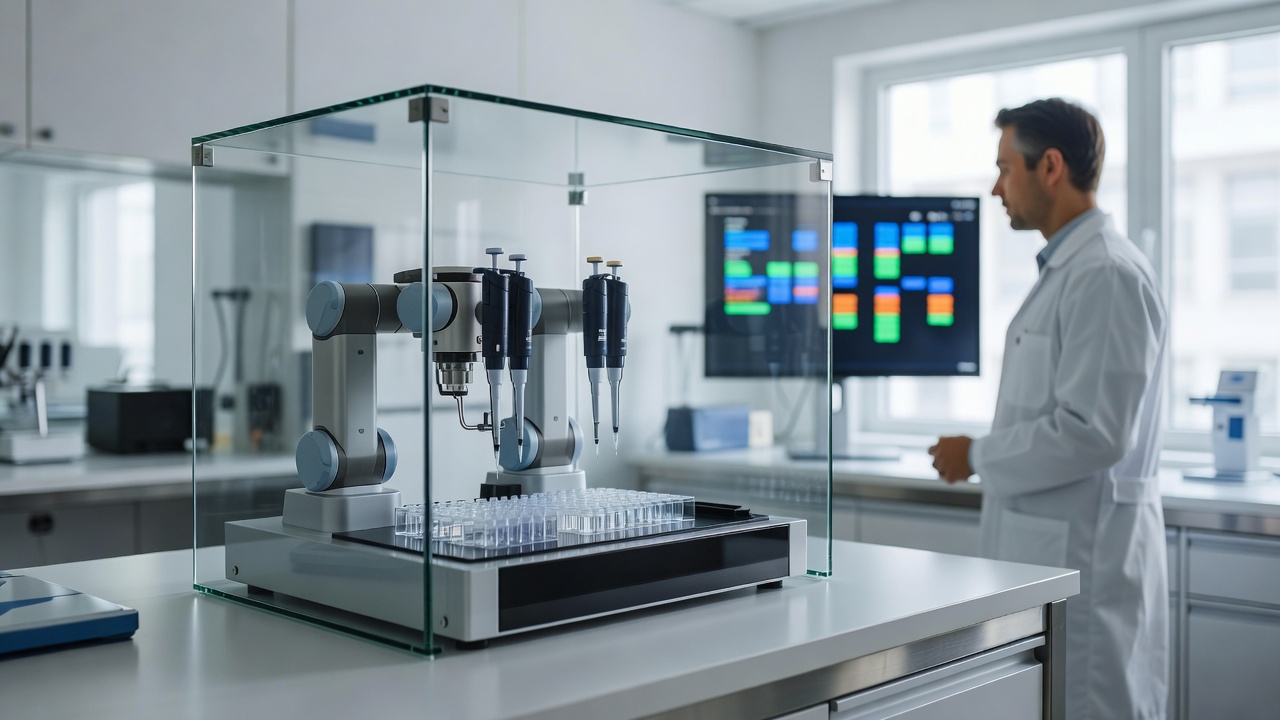
In the lower-throughput version, an ASSIST PLUS pipetting robot with a VIAFLO 96 head prepares serial dilutions of the DNA samples in a 96-well plate. The same setup then moves those dilutions into "each quadrant of the 384 well QUiCKR plate." That implies four 96-well plates feed one 384-well plate, though the source never states the arithmetic. INTEGRA credits the ASSIST PLUS with "walk-away processing" (the robot runs unattended) and better reproducibility.
Blanluet says the manual alternative is a problem: "Setting up these assays manually is tedious, time consuming and potentially error prone, so we looked for alternative solutions." Analysis then runs on QUiCKR's cloud platform, though the source does not say what that analysis does. That matters, because a fast plate read is only as useful as the software that turns raw signal into an edit measurement.
What It Means for Patients
The link to patients is indirect. QUiCKR's stated customers are pharma and biotech companies, and its stated goal is to help them optimize therapeutic candidates and speed regulatory approval. Faster confirmation of edits could shorten the research cycle for gene-editing therapies, if the assay proves reliable.
The source names no patient outcomes, trials or therapies. The reason edit confirmation matters is visible in FDA's approval of Casgevy, the first FDA-approved therapy using CRISPR/Cas9: a treatment built on gene editing depends on knowing exactly what the edit did to the DNA. Nothing in the QUiCKR material connects it to Casgevy or any other approved product, so patients should read this as a story about lab tooling, not treatment.
Competitive Landscape
QUiCKR positions itself against two incumbents, NGS and ddPCR. Its pitch is speed plus convenience: end-to-end kits and software, pre-validated workflows, and plates that fit existing equipment. "Speed is of the essence for our customers, so we ensure fast onboarding of pre-validated, turnkey solutions," Blanluet says.
INTEGRA's role is as the automation partner. Blanluet says, "We partnered with INTEGRA because we found its pipetting tools very easy to use and implement, and the quality of the liquid handling matched the demands of our assays." He adds, "We are happy to recommend the company as an automation partner to all our customers." INTEGRA offers a 30-day trial period for onboarding. Both statements come from a piece that exists to promote INTEGRA, which is worth remembering when weighing the praise.
The source names no competing assay vendors, and it offers no head-to-head benchmark against NGS or ddPCR. In practice, the competition a lab weighs is its own current method: sequencing it already runs, or a manual plate setup it already trusts. A new assay has to beat that on accuracy first and on speed second.
Independent analyst commentary specifically on this announcement was not publicly available at publication time.
The Road to Clinic
The clinic is far from this tool. The source gives no clinical data, regulatory clearances or validation studies. The only regulatory hint is Blanluet's reference to kits tailored to customers' "regulatory needs," which the source does not define.
FDA has published guidance on human gene therapy products incorporating genome editing, and developers of such products will need edit-confirmation methods they can defend. For QUiCKR, defensibility would take independent validation: accuracy against NGS and ddPCR, limits of detection, coverage of edit types such as indels (small insertions or deletions) and corrections, and reproducibility across labs. None of that is in the source.
The 200-sample figure is a setup demonstration, not a published validation. It is also unclear whether the 20-minute figure covers only the reading step or includes dilution and plate setup. The 5-hour figure covers setting up the whole workflow and confirming accuracy on 200 samples, so it is not directly comparable to the 20-minute assay figure.
What's Next
Four things will show whether the claims hold up:
- Independent data supporting the 20-minute, NGS-level accuracy claim.
- A peer-reviewed comparison with NGS and ddPCR.
- Named customers and wider adoption beyond this case study.
- Uptake after the 30-day INTEGRA trial and the fast onboarding of pre-validated assays.
Cost is the other missing piece. The source calls NGS and ddPCR costly but gives no per-sample figures for either, or for QUiCKR. Funding and company size are also unstated.
The most striking thing here is how little of the story is about CRISPR itself. The edit is the glamorous half of gene editing, and the check is the half that decides whether anyone can trust it. A 20-minute assay would be a real prize, but until the accuracy data appears, the clearest speed-up on offer is a robot doing the pipetting.
For an academic or industry researcher running edit-confirmation, the practical test is modest: if a 200-sample run really is set up and checked in 5 hours, ask for side-by-side concordance with your own sequencing results before changing any workflow. Use the 30-day trial to generate that comparison on your own edits, not the vendor's.
-- Zara Velez, Emerging Technology Editor
Sources: FDA · Govinfo · INTEGRA Biosciences case study (via News-Medical)