Quantum Simulators Gain Verifiable Error Margins in 51-Ion Experiment
November 18, 2026
A team led by Tristan Kraft of the Technical University of Munich (TUM) and Peter Zoller of the University of Innsbruck has published a method in Physical Review X that gives a quantum simulator verifiable error margins, and they have demonstrated it on a chain of 51 trapped
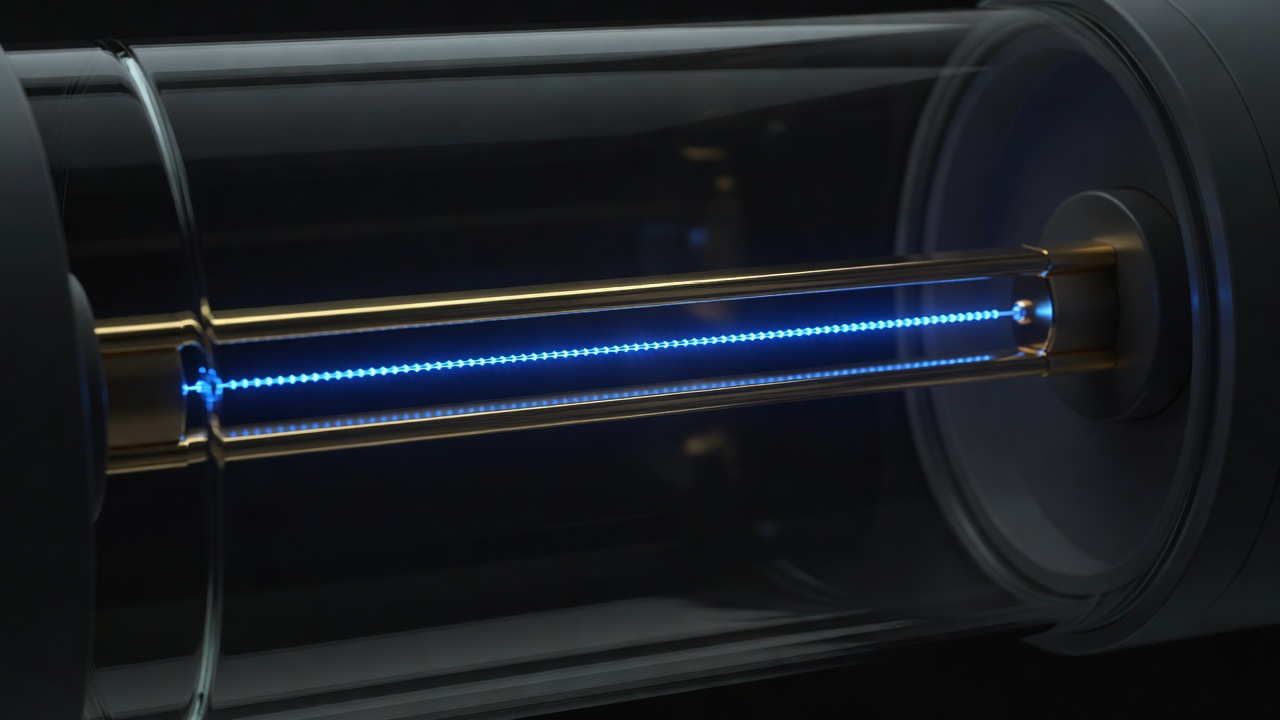
A team led by Tristan Kraft of the Technical University of Munich (TUM) and Peter Zoller of the University of Innsbruck has published a method in Physical Review X that gives a quantum simulator verifiable error margins, and they have demonstrated it on a chain of 51 trapped ions in Innsbruck, Austria. The headline number is less important than the problem it addresses: past a certain size, a conventional computer can no longer be used to check what a quantum simulator reports. For anyone planning to rely on these machines, an answer without an error bar is a number you cannot yet trust, and this work attaches the error bar.
What Happened
The research was announced in a University of Innsbruck release dated November 17, 2026. Kraft, of TUM, leads the international team and is the main voice in the release. Zoller, who holds posts at the University of Innsbruck and the Institute for Quantum Optics and Quantum Information (IQOQI) of the Austrian Academy of Sciences, co-leads it. The release describes him as a quantum computing pioneer. Barbara Kraus, also of TUM, worked alongside the team leads.
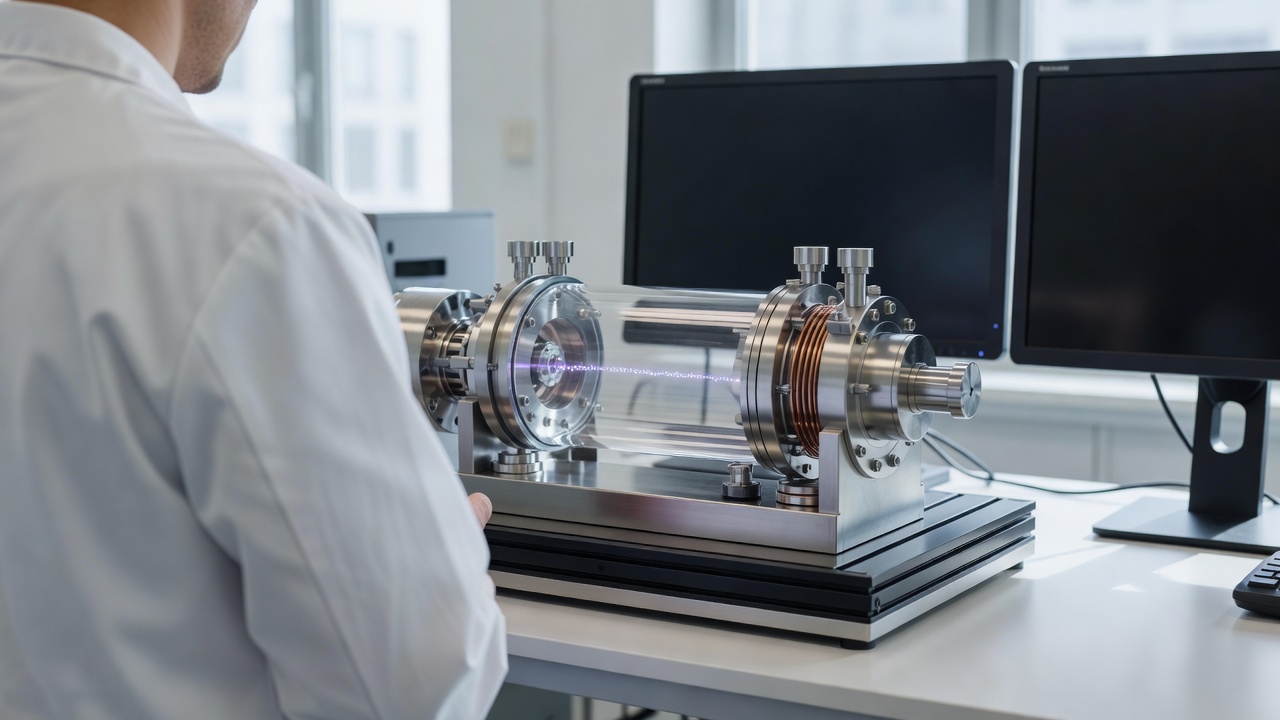
The experimental half was carried out by a team led by Manoj Joshi and Christian Roos on an ion-trap quantum simulator (a specialized physical system in which trapped charged atoms are held in a line and made to mimic the behavior of other quantum systems, such as many interacting particles). The release says the approach was demonstrated on a simulator with up to 51 qubits, using a chain of 51 trapped ions, so the 51-ion chain serves as a 51-qubit simulator.

What the release does establish is the structure of the demonstration: validate the method where classical computers can still check it, then run it where they cannot.
The Technical Breakthrough
The central idea is that the simulator is not assumed to behave as designed. Kraft puts the motivation plainly: "But no real experiment is perfect... Interactions may turn out differently than expected, the system is influenced by its environment, and measurements are also subject to uncertainties."
The method replaces the ideal-device assumption with a reconstruction built from measurements. Kraft describes the process: "From this data, we determine the relevant interactions as well as key influences from fluctuations and noise. We then calculate how the uncertainties in this model affect the simulation results... The quantum simulator thus provides not just a single value, but a result with error margins that quantify its accuracy."
In practical terms, the workflow has three stages:
- Measure: collect experimental data from the device itself.
- Reconstruct: infer the relevant interactions, plus fluctuations and noise, that describe how the system actually behaves.
- Propagate: calculate how the uncertainties in that reconstructed model carry through to the simulation results, then report the result with an error margin attached.
The validation strategy matters as much as the method. The team first tested it on a system of 10 trapped ions, small enough that conventional computers can still calculate its behavior. There, the reconstructed models and error limits could be checked against independent measurements. The method was then run on 51 trapped ions, a size well beyond that easy classical check.
Why It Matters for Industry
A quantum simulator is useful only if its output can be believed. When a simulation is small, the answer can be compared with a conventional computer. Beyond that size, that comparison stops being practical, and a result that cannot be independently checked is hard to put weight on. Error margins turn a bare number into a claim with a stated accuracy, which is the form an engineer or a research group can actually use.
The funding list hints at who is watching. The release credits the Austrian Science Fund (FWF), the German Ministry of Research, Technology and Space, the European Union, BMW and other funding organizations.
Competitive Landscape
Its only comparative framing is conceptual. Zoller states it directly: "After all, when a classical computer and a quantum simulator tackle the same problem, it's not just a matter of which one delivers a result faster. What's also crucial is which one can solve the problem with a smaller, verifiable margin of error." Under that framing, quantum advantage would be judged on verified accuracy as well as speed or problem size.
The Bigger Picture
The verification problem sharpens as hardware improves. Zoller states it in the context of the next generation of devices: "This is particularly important because classical calculations for such systems become significantly more difficult as the number of particles increases... This also makes independent verification of the results increasingly complex, making the question of experimentally determined error limits all the more important."
The 10-ion check works only while classical machines can still follow. Once a simulator outgrows that reach, the check disappears, and what remains is the device's own account of its reliability. The method addresses this by building the uncertainty estimate from the experiment's data instead of from a classical rerun of the same problem.
The error margins come from a model reconstructed from measurements, so they are only as good as that model. The work also concerns quantum simulators, specialized machines for mimicking other quantum systems, not general-purpose gate-based quantum computers, and the release does not discuss other platforms such as superconducting or neutral-atom devices.
What's Next
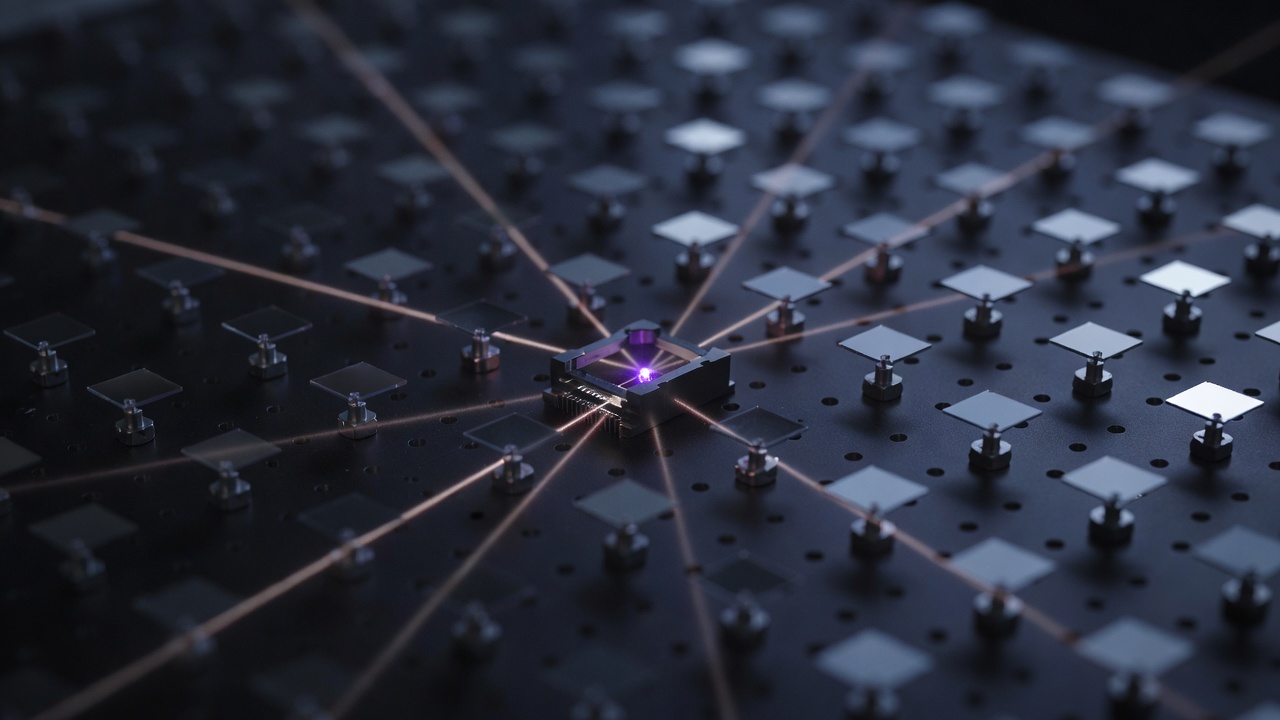
The team is now adapting the method for the newest two-dimensional (2D) quantum simulators, where classical verification is hardest. In two dimensions, Zoller's point applies with extra force: the more particles involved, the less a conventional cross-check can be relied on, and the more a self-contained error estimate matters.
For academic researchers who run or rely on analog quantum simulators, the practical takeaway is a change in what counts as a reportable result. A simulation output paired with an experimentally derived error margin can be compared across devices and against theory. A bare value from a 51-ion chain cannot.
The most striking thing here is how modest the pitch is. The usual quantum story is about doing something no classical machine can do. This one is about admitting how sure the machine is, and that may prove the more durable contribution. A device that can state its own uncertainty is one a skeptic can argue with, and that is how a technology earns trust.
-- Aria Lin, Enterprise Technology Analyst
Sources: arXiv · Mit · ScienceDaily