Philippines Pushes Local Electric Tricycle Production Despite $10,400 Price TagPhilippines Pushes Local Electric Tricycle Production Despite $10,400 Price TagPhilippines Pushes Local Electric Tricycle Production Despite $10,400 Price TagPhilippines Pushes Local Electric Tricycle Production Despite $10,400 Price Tag
September 22, 2026
President Ferdinand Marcos Jr. toured MD Juan Enterprises Inc.
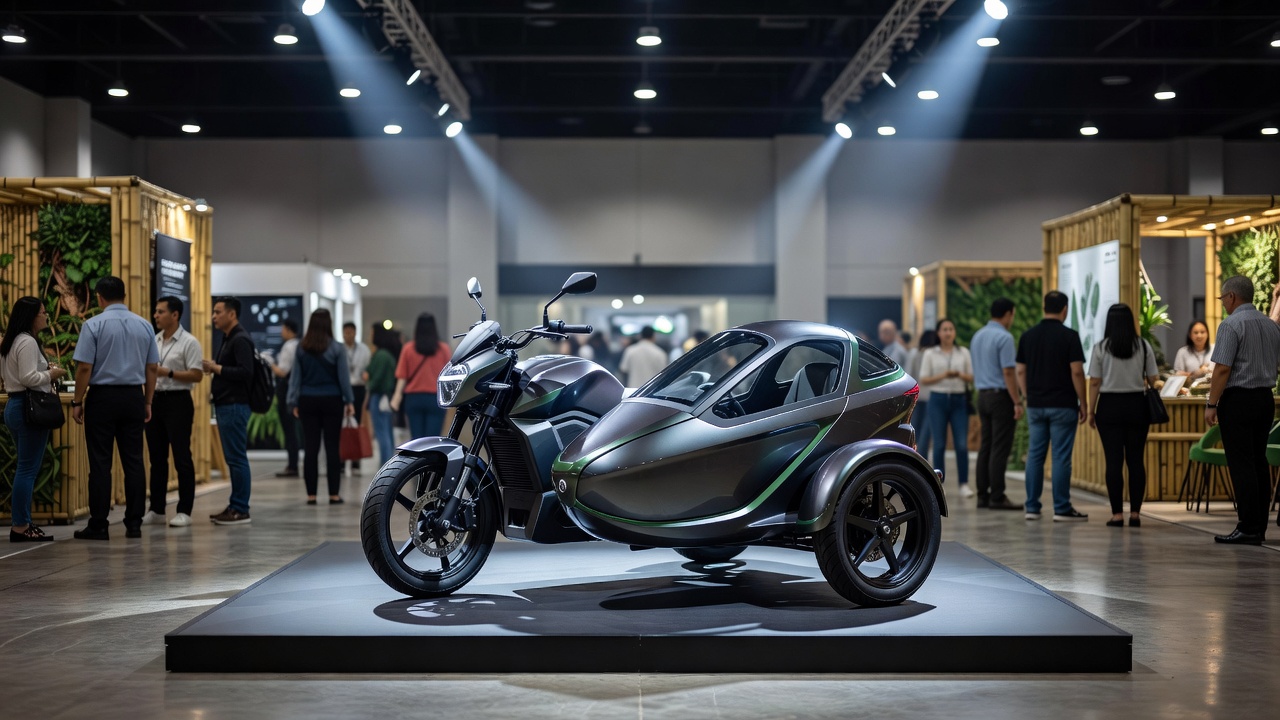
President Ferdinand Marcos Jr. toured MD Juan Enterprises Inc. in Caloocan City on Aug. 25, pressing the auto parts maker to start building electric tricycles and jeepneys domestically, using technology that currently costs $10,400 per unit to produce. The more immediate obstacle is not factory capacity alone: it is also that the $10,400 price tag on Cagayan State University's prototype is mostly research and development that a commercial line would not have to carry twice. With fuel costs climbing and interest in electric vehicles growing across the Philippines, the question is whether publicly funded university engineering can actually cross into a private assembly line, or whether it stays a lab demonstration.
What's New
Marcos's Aug. 25 visit to MD Juan Enterprises Inc., a Caloocan City auto parts manufacturer, marked a direct push by the national government to move electric tricycle and jeepney production onto domestic soil. According to the president, the national government is assessing what equipment and technology the company still needs to produce EVs locally.
MD Juan is not a new entrant. The company previously built electric tricycles in 2013 and 2014, then stopped, according to the government's account of the visit, because of low demand. DOST Secretary Renato Solidum Jr. has pointed to a different market now: higher fuel costs and rising interest in electric vehicles are what he cites as the reason the same production line could be viable again, more than a decade after it went idle.
The push is not starting from zero. It is built on hardware that already exists: a purpose-built electric tricycle and a conversion kit for gas-powered tricycles, both developed by a public university under a government research program. What Marcos is asking MD Juan to do is take a lab-tested design and turn it into a factory product, at a price ordinary tricycle operators can afford. That gap between prototype and product line is the real substance of the story.
How It Works
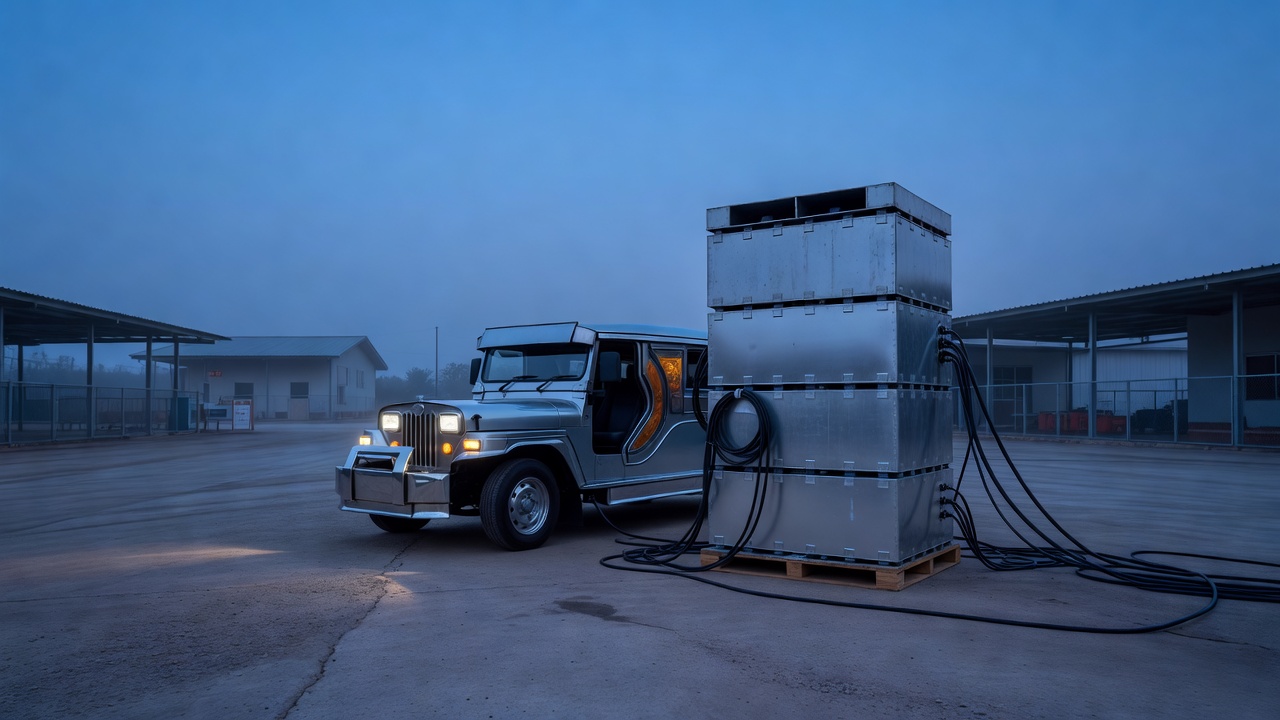
The underlying technology comes from Cagayan State University's (CSU) ElectroMobility Research and Development Center (EMRDC), which has built two distinct products. The first is a purpose-built electric tricycle: a seven-seater designed from the ground up around a battery and electric drivetrain rather than a gasoline engine. The second is the C-Trike, a retrofit system that converts a conventional gas-powered tricycle to electric propulsion without requiring a new vehicle body.
CSU has paired both products with a battery-swapping system (a network where operators exchange a depleted battery pack for a pre-charged one instead of waiting through a full recharge) for compatible electric vehicles, addressing the downtime that keeps tricycle drivers off the road and off the fare meter. On the electronics side, CSU worked with the University of the Philippines Diliman on the electrical and electronic systems that manage power delivery in its EVs, pairing CSU's vehicle engineering with UP Diliman's systems expertise.
To move from campus research toward commercial reach, CSU has entered technology licensing agreements with private companies, covering manufacture, distribution, and technical support for fabrication and assembly. Those agreements are the legal bridge between a university lab and a production floor. The Department of Science and Technology (DOST) funds the underlying research through its Science for Change Program and is separately developing three charging approaches: conventional charging stations, solar-powered chargers, and battery-swapping infrastructure, to support whichever electric tricycle model reaches the street first.
The Economics
The numbers explain both the promise and the problem. CSU's seven-seater electric tricycle currently costs about P600,000 ($10,400) to build, a figure that reflects a prototype produced with more than P51 million in government funding covering the vehicle body, materials, and electrical systems. That is not a retail price; it is what it costs a research center, not a factory, to produce one unit.
The C-Trike conversion path is considerably cheaper. Converting an existing conventional tricycle to electric propulsion costs about P120,000, according to the university, a fraction of the full prototype's price because it reuses the existing vehicle body and adds only the electric drivetrain and battery system.
DOST Secretary Renato Solidum Jr. told the Daily Tribune that the current price reflects a cost structure that would not survive contact with mass production: "The reason why it is pricey is because of the R&D expense. But once it is commercially produced, R&D expense will be removed and only the cost of material and labor will be the expense."
That is the central economic bet behind the Marcos administration's push at MD Juan: that a P600,000 prototype price is a research accounting artifact, not a manufacturing floor. Whether material and labor costs alone can bring a seven-seater electric tricycle down to a price point tricycle operators can actually finance is the unresolved variable, and neither DOST nor CSU has published a stated production-cost target to answer it.
Competitive Landscape
MD Juan Enterprises Inc. is the only named manufacturer in this push, and its position is unusual: it is both the government's chosen partner and a company with a documented history of trying and abandoning this exact business. MD Juan produced electric tricycles in 2013 and 2014 before stopping due to low demand, then went twelve years without restarting the line until Marcos's Aug. 25 visit reopened the conversation. The national government is now assessing what equipment and technology the company still needs to produce EVs locally, effectively auditing a factory that already knows how to build the product but lacks the current tooling to do it at scale.
MD Juan is not the only project DOST is backing under the Science for Change Program. Mapua University is developing a solar-powered electric boat with DOST support, and the University of the Philippines is developing an electric ferry with the same backing. Neither is a direct competitor to CSU's electric tricycles, but both are evidence of the same government strategy applied across different vehicle categories: fund university engineering, then look for a private manufacturer willing to commercialize it.
Independent analyst commentary specifically on this announcement was not publicly available at publication time.
What's Next
The technology is already past the pure-lab stage. Five CSU electric tricycle units were produced and deployed to provinces for field testing, according to DOST's 2024 annual report, giving the program real-world operating data ahead of any commercial launch. CSU presented its electric tricycle and C-Trike conversion technologies publicly at the Sustainability Expo 2026 at SMX Convention Center Aura in Taguig City on Aug. 5, three weeks before Marcos's visit to MD Juan.
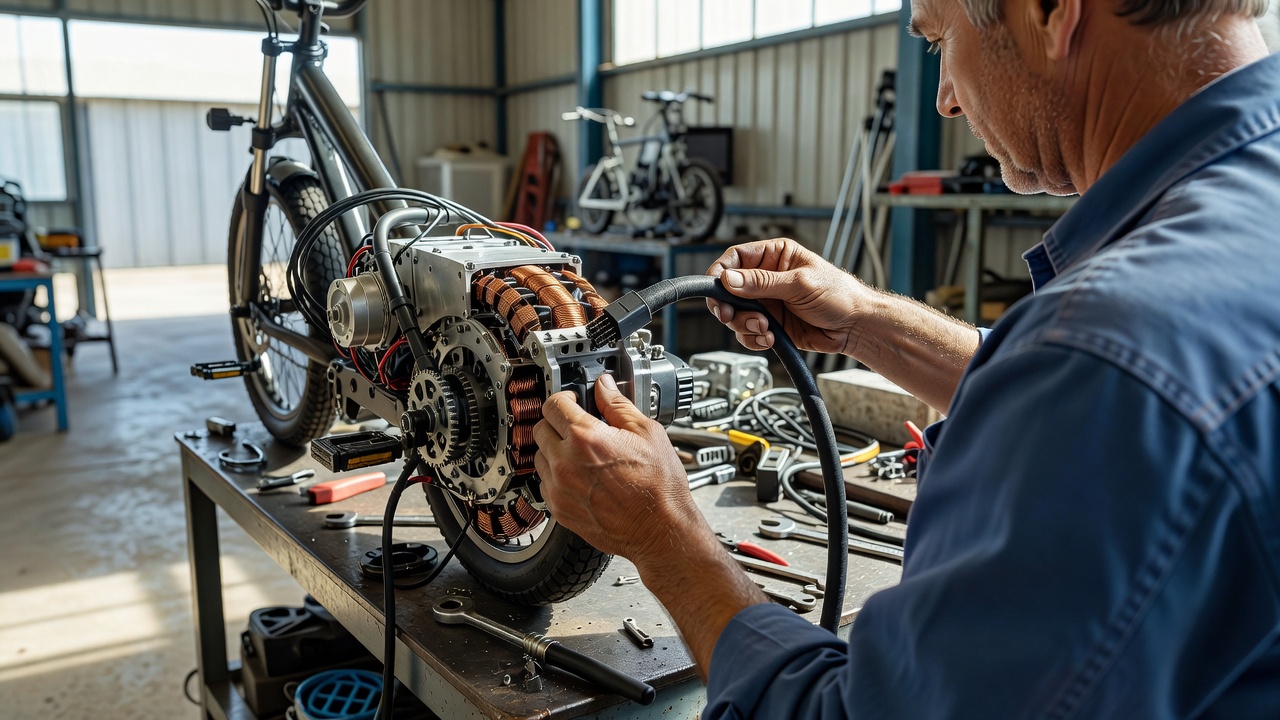
Academic scrutiny is also underway: a study published in the Philippine Journal of Science examined the performance and economics of converting conventional tricycles to electric propulsion, the same conversion process CSU prices at P120,000 through its C-Trike system.
What remains unstated is a timeline. Neither the government nor CSU has published a target date for when MD Juan or any other manufacturer would begin commercial output, nor a projection for how far unit costs would fall once R&D expense is stripped out, nor which private companies currently hold CSU's technology licensing agreements. The gap between five field-tested prototypes and a factory line is where this story goes next.
For a business buyer evaluating whether to invest in electric tricycle assembly, the math CSU and DOST are offering is a P120,000 conversion kit versus a P600,000 from-scratch build, with the promise that stripping out R&D costs at scale could close that gap further. That is a procurement decision with a stated floor price and no stated ceiling yet, the exact kind of uncertainty a manufacturer like MD Juan has to underwrite before committing a factory line to it.
MD Juan Enterprises tried this once before and walked away when the market said no. What has changed is not the technology so much as the price of the alternative: gasoline. Whether a university-built C-Trike kit can succeed where a 2013 factory line failed will say more about fuel economics than about engineering.
-- Aria Lin, Enterprise Technology Analyst
Sources: CleanTechnica · Cagayan State University ElectroMobility Research and Development Center (EMRDC), via Philippine Department of Science and Technology