PHEV Real-World Emissions Nearly Six Times Official Figures, T&E SaysPHEV Real-World Emissions Nearly Six Times Official Figures, T&E SaysPHEV Real-World Emissions Nearly Six Times Official Figures, T&E SaysPHEV Real-World Emissions Nearly Six Times Official Figures, T&E Says
October 15, 2026
T&E's analysis finds that the real-world emissions of 2024 plug-in hybrid (PHEV, a car that pairs a combustion engine with a battery that can be charged from the grid) models were nearly six times higher than their official WLTP figures, just as the EU's final utility-factor
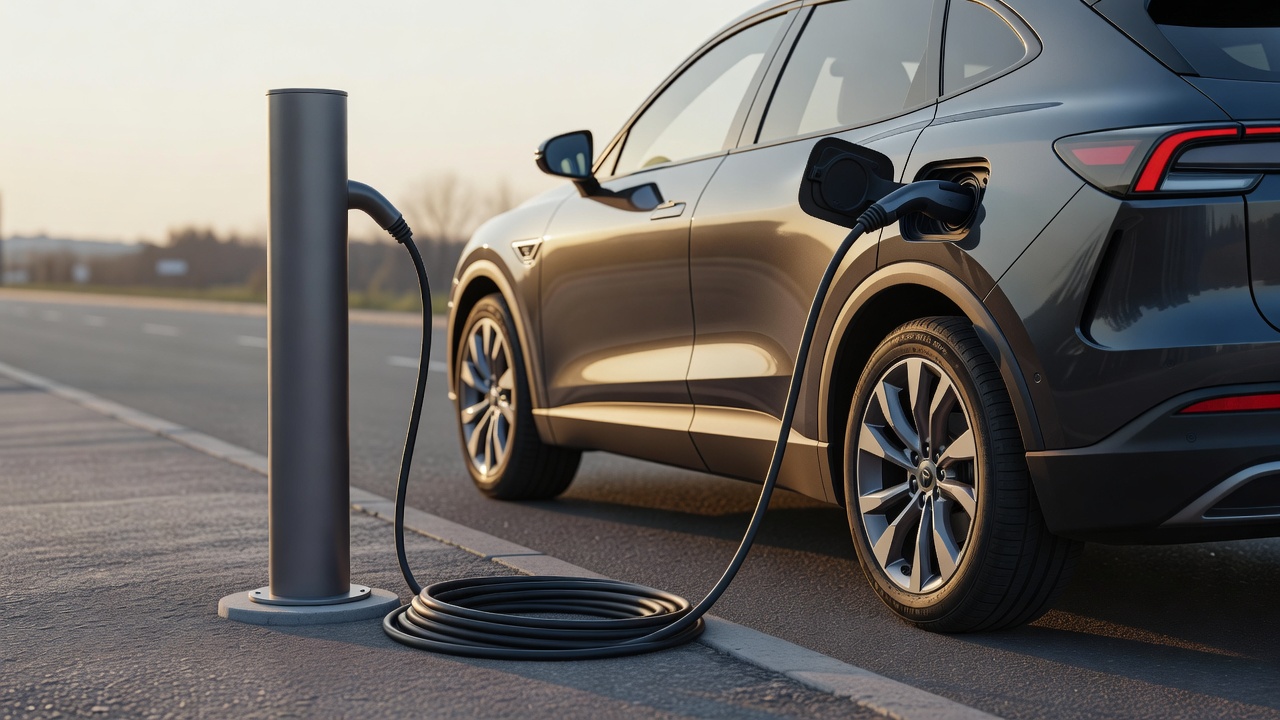
T&E's analysis finds that the real-world emissions of 2024 plug-in hybrid (PHEV, a car that pairs a combustion engine with a battery that can be charged from the grid) models were nearly six times higher than their official WLTP figures, just as the EU's final utility-factor correction starts in November 2026. The number is striking, but the story sits in a quieter place: a single accounting methodology, the utility factor, now carries enough weight that T&E estimates freezing it would cut battery-electric (BEV) sales by 13 percentage points in 2030 under one legislative proposal. For engineers and sustainability teams, the fight over one technical methodology will shape how credibly Europe counts hybrid emissions.
What's New
Transport & Environment (T&E), an environmental NGO, published the analysis on October 14, 2026, under the byline of Yoann Gimbert, Principal Analyst, Cars. CleanTechnica carried it, with its own listing dated October 15. T&E describes itself as created over 30 years ago, with a record of shaping some of Europe's most important environmental laws, and states its vision as a zero-emission mobility system that is affordable and has minimal impacts on our health, climate and environment. It is also an advocacy organization that openly supports the correction, so every figure below is T&E's own analysis and none has been independently confirmed here.
The headline finding: "On average, real-world emissions for 2024 PHEV models were nearly six times higher than official figures." T&E states that real-world fuel consumption data reveal that PHEV climate benefits were overstated, and that the vehicles have emissions close to traditional combustion cars. In plain terms, a car sold on the strength of a low official number was, on average, burning enough fuel on the road to look much like an ordinary petrol or diesel model.
The source does not give absolute grams-per-kilometre values, a sample size, or the name of the underlying official dataset. It also names no manufacturers, and the charts and bullet lead-ins that would normally carry such detail are missing from the text available. The "nearly six times" figure therefore stands as a ratio for the 2024-model analysis only, and readers should treat it as a claim by T&E rather than a settled measurement.
How It Works
The utility factor (UF, the methodology that determines how much of a PHEV's driving counts as electric in official CO2 accounting) sits at the center of the dispute. T&E calls it "a technological methodology"; the remainder of that sentence is cut off in the text available, so its full definition is not reproduced here. The practical point is that the UF is a technical setting, not a law of physics, and T&E argues that politicians should not interfere with it.
The WLTP (the EU's official laboratory test procedure for car emissions) figure for a PHEV depends on that assumed electric share. As general arithmetic, when drivers use less electric power than the UF assumes, real-world emissions rise above the official number, and the more the assumption overstates electric driving, the wider the gap. The source does not define the mechanism further, and it does not quantify how much of the nearly sixfold gap comes from the UF itself.
A UF correction already took place in 2025, and the final correction begins in November 2026. The source also writes "November 2026/27," which it does not explain, so that wording is flagged here rather than interpreted. T&E describes freezing the UF as "the single change to the car CO2 framework that would have the largest impact on 2030 and 2035 BEV sales," which is why a seemingly dry methodology has become a legislative flashpoint.
The Economics
T&E's 2030 scenario sets a benchmark of 50 gCO2/km (grams of carbon dioxide emitted per kilometre driven) and asks what electric range would meet it. Its answer: 140 to 220 km of electric range would keep PHEVs at or below that threshold. The source also says that with better technology, range is "limited to about 180 km." The wording is ambiguous between a total range and an increase, so it is reported here as stated and should not be read as an increase of 180 km.
The source gives no battery costs, vehicle prices, or compliance costs, and none are assumed here. The only economic lever visible in the text is the 2030 range band: a PHEV that can cover 140 to 220 km on electricity is the design target against which T&E measures the 50 gCO2/km goal. Everything about what such a vehicle would cost to build or buy remains outside the available evidence.
Competitive Landscape
The legislative stakes are framed as PHEVs versus BEVs under the EU car CO2 framework. Under the car CO2 proposal of EPP (European People's Party) rapporteur Massimiliano Salini, T&E estimates that freezing the UF would reduce BEV sales by:
- 13 percentage points in 2030
- 18 percentage points in 2035
T&E's analysis names no manufacturers, and the research behind this article supplies no peer or competitor data, so no company comparisons are made. The contest it describes is between two powertrain categories and between regulatory choices, not between named firms.
Independent analyst commentary specifically on this announcement was not publicly available at publication time. No response from industry bodies or manufacturers appears in the source.
What's Next
The UF correction begins in November 2026. EU co-legislators and Member States are the bodies that would decide whether to keep it or freeze it. Salini's proposal is the live test, since T&E's 13 and 18 point estimates are scoped to it. The source gives no legislative timeline or vote dates, so none are offered.
Two things are worth tracking. The first is the 50 gCO2/km range scenario: whether new PHEV designs move toward the 140 to 220 km electric range band T&E describes. The second is whether later real-world data keep showing a gap on the scale of nearly six times. The source offers no prior-year comparison, does not say who gathered the underlying data, and does not say whether it was independently reviewed. Those are the gaps to close before the numbers are treated as settled.
For a policymaker weighing the Salini proposal, the practical translation is this: if T&E's figures hold, a hybrid counted at roughly a sixth of what it emits on the road distorts any instrument built on that official number. A fleet CO2 target met on paper with 2024-model PHEVs would, on T&E's numbers, be missed on the road by a wide margin. The choice in front of lawmakers is whether to let the correction proceed, or freeze it and accept T&E's estimated 13 point loss in 2030 BEV sales while the official figures stay as they are.
The irony of a "still smoking" scandal is that the fix is a spreadsheet methodology, not an engine. A method meant to make paper match the road is being asked to survive a political vote, and by T&E's own estimate, freezing it would cut BEV sales by 13 percentage points in 2030 and 18 percentage points in 2035. Whether lawmakers see it as a technical instrument or a negotiating chip will decide how much of the gap closes.
-- Aria Lin, Enterprise Technology Analyst
Sources: PubMed Central · Epa · CleanTechnica