Nintendo Switch 2 Review: A Great Screen Held Back by Battery Life
November 23, 2026
The Nintendo Switch 2 now sells for $499.00 after a September 2026 price increase. It brings a 7.9-inch 1080p, 120Hz HDR10 screen and a custom NVIDIA chip that Nintendo says delivers about ten times the graphics power of the original.
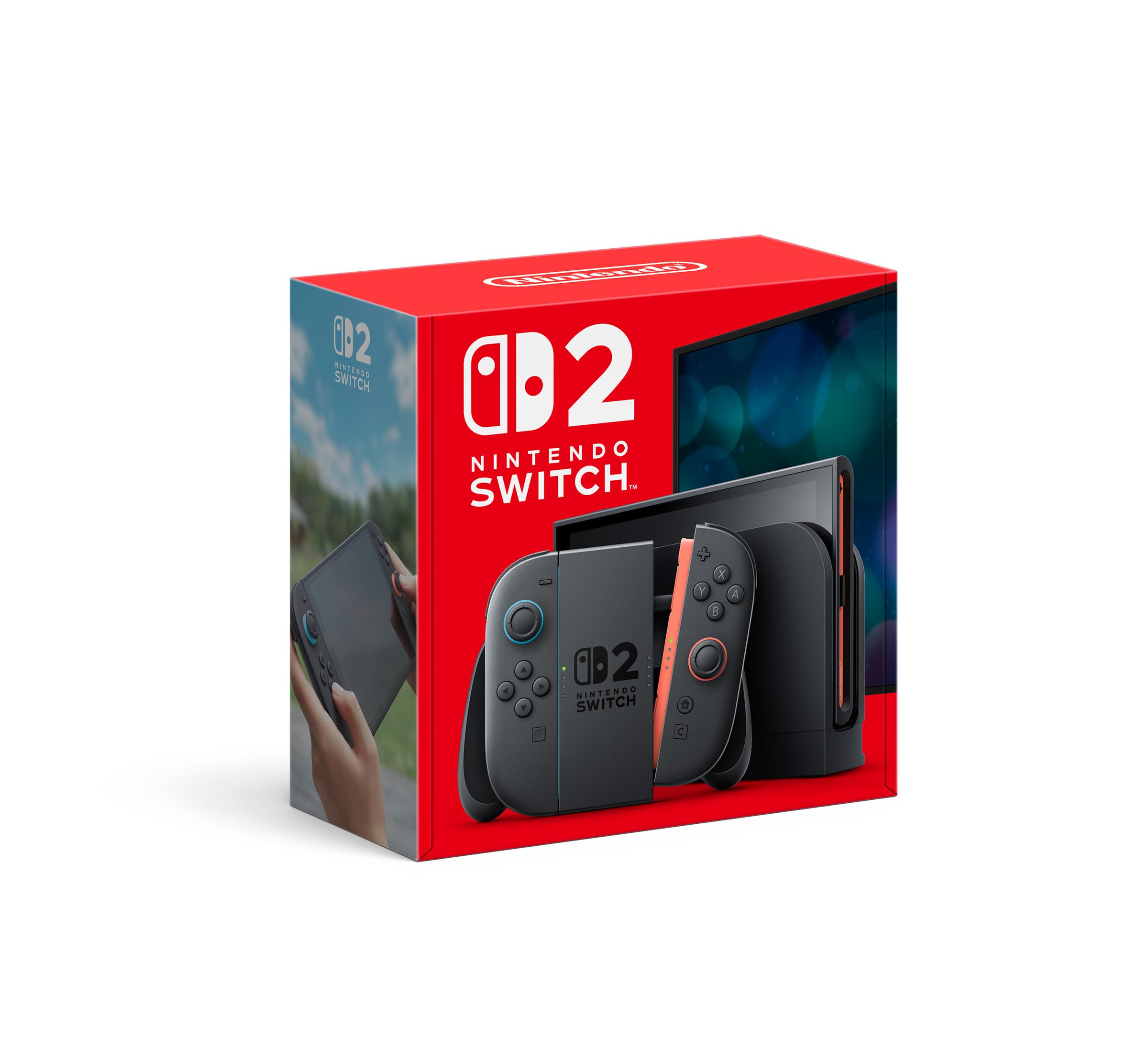
The Nintendo Switch 2 now sells for $499.00 after a September 2026 price increase. It brings a 7.9-inch 1080p, 120Hz HDR10 screen and a custom NVIDIA chip that Nintendo says delivers about ten times the graphics power of the original. It launched June 5, 2025, and the price has moved since. My immediate impression is that this is the first Nintendo handheld that stops lagging behind on specs. It looks and feels like a real console-class machine. It also asks you to accept short battery life and a flat, ungripped back to get there.
Quick Verdict
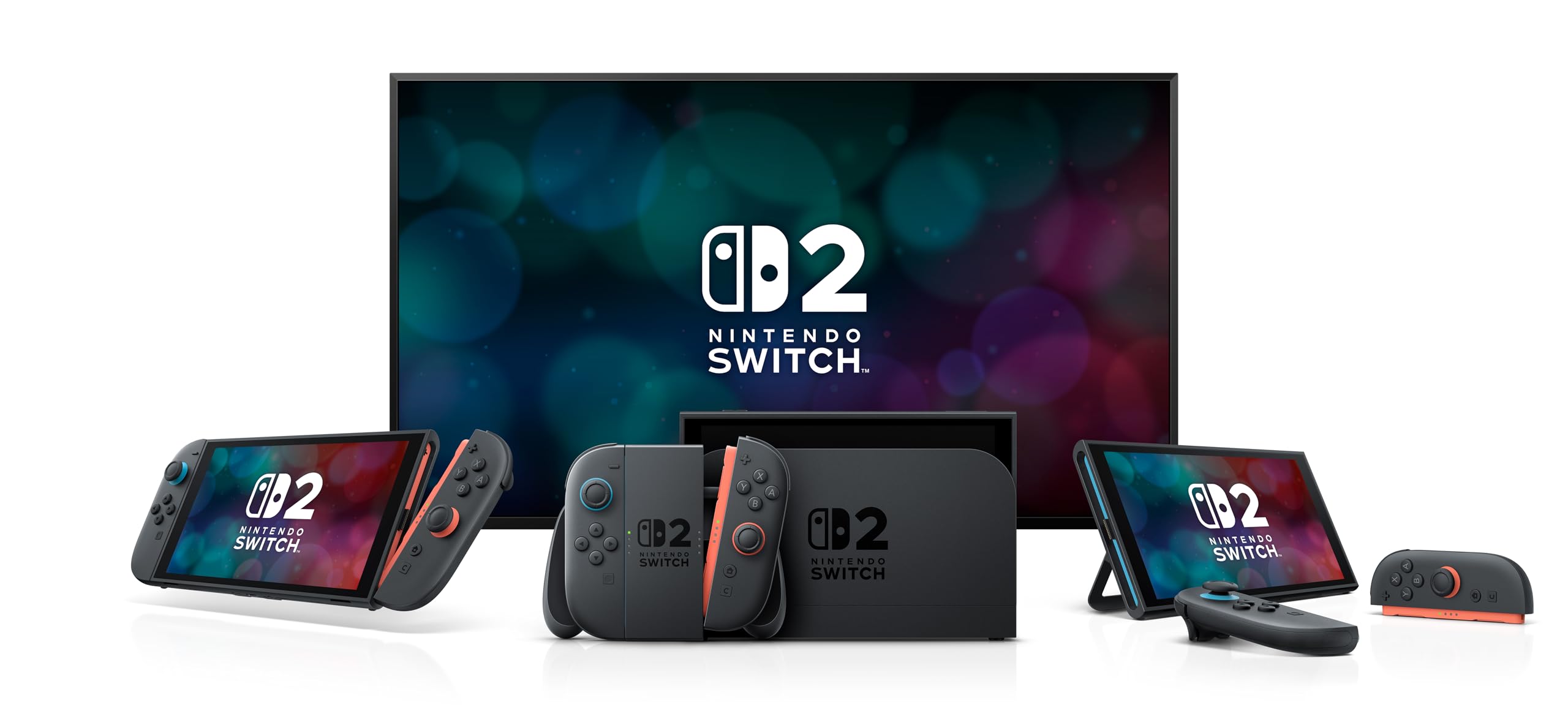
Buy it if you play handheld first and want Nintendo exclusives on a screen that finally looks modern. The generational leap in display, performance and storage is real, and the 4K docked option is a bonus. Battery life and the price are the two things holding it back, and microSD Express is the only way to expand storage. At $499.00 it earns an overall 4.0/5.
Rating
| Aspect | Rating |
|---|---|
| Display | 4.5/5 |
| Performance | 4.5/5 |
| Battery | 2.5/5 |
| Build and Comfort | 3.5/5 |
| Value | 3.5/5 |
| Overall | 4.0/5 |
Pros
- 7.9-inch, 1080p, 120Hz HDR10 screen, a big step up from the original's 6.2-inch 720p panel
- 256GB of internal storage, against 32GB on the original and 64GB on the OLED
- 4K/60 or 1440p/120 docked output, with DLSS and ray tracing support
- Magnetic Joy-Con 2 with a mouse mode that works on a flat surface or your lap
- Wide backward compatibility, with some older games running better
Cons
- Storage expansion is microSD Express only, and regular microSD cards do not work
- VRR works on the handheld screen only, and the dock has one fewer USB port than the original
- The flat, ungripped back gets uncomfortable after a couple of hours
Specs at a Glance
| Specification | Detail |
|---|---|
| Price | $499.00 (raised in September 2026) |
| Release date | June 5, 2025 |
| Processor | Custom NVIDIA processor and GPU with DLSS and ray tracing |
| Graphics power | About 10x the original Switch, per Nintendo's claim |
| RAM | 12GB |
| Storage | 256GB internal |
| Storage expansion | microSD Express only |
| Display | 7.9-inch LCD, 1080p, 120Hz, HDR10 |
| Brightness | About 400 nits with auto-brightness off, 450+ nits in HDR titles |
| Docked output | 4K/60 or 1440p/120 |
| Variable refresh rate | Handheld screen only, ALLM supported |
| Battery capacity | 5,220 mAh (OLED model: 4,310 mAh) |
| Nintendo's runtime estimate | 2 to 6.5 hours |
| Dimensions | 10.71 x 4.57 x 0.55 in with Joy-Con 2 attached |
| Weight | 535g (1.18 lb) with Joy-Con 2 |
| Handheld ports | 2x USB-C (top and bottom), microSD Express slot, Switch 2 game card slot, built-in mic |
| Dock ports | HDMI, Ethernet, power (USB-C), 2x USB-A |
| Kickstand | Nearly full-width, adjustable to a wider angle |
| Colors | Matte black with muted red and blue accents |
| Controllers | Magnetic Joy-Con 2 with mouse mode and a dedicated GameChat 'C' button |
| Special features | Battery charge limit setting, GameChat with up to 12 people per lobby and 4 video feeds |
| Shortest measured handheld battery life (Mario Kart World, max brightness) | about 2 hours 10 minutes |
Performance & Frame Rates
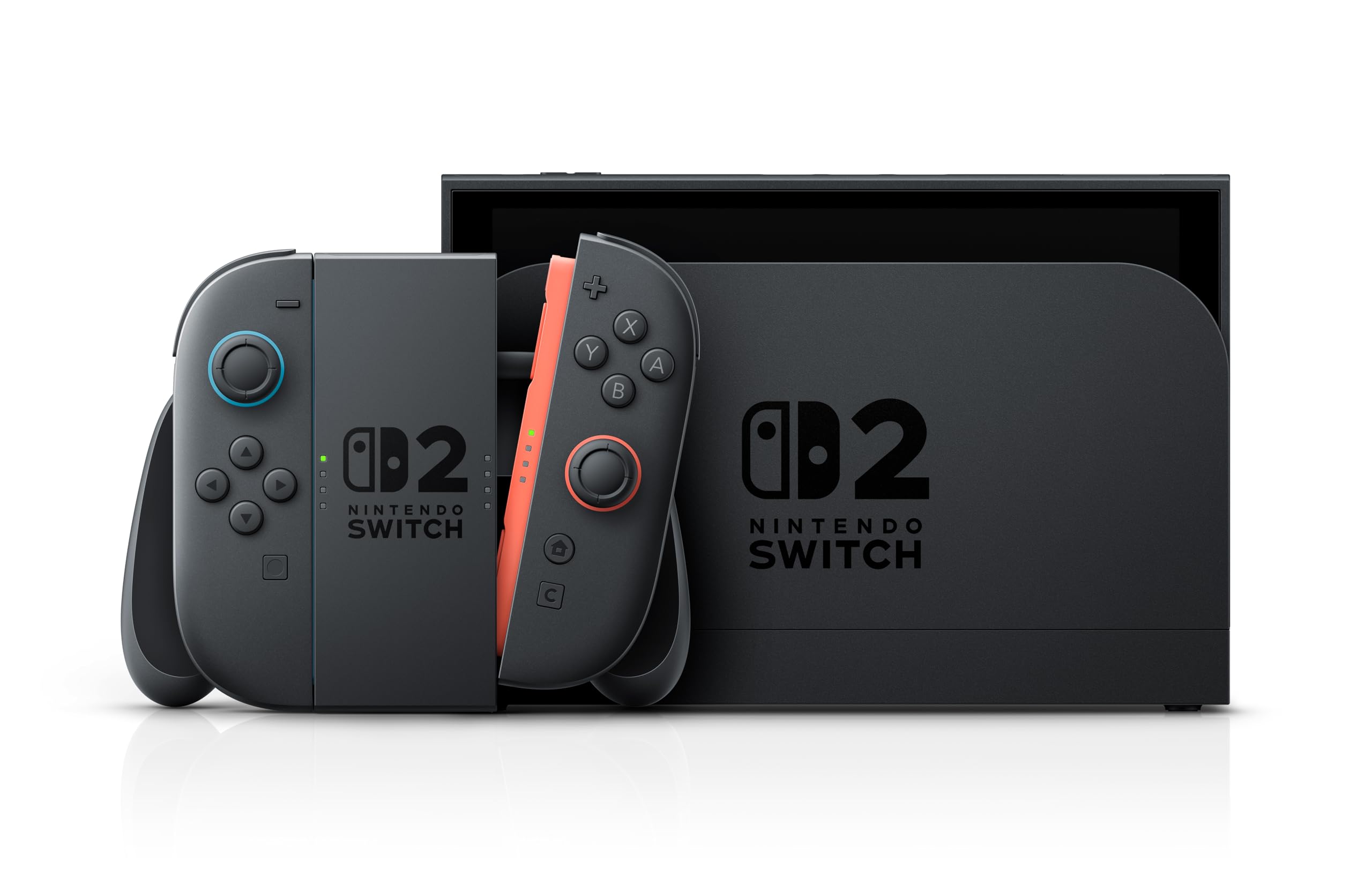
The custom NVIDIA chip is the heart of this console. Nintendo claims about ten times the graphics power of the original, and the hands-on reports back up the feeling that this is a different class of machine. DLSS and ray tracing are both supported, which is why games can look sharper without the hardware working as hard as the pixel count suggests. With 12GB of RAM behind the chip, the console is built to handle ports that the original Switch could never run.
Reviewers saw Mario Kart World reach 60 fps. In docked mode the console outputs 4K/60 or 1440p/120, and games vary in how they use that headroom. Mario Kart World runs at native 1440p, while others are upscaled to 4K. Reviewers also reported Zelda: Tears of the Kingdom running at 4K/60. The heaviest port in the lineup, Cyberpunk 2077, ran at 30 to 40 fps. That is a respectable result for a thin handheld, but it is a reminder that this is not a PS5.
The comparison to Sony's machines is worth stating plainly. Reviewers agree the Switch 2 cannot match the PS5 or PS5 Pro. They also describe it as not a million miles away from the PS5 and Xbox Series consoles, and one noted it can run games that made the PS4 sweat. That feels right to me as a verdict: you get a clear jump over the original without the pretense of being a high-end box.
A few details matter for day-to-day use. VRR works on the handheld screen only, so docked TV play does not get it. ALLM is supported, which helps TVs switch to game mode automatically. Reviewers who tested the console also noticed only slight stutter, and only in four-player local co-op with GameChat video running. DLSS artifacts show up occasionally, mostly in the background. The dock has an internal fan, and reviewers describe it as relatively quiet.
Library & Ecosystem
Mario Kart World is the flagship, and it shows off what the hardware can do. It has a 24-player mode, up from 12 in the previous game. Other first-party titles include Donkey Kong Bananza, which followed in July after launch.
Beyond Nintendo's own games, the lineup leans on ports. Cyberpunk 2077, Hogwarts Legacy, Street Fighter 6, Hitman and Yakuza are all on the list. That is good news for variety and a mild disappointment for anyone hoping for a wave of exclusives. Reviewers described the early library as thin and largely made of ports, and that was a fair read.
Backward compatibility is a real strength. It is wide, and many older games run better on the new hardware. Some details are worth knowing. The Ring Fit Adventure strap does not fit the larger Joy-Con 2, though the original Joy-Con still work. One reviewer reported Smash Bros. Ultimate crashing when choosing a Mii Fighter, which Nintendo said it was fixing. Upgrades vary by game: Zelda: Breath of the Wild has a paid upgrade, or it is free with the Nintendo Switch Online Expansion Pack, while Pokemon Scarlet and Violet gets a free upgrade with a higher framerate and longer draw distance.
On the storage side, the 256GB of internal space is a huge improvement over the 32GB of the original and 64GB of the OLED. You will still want more eventually, and that is where the microSD Express rule bites: it is the only expansion type, and regular microSD cards do not work. Games use the new Switch 2 game card slot.
GameChat gets a dedicated 'C' button. The built-in mic with noise reduction works well, according to reviewers, but video and screen share are low-res and laggy. Using GameChat requires a paid Nintendo Switch Online membership now that the free period has ended. The Switch 2 Camera is a separate purchase, and one reviewer called the whole feature a gimmick next to free Discord. I agree it is a nice extra rather than a reason to buy.
Comfort & Build
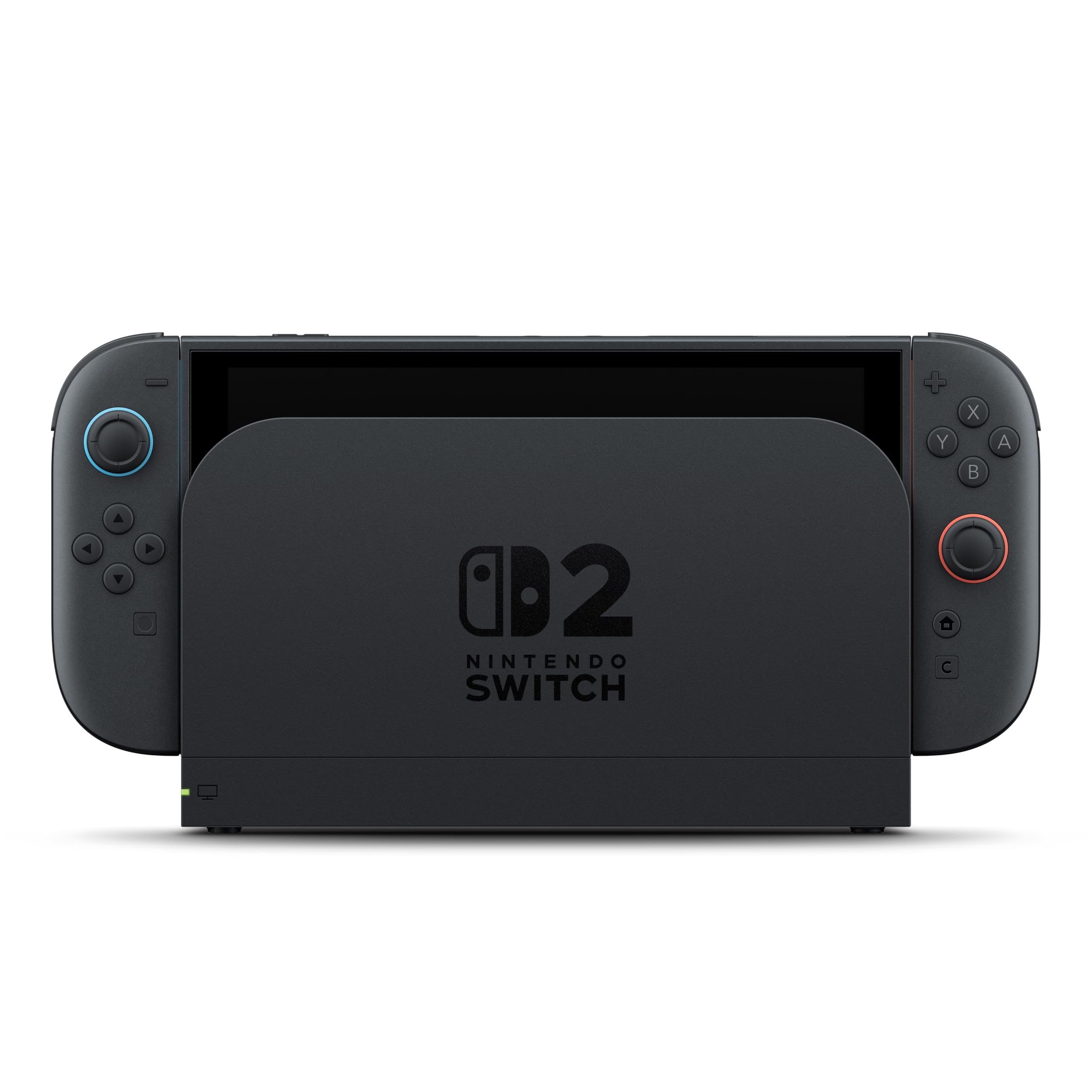
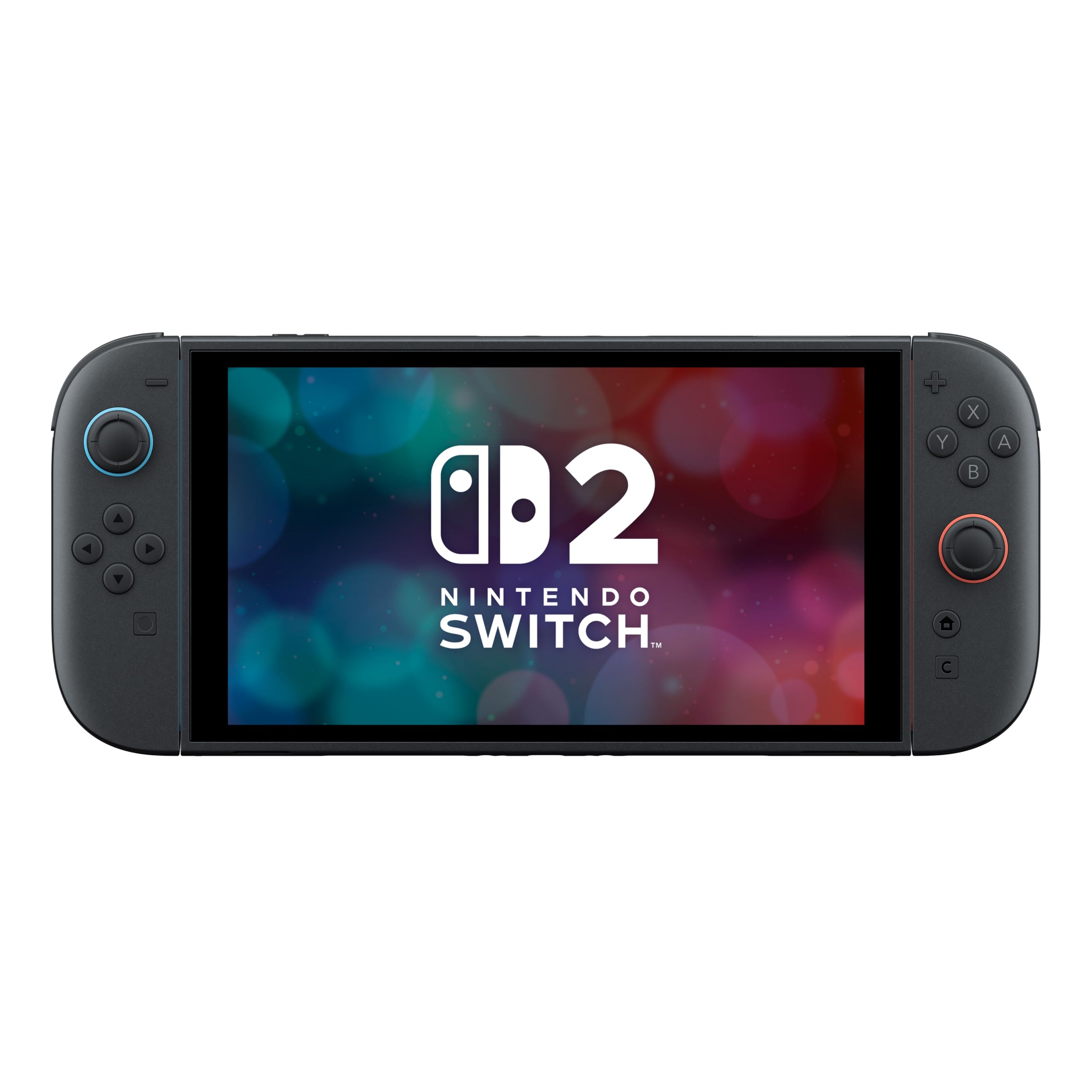
The Switch 2 weighs 535g (1.18 lb) with Joy-Con 2 attached. That is heavier than the original at 399g and the OLED at 422g, but far lighter than the Steam Deck OLED at 640g. The ROG Ally weighs 1.34 lb. The thickness of 0.55 in matches the Switch OLED, so it is still slim for its class. The screen has grown from 6.2 inches to 7.9 inches, which is where most of the extra size goes.
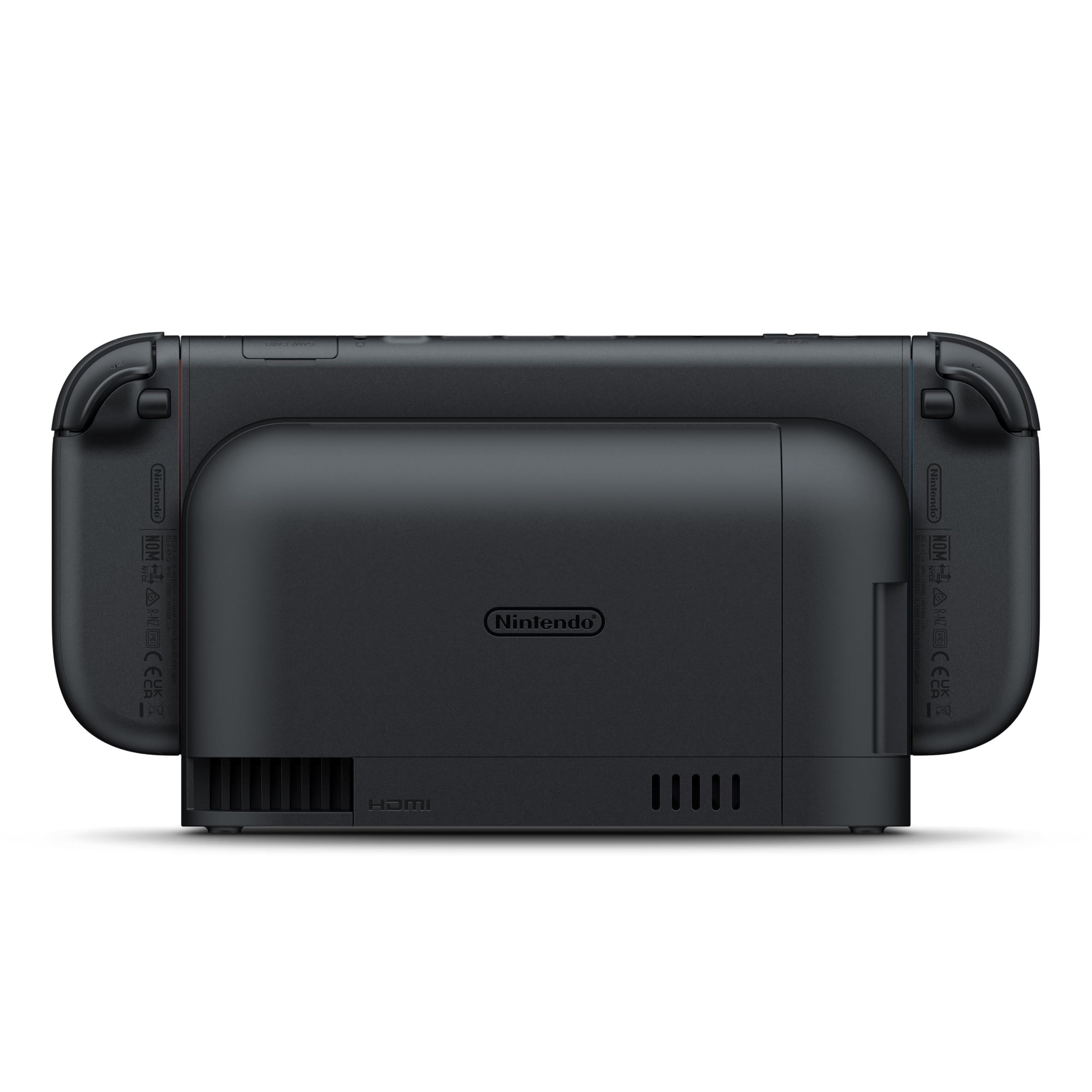
The finish is matte black with muted red and blue accents. Reviewers describe it as more premium and less toy-like than before, though it picks up minor scratches more easily. The kickstand is nearly full-width and adjusts to a much wider angle. One reviewer noted the hinge is thin with some jiggle, but has strong tension. Tabletop mode puts stress on the bottom USB-C port, and the game card slot is reinforced.
Comfort is where the console shows its limits. The flat back has no grips, and reviewers found it gets uncomfortable after a couple of hours of handheld play. Three sources recommend a third-party grip case, and one describes using one. The Joy-Con 2 are slightly larger, and one reviewer found the plus and minus buttons a bigger reach with the right stick sitting farther away. The magnetic attachment is a nice upgrade, with a release button under each trigger and the option to attach them upside down, though one reviewer warned of a pinch risk. Mouse mode helps in strategy games such as Civilization 7.
There are two USB-C ports, one on top and one on the bottom, plus a built-in mic and a headphone jack. The dock has one fewer USB port than the original dock, leaving two USB-A ports along with HDMI, Ethernet and power. Bluetooth audio shows a noticeable delay with gaming headsets and earbuds, according to one reviewer, so wired headphones are the safer choice.
Battery is the biggest trade-off. The 5,220 mAh cell is larger than the OLED's 4,310 mAh, but the screen and chip use far more power. Nintendo estimates 2 to 6.5 hours. Reviewers who put it through demanding games got closer to the low end: 2:23 in Mario Kart World, 2:56 in Zelda: Breath of the Wild, and 4:15 in the lighter Puyo Puyo Tetris 2S, all at maximum brightness. Another reviewer got just shy of two and a half hours in Zelda. A battery charge limit setting helps long-term health if you mostly play docked.
Value & Accessories
Pricing has moved since launch. The Switch 2 arrived June 5, 2025, and stock was hard to find at first. It now sits at $499.00 after a September 2026 increase, and it is no longer the cheap option in the way earlier Nintendo hardware was.
The accessories matter more than usual here. Expansion storage has to be a microSD Express card, and you cannot reuse the regular microSD card from your old Switch. If you plan to carry a large digital library, budget for it from day one. A third-party grip case is the other near-essential add-on for anyone who plays handheld for long sessions, based on what reviewers described. The dock gives you HDMI, Ethernet, power and two USB-A ports, and that covers most living-room setups.
The Switch 2 Camera is optional and only useful if you plan to use GameChat video. GameChat itself requires a paid Nintendo Switch Online membership. If you rarely play online, you can skip both and still get the full value of the console.
Value for Money
At $499.00 the Switch 2 sits at a premium compared with the original Switch line. PC handhelds are not a bargain either: the Steam Deck OLED and ROG Ally X cost more than the earlier Steam Deck and ROG Ally models. What you get for the money is a console that weighs 535g against the Steam Deck OLED's 640g, plus a first-party library you cannot play anywhere else. If you want raw power, the PS5 is the more capable machine. If you want Nintendo games on a screen this good, nothing else competes.
Who Should (and Shouldn't) Buy This
If you play handheld first and want the bigger 120Hz HDR10 screen, the Switch 2 is the right choice because it is the best Nintendo hardware yet. If you care about Mario Kart World and other Nintendo exclusives, it is the only way to play them. If you also want a 4K docked option for the living room, it covers that too.
Nintendo Life's full-drain test of Mario Kart World at maximum brightness lasted about 2 hours 10 minutes in handheld mode. Skip it if you want lots of cheap storage, because microSD Express is the only option. Skip it if you want VRR on a TV, or if you need the lightest possible console. LCD black levels are also worse than on the Switch OLED, so OLED fans may feel a step backward on the screen.
Bottom Line
The Switch 2 is a strong generational upgrade held back by its price and battery life. I recommend buying it at $499.00 if the handheld screen and Nintendo's games are what you want. Pick up a microSD Express card rather than a regular one, and consider a grip case for long sessions.
After years of Nintendo handhelds that were fun but technically behind, this one finally feels like a peer to the rest of the market. It is not perfect, and the battery will remind you of that every few hours, but it is the first Switch I would recommend to someone who cares about how a screen looks. If exclusives matter most to you, check the current first-party lineup before calling it essential.
-- Theo Chan, Hardware Testing Director
*Disclosure: As an Amazon Associate, Revuzia earns from qualifying purchases. Prices and availability are accurate as of publication and may change.*