Netgear Nighthawk RS100 Review: Cheap Wi-Fi 7 Held 150Mbps Through Three Walls
November 19, 2026
The Netgear Nighthawk WiFi 7 Router RS100 arrives at $127.48 with a simple promise: Wi-Fi 7 compatibility at a price that undercuts the rest of Netgear's lineup. Reviewers who put it through its paces came away with a clear impression.
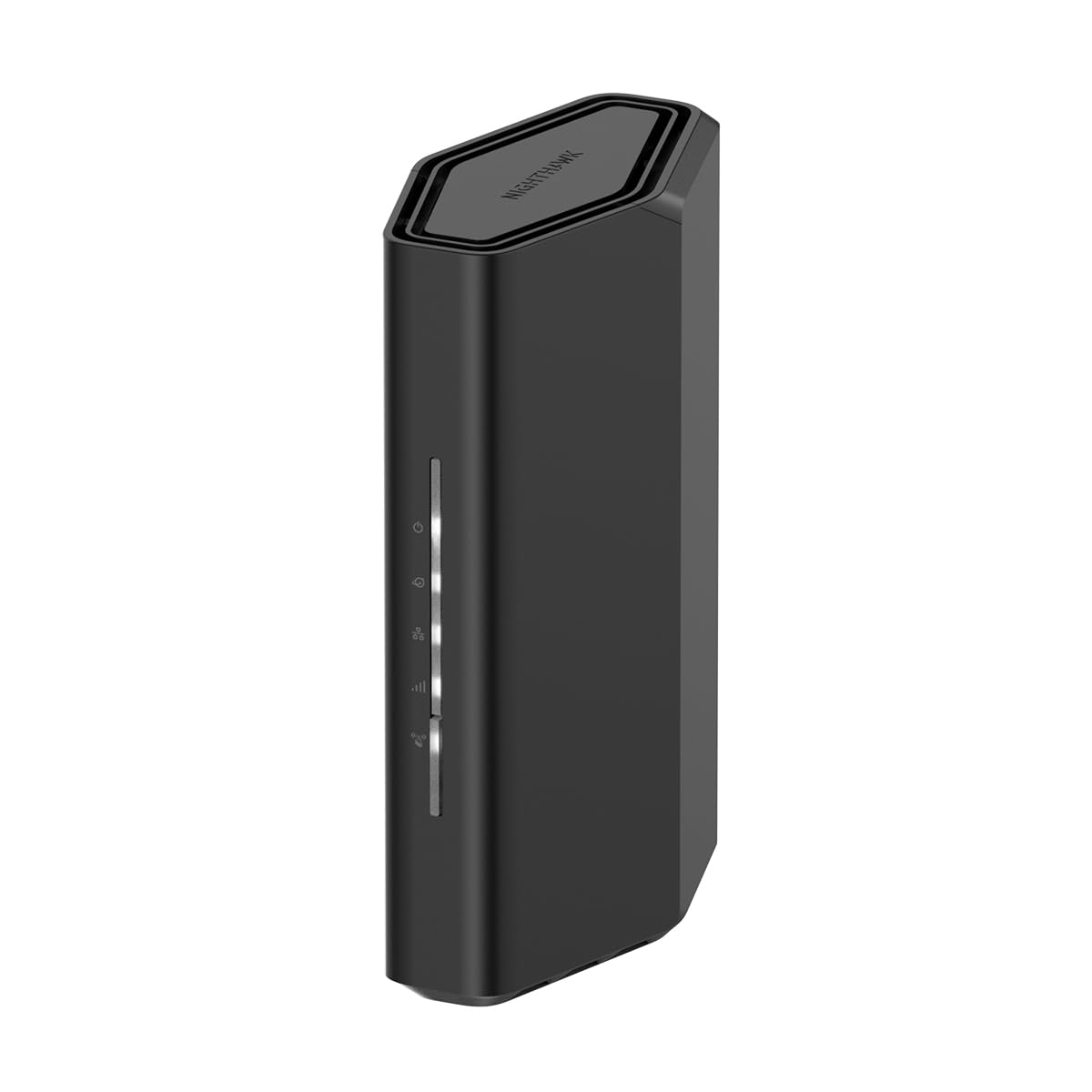
The Netgear Nighthawk WiFi 7 Router RS100 arrives at $127.48 with a simple promise: Wi-Fi 7 compatibility at a price that undercuts the rest of Netgear's lineup. Reviewers who put it through its paces came away with a clear impression. It is a stable, easy-to-live-with router that does the everyday job well, but it is Wi-Fi 7 in label more than in spirit. There is no 6GHz band, no multi-link operation and no 320MHz channels, so the headline features of the standard mostly sit out of reach. The question is whether the basics are strong enough to justify the upgrade.
Quick Verdict
Reviewers found the RS100 held the full 150Mbps of their broadband line in the same room, at 30ft through three partition walls, and in a back-office dead spot. At $127.48 it is a solid budget upgrade for anyone on a sub-gigabit plan who wants a newer router. Buy it for a small or medium home; skip it if you want USB, fast wired ports or the real gains of Wi-Fi 7. We rate it 3.5/5 overall.
Rating and Pros/Cons
| Aspect | Rating |
|---|---|
| Speed | 3.5/5 |
| Range and Coverage | 4/5 |
| Features | 2.5/5 |
| Connectivity | 3/5 |
| Value | 4.5/5 |
| Overall | 3.5/5 |
Pros
- Cheapest Wi-Fi 7 router in Netgear's lineup, at GBP 130 in the UK against GBP 200 for the RS200
- Held the full 150Mbps at 30ft through three partition walls
- 2.5GbE WAN port leaves room for a broadband plan faster than gigabit
- Compact 184mm x 66mm x 122mm body fits on a shelf or desk
- Rated for up to 2,000 sq ft of coverage and up to 50 devices
Cons
- Dual-band only: no 6GHz radio, no MLO, no 320MHz channels
- All four LAN ports are gigabit, and there is no USB port
- Only two internal antennas, against four on the RS200 and RS300
- 2x2 MIMO and 160MHz channels leave its 5GHz rating at half that of the RS200
Specs at a Glance
| Specification | Detail |
|---|---|
| Price | $127.48 (GBP 130 in the UK) |
| Wi-Fi standard | Wi-Fi 7, dual-band (2.4GHz + 5GHz) |
| Rated speed | Up to 3.6Gbps headline rating; 2.9Gbps maximum on 5GHz |
| MIMO | 2x2 |
| Antennas | 2 internal |
| Maximum channel width | 160MHz |
| Wi-Fi 7 features | 4K QAM, preamble puncturing |
| Multi-link operation (MLO) | No |
| WAN port | 1 x 2.5GbE |
| LAN ports | 4 x Gigabit Ethernet |
| USB | None |
| Coverage | Up to 2,000 sq ft (1,500 sq ft in some regions) |
| Device capacity | Up to 50 devices |
| Dimensions | 184mm high x 66mm wide x 122mm deep |
| Mesh | Single-box router, not a mesh system |
Speed and Throughput

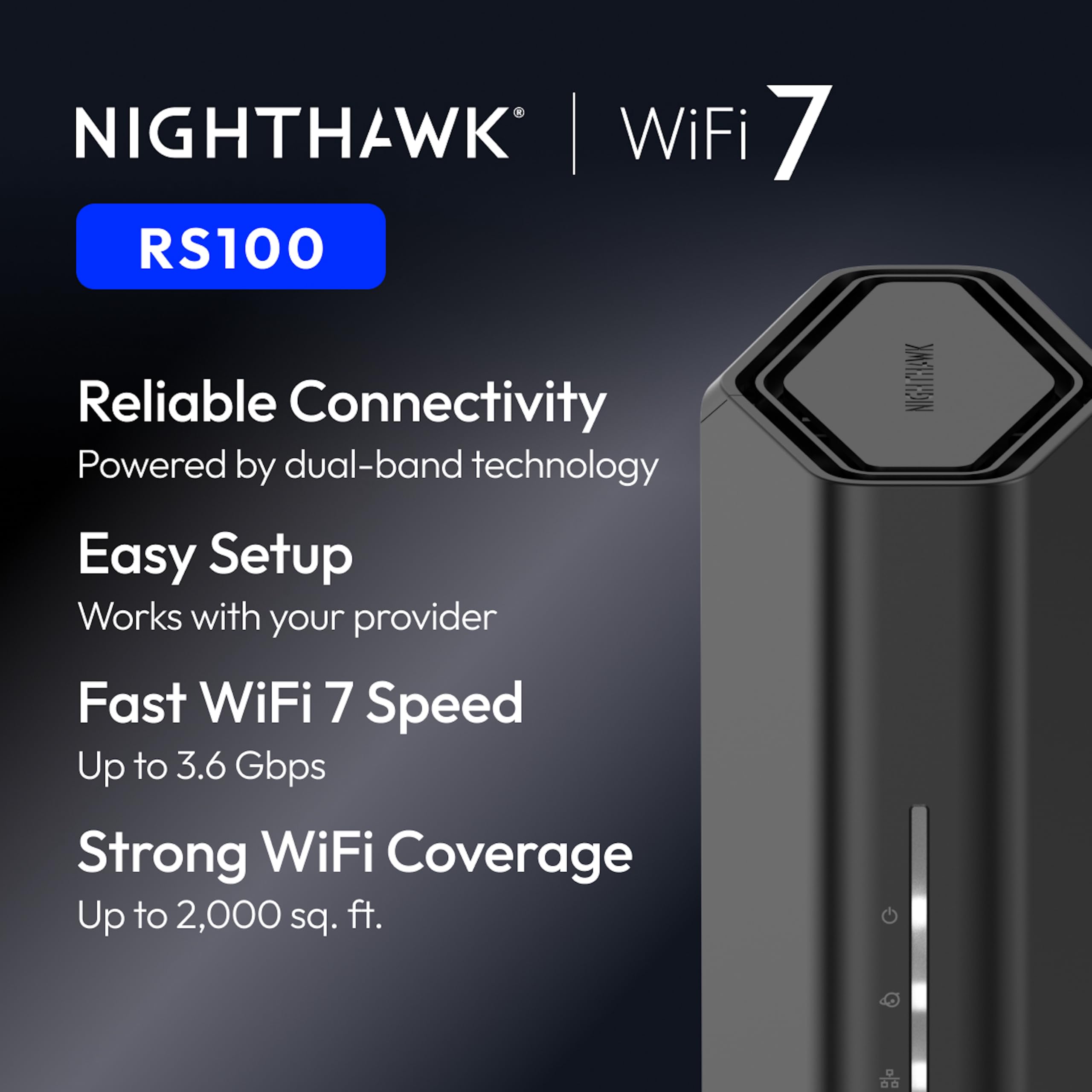
Netgear's headline rating for the RS100 is up to 3.6Gbps, a theoretical figure that appears to combine both bands. The 5GHz band alone is rated at a maximum of 2.9Gbps, which is half the speed of the RS200. The 2x2 MIMO layout and 160MHz maximum channel width set that ceiling, and they cap what any single device can pull in practice.
Those numbers matter less than they sound, because most homes are limited by their broadband plan long before the router runs out of headroom. That is what reviewers found on a 150Mbps line. The RS100 hit the full 150Mbps on an Ookla speed test and on a 20GB Steam download in the same room as the router. In that test the ceiling was the broadband line, not the router.
There is an important limit to that result. A 150Mbps line is a small fraction of the 2.9Gbps 5GHz rating, so the test shows the router keeps up with an everyday plan but says nothing about its top speed.
Wi-Fi 7 adds 4K QAM, which packs 20% more data into the same airtime as Wi-Fi 6, and that gain is real. But without a 6GHz band, MLO or 320MHz channels, the newest phones and laptops cannot stretch their legs on this router. Expect an incremental step up from a Wi-Fi 6 box rather than a dramatic one.
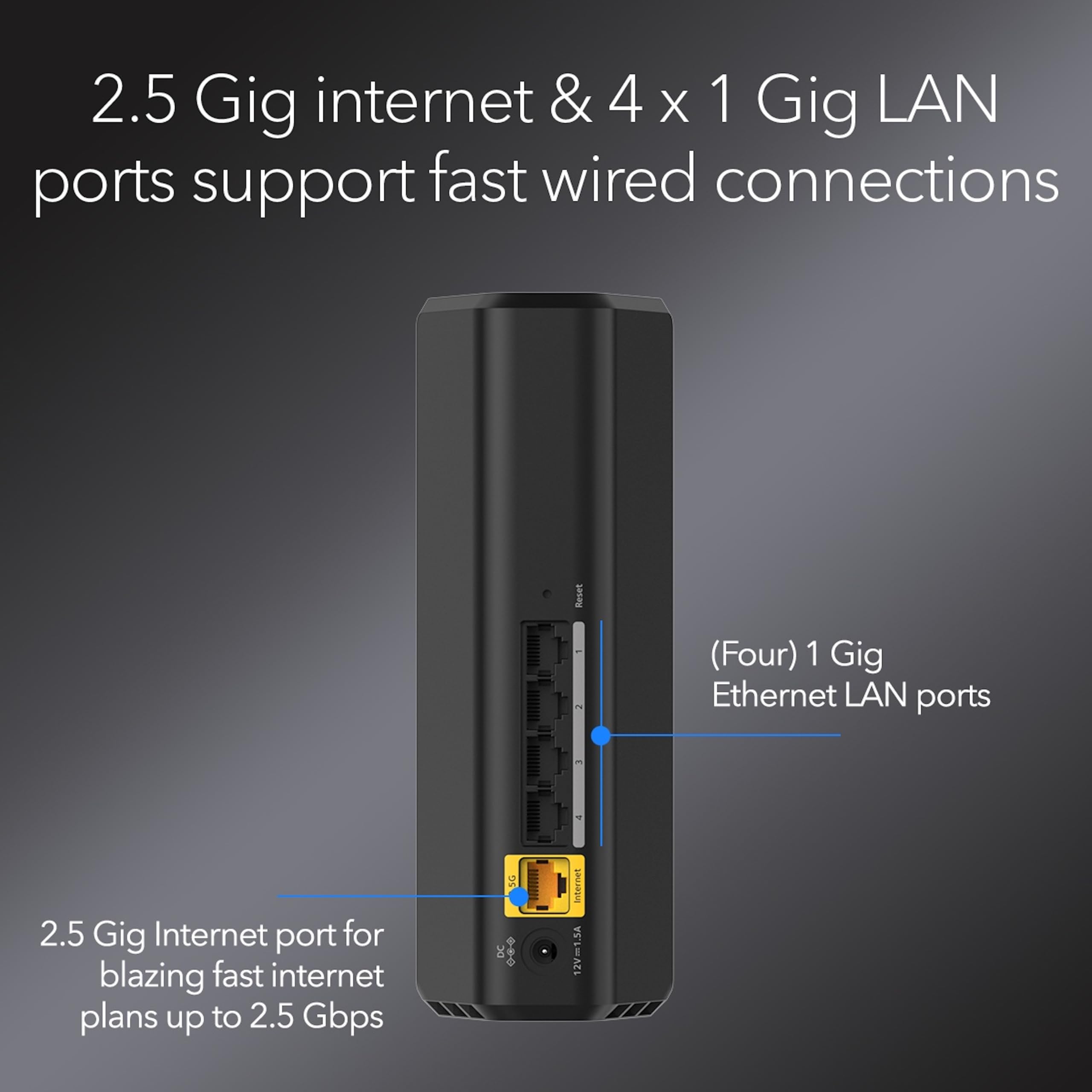
The wired side adds a second constraint. The 2.5GbE WAN port accepts a connection faster than gigabit from your modem or fibre terminal, but every LAN port tops out at 1Gbps. A wired desktop or NAS will never see more than gigabit speeds from this router, whatever the plan behind it.
Range and Coverage
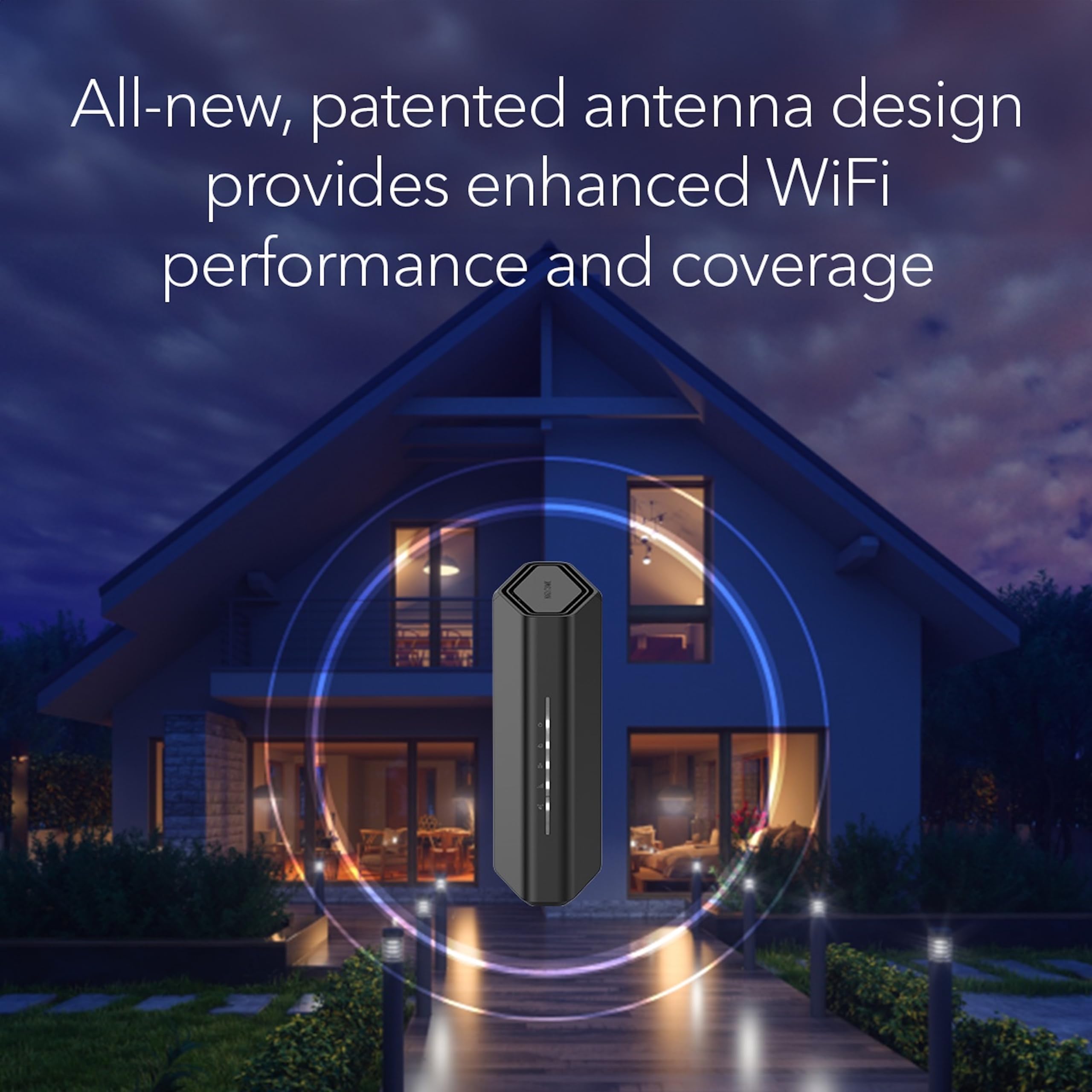
Range is where the RS100 earned its best marks. Reviewers reported it held 150Mbps at 30ft through three partition walls. Speed dipped slightly on the walk to a back-office dead spot, then recovered to the full 150Mbps. For a router with only two internal antennas, holding the full line speed through that many walls is a strong result.
Netgear claims coverage of up to 2,000 sq ft (about 186 sq m), though some regions quote 1,500 sq ft because of local regulations. It is rated for up to 50 devices, which is plenty for a typical household of phones, laptops, TVs and smart-home gear.
The limits are physical. The RS100 has two internal antennas, where the RS200 and RS300 have four. That tradeoff explains why it does well in small and medium homes but should not be your first pick for a sprawling property. It is a single-box upgrade rather than a mesh system, so a large home with several floors and thick walls is better served by something bigger.
For best results, place it centrally and out in the open rather than inside a cabinet. With a 2,000 sq ft rating on a two-antenna design, the router has little spare signal to lose to furniture or walls.
Setup and App Experience
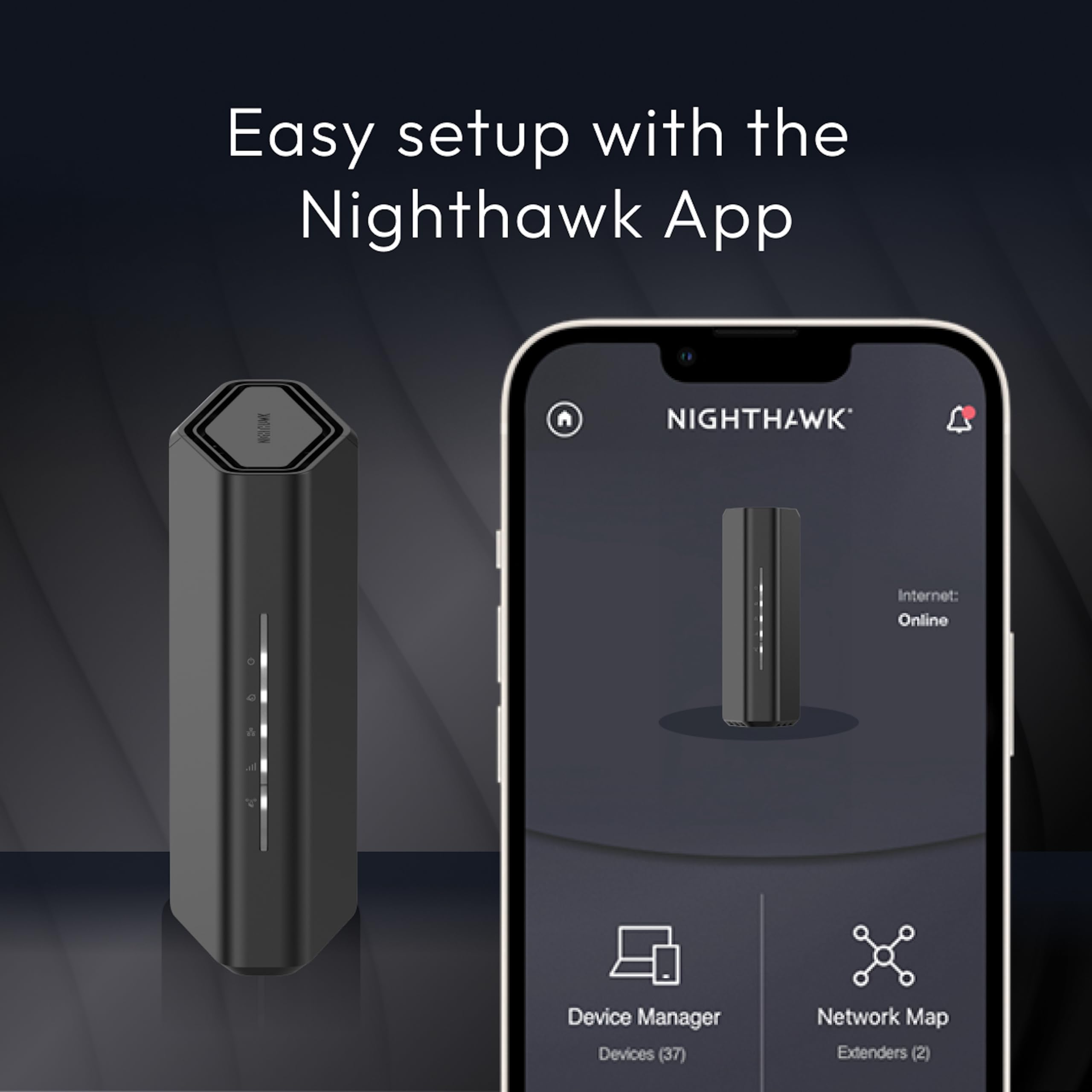
The router is compact at 184mm high, 66mm wide and 122mm deep, so finding a spot on a shelf or desk is easy. That small footprint is part of the appeal for flats and small homes, where a bulky multi-antenna router looks out of place. Remember that range depends on placement, so a central, open position beats a tidy hiding spot.
Wiring is simple. Connect your modem or fibre terminal to the single 2.5GbE WAN port, then plug wired devices into the four gigabit LAN ports. Four wired ports cover a TV, a games console, a desktop and a printer, but they run out quickly in a busy home. With no USB port there is no shared-storage setup to configure, which keeps things simple but removes the option entirely.
The router suits buyers who want to plug in and forget. It is a single-box upgrade, so there are no satellite units to place or pair. The trade-off is that you cannot grow the network later by adding nodes. If your home needs more coverage in a year, you will be replacing the router rather than extending it.
For contrast, the cheaper Wi-Fi 6 Asus RT-AX59U costs GBP 92 at Amazon and includes two USB ports plus free parental controls and security. That is a reminder that the RS100's low price still comes with real feature gaps.
Features and Security
Wi-Fi 7 brings two genuine upgrades here. 4K QAM packs 20% more data into the same airtime as Wi-Fi 6, and preamble puncturing lets the router keep using a channel even when part of it is hit by interference. Both help in crowded wireless environments, and both work on a modest two-antenna design.
The list of what is missing is longer. There is no 6GHz radio, no MLO to combine the 2.4GHz and 5GHz bands into a single link, and no 320MHz channels. There is no USB port for shared storage, and the LAN ports top out at gigabit speeds. The 2.5GbE WAN port suits faster-than-gigabit broadband, but the gigabit LAN caps wired devices, which matters for NAS owners and anyone with a fast wired desktop.
The 2x2 MIMO layout and 160MHz channel limit mean each device gets a narrower pipe than on the pricier RS200 and RS300. For phones, laptops and TVs on a plan of a few hundred megabits, that is rarely a problem. For many devices all pulling heavy traffic at once, the extra antennas on the siblings would help.
Value for Money
At $127.48, the RS100 sits at the budget end of the Wi-Fi 7 market. In UK pricing it is GBP 130, which is GBP 70 less than the RS200 at GBP 200. The RS300 costs roughly twice as much at GBP 245, and the RS700S sits at the premium end at GBP 800.
The Wi-Fi 6 Asus RT-AX59U costs less at GBP 92 and adds USB ports and free parental controls, but it is a generation behind and should have a shorter support life. For most buyers the RS100's newer standard and 2.5GbE WAN port justify the extra spend.
Who Should (and Shouldn't) Buy This
Buy it if you live in a flat or small home with a plan between 150Mbps and 1Gbps, you are still on an ISP-supplied or Wi-Fi 5 router, and you want Wi-Fi 7 compatibility without paying for features you will not use. It held the full line speed through three walls, which makes it a stable, simple choice for streaming, calls and everyday browsing.
Skip it if you have a larger home, because the RS200 or RS300 have four antennas and cover more ground. Skip it if you need USB storage, MLO or 6GHz, or if you want fast wired transfers to a NAS over gigabit-limited LAN ports. Budget-minded buyers who value USB and free parental controls could save money with the Asus RT-AX59U.
Bottom Line
The Netgear Nighthawk RS100 is a capable, low-cost entry to Wi-Fi 7 that does the basics well at $127.48. Buy it for the price and the 150Mbps it held through three walls, not for the headline Wi-Fi 7 features it leaves out. It is an honest budget router that is easy to recommend to the right buyer.
-- Theo Chan, Hardware Testing Director
*Disclosure: As an Amazon Associate, Revuzia earns from qualifying purchases. Prices and availability are accurate as of publication and may change.*