Falcon 9 Launches 27 Starlink Satellites on Booster's 26th Flight
October 27, 2026
SpaceX's Falcon 9 lifted off at 12:25 a.m. PDT (3:25 a.m.
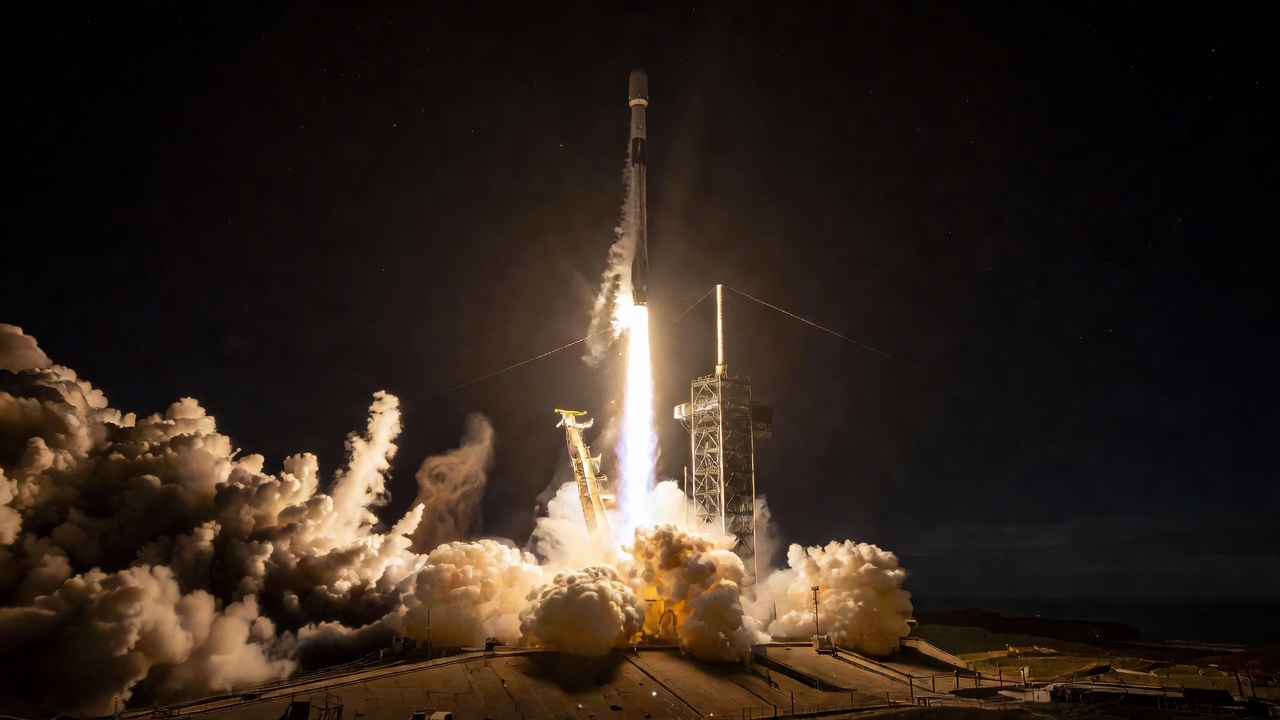
SpaceX's Falcon 9 lifted off at 12:25 a.m. PDT (3:25 a.m. EDT) on Tuesday, Oct. 27, 2026, from Space Launch Complex 4 East at Vandenberg Space Force Base, carrying 27 Starlink satellites on a mission that NASASpaceflight describes as the 700th flight of the Falcon 9 family. The milestone is the smaller story. The first stage that flew it, booster B1082, was making its 26th trip to space, yet on Oct. 23 a sister booster, B1063, flew its 36th time, so a 26-flight booster is still ten flights behind its sister booster B1063. For anyone tracking launch rates, satellite deployment or the future of low Earth orbit, this mission shows what routine reuse looks like in practice.
What Happened
The Starlink 15-16 mission launched on a southeasterly trajectory from California's central coast, putting its payload into an orbit inclined 70 degrees to the equator (inclination is the tilt of the orbit relative to the equator, and it decides which latitudes the satellites pass over). The 27 spacecraft are Starlink V2 Mini satellites, per NASASpaceflight. They separated from the second stage about one hour into the flight, after a short circularization burn that rounded out the orbit.
Booster B1082 returned to the Pacific Ocean and landed on the droneship Of Course I Still Love You, an uncrewed barge stationed off Baja California, Mexico. The recovery update was stamped 4:15 a.m. EDT (0815 UTC), roughly 50 minutes after liftoff. That is the time the update was posted. A booster is the reusable first stage of the rocket, the part that does the heavy lifting off the pad and then flies back to be used again.
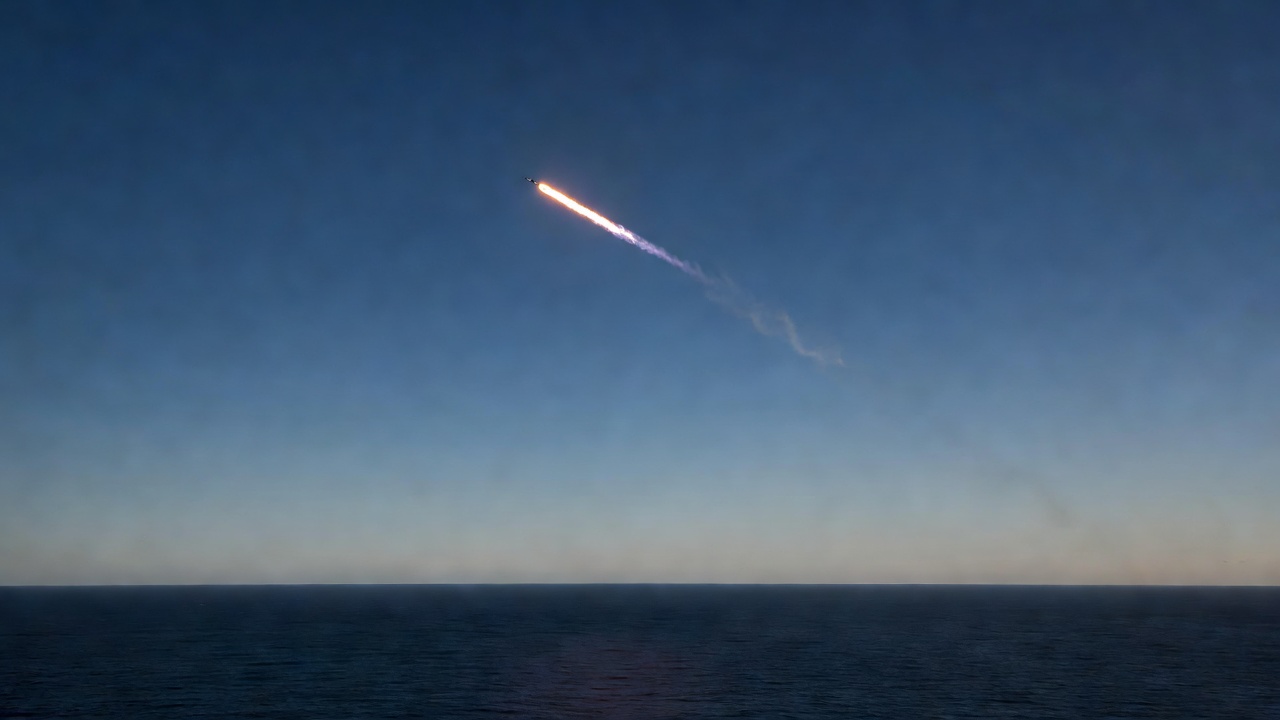
The schedule was not smooth. The mission was first set for Oct. 23, then slipped behind Starlink 15-15, which flew from the same pad. The final attempt opened at 10:46 p.m. PDT on Monday, Oct. 26, with a window that ran until 1:45 a.m. PDT. Liftoff came about one hour and 39 minutes after the window opened, leaving roughly 80 minutes of margin before the window closed.
The Science Behind It
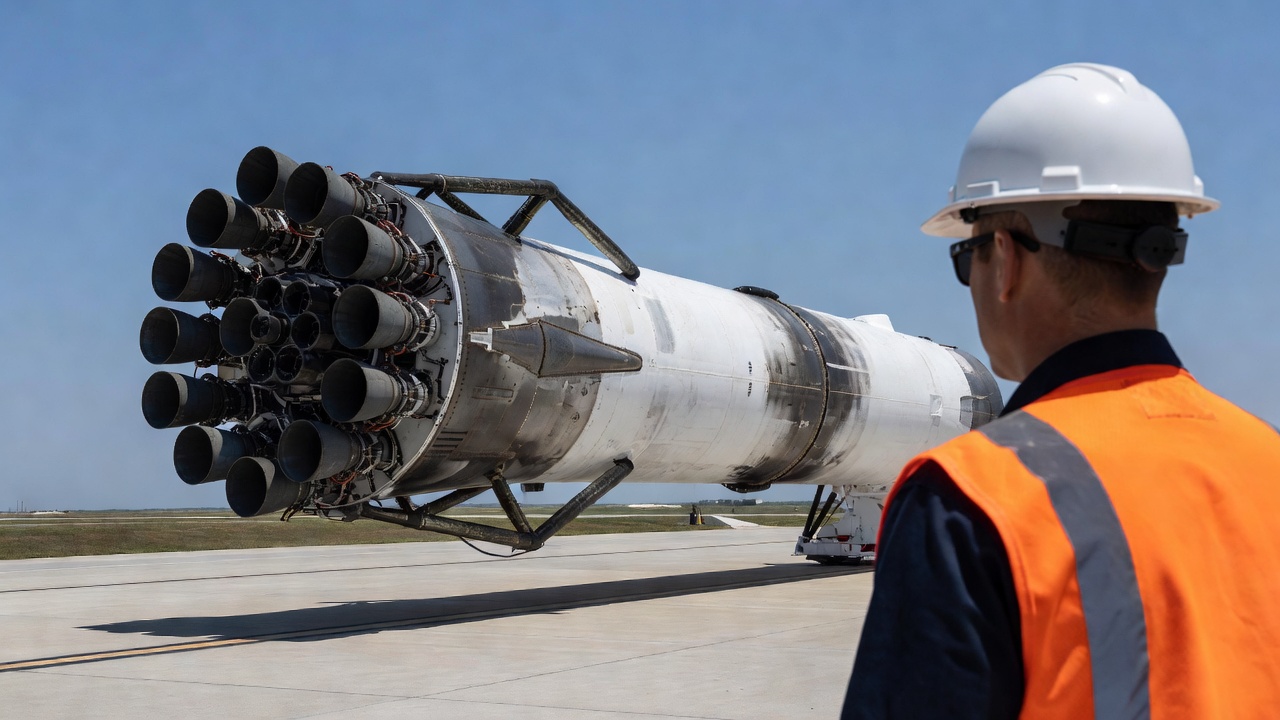
Falcon 9 stands 70 meters tall and has two stages. The first stage uses nine Merlin 1D engines tuned for thrust at sea level, and the second stage uses a single vacuum-optimized Merlin 1D, built to run where there is almost no air. Both stages burn RP-1/LOX (refined kerosene and liquid oxygen), according to NASASpaceflight.
The 70-degree inclination is a function of geography as much as engineering. Flying southeast from the central California coast sends the rocket over open ocean, and the resulting tilted orbit carries the satellites over a wide band of latitudes instead of hugging the equator. Once the second stage reaches the target trajectory, a brief circularization burn (a short engine firing at the high point of the path that turns an elliptical orbit into a near-circular one) sets the final altitude. Then the stack releases all 27 satellites, about an hour after leaving the pad.
The recovery half of the mission is just as scripted. The first stage lands on a droneship in the Pacific instead of falling into the sea, which is what allows the same airframe to fly again weeks or months later.
Why This Mission Matters
B1082 has been in service since January 2024. Before this flight it had flown USSF-62, OneWeb Launch 20, NROL-145, Transporter-18 and 21 Starlink V2 Mini batches, which makes 25 prior missions and 26 in total. Its manifest mixes government, commercial rideshare and constellation work, so one airframe has served customers with very different requirements, from a U.S. Space Force weather satellite to a rival constellation operator.
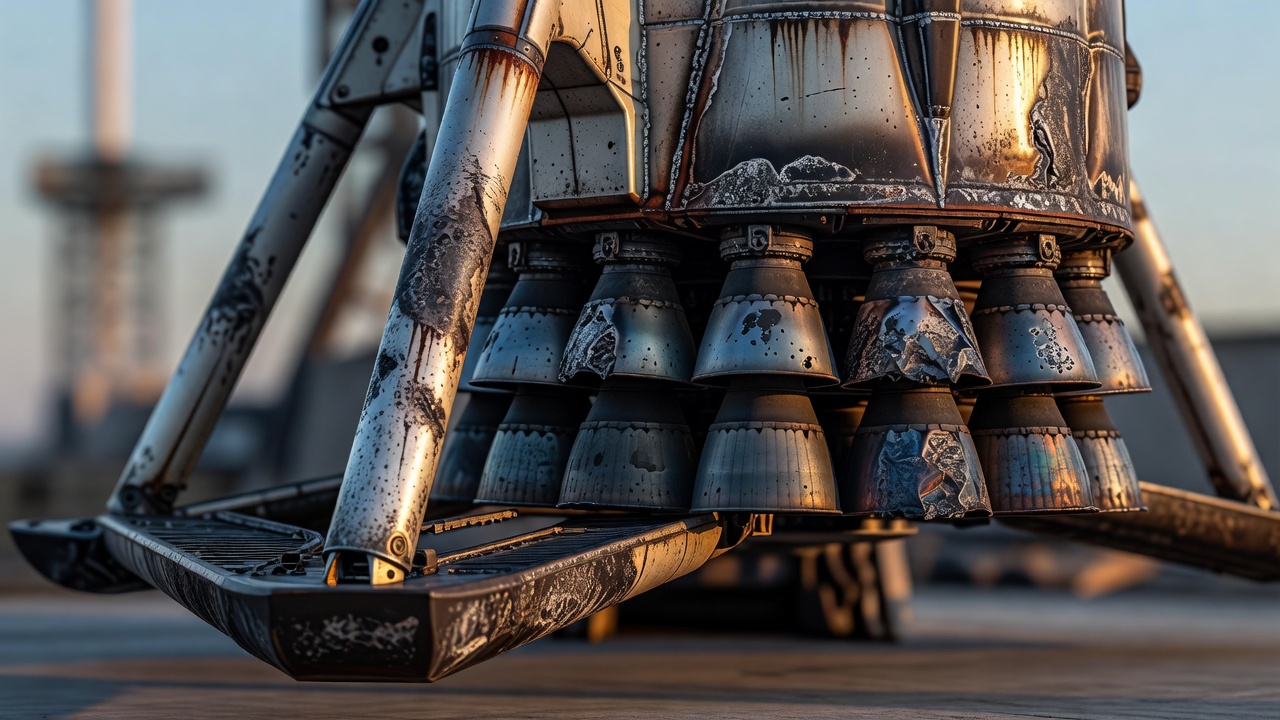
NASASpaceflight says Starlink Group 15-16 serves as Falcon 9's 700th mission overall.
Context from the previous flight sharpens the picture. On Oct. 23, booster B1063 flew its 36th time on Starlink 15-15, which would make it the second booster to reach 36 flights. That landing was the 673rd Falcon booster landing to date, and the 229th on the droneship A Shortfall of Gravitas. Reuse at that scale is what lets SpaceX fly its own constellation missions from one pad within days of each other.
Competitive Landscape
The strongest competitive signal is on SpaceX's own side: Gwynne Shotwell, SpaceX's COO and President, said on the company's Q3 earnings call that Starlink added 1.6 million customers in the quarter, with service active in 174 markets. She added that the figure excludes "additional hundreds of thousands of enterprise subscribers and aviation customers."
Other companies are building competing networks, and they depend on launch capacity. Amazon says its Amazon Leo network, formerly Project Kuiper, began full-scale deployment in April 2025 and will use launch providers Arianespace, Blue Origin, SpaceX and United Launch Alliance for more than 80 launches. Eutelsat positions its OneWeb constellation as part of a multi-orbit GEO-LEO network. B1082's own history includes a OneWeb launch, so SpaceX's rocket has carried a competitor's satellites as well as its own.
What Comes Next
The schedule around this launch shows how hard the cadence is to hold. Starlink 15-15 needed four attempts: a technical issue on Oct. 20, weather on Oct. 21, and a hold in the final seconds on Oct. 22 that was also weather-related, before it flew on Oct. 23 at 3:48 p.m. PDT. Starlink 15-16 inherited that delay from the same pad. The brief documents no scrubs of its own for the final attempt; the earlier delay was a schedule slip behind Starlink 15-15, not a scrub.
SpaceX's manifest reportedly lists another Starlink mission from SLC-4E on Oct. 29, 2026, followed by USSF-432 from the same pad. For B1082, the next steps are recovery, inspection and turnaround toward a 27th flight.
The most striking thing here is how unremarkable the evening was. A 26th-flight booster, a satellite stack of 27 and a Pacific landing all passed without a headline of their own, and the reported 700th mission nearly disappeared into the log. The real signal is that the hard part, getting hardware back and flying it again, has become the reliable part, and the pad schedule is now where the drama lives.
For a satellite-internet buyer, the practical meaning is coverage. Shotwell's figures put Starlink in 174 markets, and each Falcon 9 batch of 27 satellites is a step toward serving more of them.
-- Zara Velez, Emerging Technology Editor
Sources: Teslarati · Youtube · Spaceflight Now launch coverage