Bloq Quantum Launches Maya AI Agent With Unproven 10x Speed ClaimBloq Quantum Launches Maya AI Agent With Unproven 10x Speed ClaimBloq Quantum Launches Maya AI Agent With Unproven 10x Speed ClaimBloq Quantum Launches Maya AI Agent With Unproven 10x Speed Claim
October 13, 2026
Bloq Quantum announced Bloq Maya on October 13, 2026, a conversational AI agent that CEO Sreekuttan L S says takes enterprise teams from an idea to a tested quantum use case "up to 10x faster." The same press release also says companies need only "half the usual time and

Bloq Quantum announced Bloq Maya on October 13, 2026, a conversational AI agent that CEO Sreekuttan L S says takes enterprise teams from an idea to a tested quantum use case "up to 10x faster." The same press release also says companies need only "half the usual time and manpower" with Maya, which is roughly a 2x gain, and the two figures sit uneasily together. Neither comes with a benchmark or a baseline. For developers and technology buyers, the question is whether an LLM agent can produce quantum code that is correct, not just plausible-looking, and this launch does not yet say.
This article covers what Bloq released, what the agent is said to do, which claims can be checked against the announcement, and which cannot.
What Happened
Bloq Quantum released Bloq Maya, which it calls its "flagship AI Agent" for enterprise quantum teams. According to the company's press release, the agent is "officially live and available for use today." The announcement carries no beta period, roadmap or staged rollout.
The release frames the product around a workflow problem. Sreekuttan L S, Co-Founder and CEO of Bloq Quantum, says: "Translating complex quantum workflows into production-ready enterprise applications remains a massive bottleneck for enterprises." He then adds: "Bloq Maya removes the friction so teams can go from an idea to a tested quantum use case up to 10x faster." The release presents these as two separate sentences, so they are quoted separately here.
The release does not state pricing. Its boilerplate says a team member will "provide pricing and access options," and directs readers to www.bloq.in or [email protected]. It also gives no user counts, customer counts, funding figures, qubit counts or benchmark scores. The announcement is a company press release, republished by The Quantum Insider under a "PRESS RELEASE" label, so every performance statement in it is a vendor claim.
The Technical Breakthrough
Maya is embedded in Bloq's "unified workspace," which the company's boilerplate describes as low-code. Users talk to the agent in plain language and can ask it to "generate custom quantum circuits, build QUBOs, review algorithms, or generate optimized quantum code." The release says Maya automates "the heavy lifting of infrastructure and complex coding dependencies."
The QUBO item is the most technically specific. A QUBO (quadratic unconstrained binary optimization, a problem format that encodes a decision as binary variables and a quadratic cost function to minimize) is the native input for quantum annealers and is also used by variational algorithms. The release does not define the term. Building a QUBO means translating a business problem, such as which assets to hold, into a cost matrix. That translation step is often where expertise is needed, so an agent that automates it targets a real pain point.
A variational algorithm (a hybrid method in which a classical optimizer repeatedly tunes the parameters of a quantum circuit) is the other consumer of QUBOs. Cirq's documentation, for instance, shows how to write a quantum approximate optimization algorithm (QAOA) for noisy intermediate-scale quantum (NISQ) hardware to solve max-cut, a problem that is hard for classical computing.
The release leaves several basic questions open:
- The underlying large language model is not named.
- The supported SDKs and frameworks, such as Qiskit or Cirq, are not stated.
- The hardware backends are not listed, and the release does not say whether generated code runs on real quantum processors or only on simulators.
- The release promises that the platform offers "several key features:" and then lists none. The list was lost in scraping or omitted.
Those gaps matter because "tested" has no fixed meaning in quantum software. A circuit can pass on a noiseless simulator and fail on noisy hardware, so the claim of a "tested quantum use case" cannot be evaluated without knowing where the testing happened.
Why It Matters for Industry
The release names four target sectors: finance, consulting, automotive and pharmaceuticals. The use cases it lists are risk modeling, portfolio optimization and complex simulations. Portfolio optimization is a natural fit for the QUBO workflow described above, since it is a selection problem with a quadratic cost. The release does not name a single customer or pilot in any of these sectors.
The commercial pitch is a lower barrier to entry. Teams without deep quantum expertise would describe a problem to Maya and receive circuits or optimization formulations in return, inside a low-code environment. If that works, it shifts scarce specialist time from boilerplate to problem design.
The speed claims need scrutiny, and the release gives three versions of them:
- The CEO quote says teams can go from idea to a tested use case "up to 10x faster."
- The release says companies need "half the usual time and manpower" to develop quantum solutions with Maya.
- The boilerplate says Bloq "enables companies to develop quantum algorithms 10x faster," with the "up to" dropped.
"Half the time" implies about a 2x improvement. "Up to 10x" describes a ceiling, and an unqualified "10x faster" describes a typical result. These cannot all describe the same measurement. The release states no baseline, such as a team using a standard SDK without an AI assistant, and no benchmark methodology. Without one, the figures are marketing language rather than measurements.
Competitive Landscape
The announcement makes no comparisons to competitors, and none of the research material identifies a direct rival to an AI agent for quantum code. The names below are industry context, not stated rivals to Maya.
- IBM (Qiskit): an open-source, backend-agnostic software stack for building and running quantum circuits.
- Google (Cirq): a Python library for writing, manipulating and optimizing quantum circuits, then running them on simulators or quantum computers.
- Microsoft Azure Quantum: a cloud service whose Quantum Development Kit supports Q# along with Qiskit, Cirq and OpenQASM.
- D-Wave: an annealing hardware supplier whose Ocean SDK is Python-based and open source. It is relevant here because QUBOs are annealing's native input, though nothing in the release links Maya to D-Wave.
One adjacent platform already pairs natural language with circuit design. Classiq describes its platform as an AI-powered software platform with a natural language AI-assisted interface. That is the vendor's own description, not independent analysis.
Independent analyst commentary specifically on this announcement was not publicly available at publication time. What Bloq claims as its differentiator is the agent itself, embedded in a single low-code workspace. Without benchmarks, customer counts or funding figures, an independent comparison is not possible from the source.
The Bigger Picture
Maya belongs to a wider pattern of AI agents moving into specialized technical workflows, with quantum development the latest domain. The release frames the obstacle as "translating complex theoretical quantum concepts into production-ready business solutions." That is a software and skills problem, and agentic tooling is aimed squarely at it.
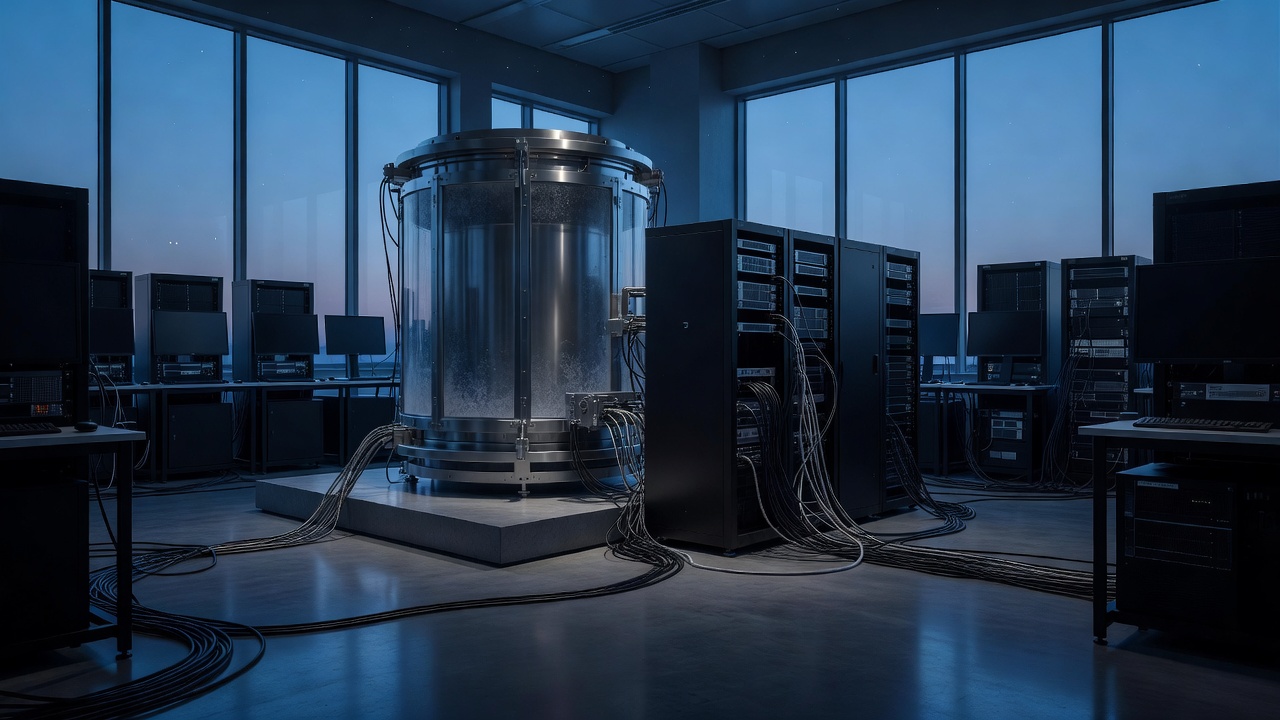
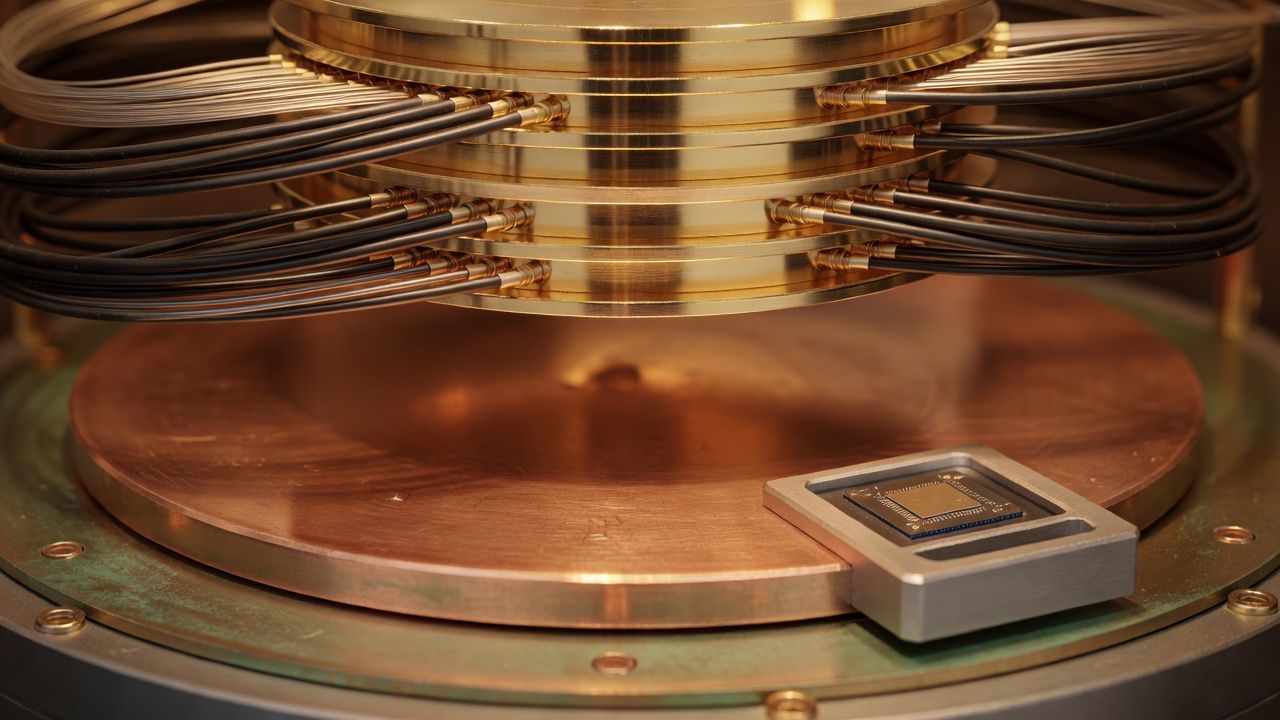
The framing leaves out the physical side. Software tooling cannot change hardware limits. D-Wave, for example, describes a QPU that operates below 20 mK in a closed-loop cryogenic dilution refrigerator, and its Advantage2 system has more than 4,400 qubits. Code that an agent generates still has to run on such machines, or on simulators that mimic them. Cirq's Quantum Virtual Machine, for instance, mocks the circuit constraints and noise behavior of existing hardware devices. A claim of production-readiness therefore depends on which of those targets was used.
Accuracy is the second open question. Code generation is easy to demonstrate and hard to validate in a domain where a wrong circuit can run without errors and return meaningless results. Speed claims for an agent should be paired with correctness measures, and the announcement offers neither. It cites no independent validation.

What's Next
Several items will determine whether Maya earns credibility beyond its launch announcement:
- Pricing and access: the release says only that a team member will provide options.
- The missing feature list: the "several key features" the release promises were not in the source text.
- SDKs, model and hardware: which frameworks and model are involved, and whether output has run on real devices or only simulators.
- Benchmarks and customers: a baseline that reconciles "up to 10x" with "half the time," and any enterprise willing to be named.
The release gives no roadmap, user count or funding information, so none of these can be dated.
For a technology buyer weighing a pilot, the practical test is concrete. Ask Bloq to run one of your own optimization problems, such as a small portfolio selection, from description to QUBO to result, and to state which backend executed it and how long the same task takes your team today. That single exercise would produce the baseline the release omits, and it would show whether the speedup is closer to 2x or 10x.
The most striking thing here is how the release undercuts itself. A company confident in a 10x result would typically show the measurement, yet this one offers three differently worded claims and no numbers behind any of them. Maya may well be a useful assistant for the tedious translation work that holds quantum projects back. Its first job is to show its work, and "tested" will mean something only once Bloq says where the testing happened.
-- Aria Lin, Enterprise Technology Analyst
Sources: arXiv · Mit · The Quantum Insider