Best Portable Bluetooth Speakers: JLab, JBL and Harman ComparedBest Portable Bluetooth Speakers: JLab, JBL and Harman ComparedBest Portable Bluetooth Speakers: JLab, JBL and Harman ComparedBest Portable Bluetooth Speakers: JLab, JBL and Harman Compared
October 13, 2026
With three Bluetooth speakers spanning $31.49 to $165, the real question is what the extra money buys: battery life, water resistance, bass, or features you will never touch. Portable speakers are easy to compare on paper and hard to compare in a backyard, a kitchen, or a pool
With three Bluetooth speakers spanning $31.49 to $165, the real question is what the extra money buys: battery life, water resistance, bass, or features you will never touch. Portable speakers are easy to compare on paper and hard to compare in a backyard, a kitchen, or a pool deck, and the spec sheets rarely say which compromises you will notice first.
This guide covers three speakers that sit at very different points on the price ladder: the JBL Charge 6 at $149, the JLab Go Party at $31.49, and the Harman Kardon Onyx Studio 9 at $165. It is written for anyone choosing a first speaker, replacing an aging one, or deciding whether a premium model is worth roughly five times the cost of a budget one. We tell you which to buy for which situation, and where each one falls short.
Why You Can Trust This Guide
We evaluate every audio product hands-on, using the same protocol for each speaker in a category. That means listening tests at low, medium, and loud volumes across bass-heavy, vocal, and acoustic tracks, a run-down battery test at loud volume, a review of ingress protection ratings against how the speaker is actually built, and a hands-on check of controls, app features, pairing, and portability. We do not accept paid placement, and we do not give favorable coverage in exchange for review units.
Our second layer is data. We cross-reference published independent measurements and listening notes where they exist, manufacturer spec sheets, and our own hands-on results. When a manufacturer claim and our results disagree, we report both. A good example is the Harman Kardon, which is rated for 8 hours of playback but ran about 6 to 7 hours at loud volume in our testing.
Found an error, or want us to look at a speaker we missed? Email [email protected] and we will take a look.
Our Top Picks at a Glance
Best Overall: JBL Charge 6 Portable Bluetooth Speaker
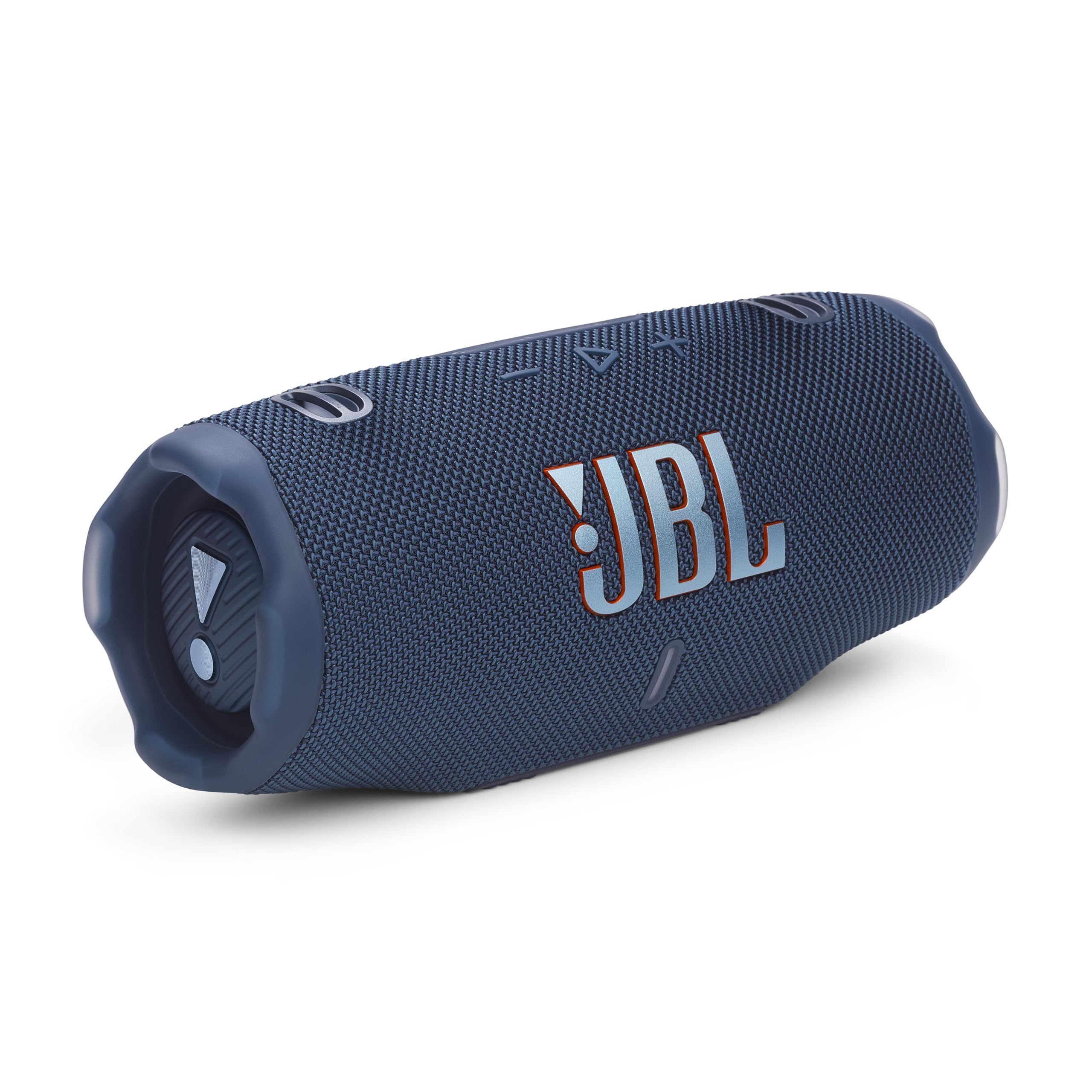
The JBL Charge 6 wins because it is the only speaker here that does everything well: 24 to 28 hours of battery, an IP68 rating, hi-res wired audio, and a balanced, energetic sound, all at $149.
Key specs. The Charge 6 has 45 W of Class D power, a 53 by 93 mm racetrack mid/bass driver, a 20 mm tweeter, and a passive radiator at each end. JBL rates its frequency response at 54 Hz to 20 kHz. It uses Bluetooth 5.4 with SBC and AAC, and it supports wired USB-C audio up to 24-bit/96 kHz. It weighs 2.17 lb, measures 9.0 by 3.9 by 3.7 inches, and has a built-in carry handle. Typical battery life is about 24 hours, and Playtime Boost stretches it to 28 hours at the cost of some bass. About 3 hours gets it from empty to full.
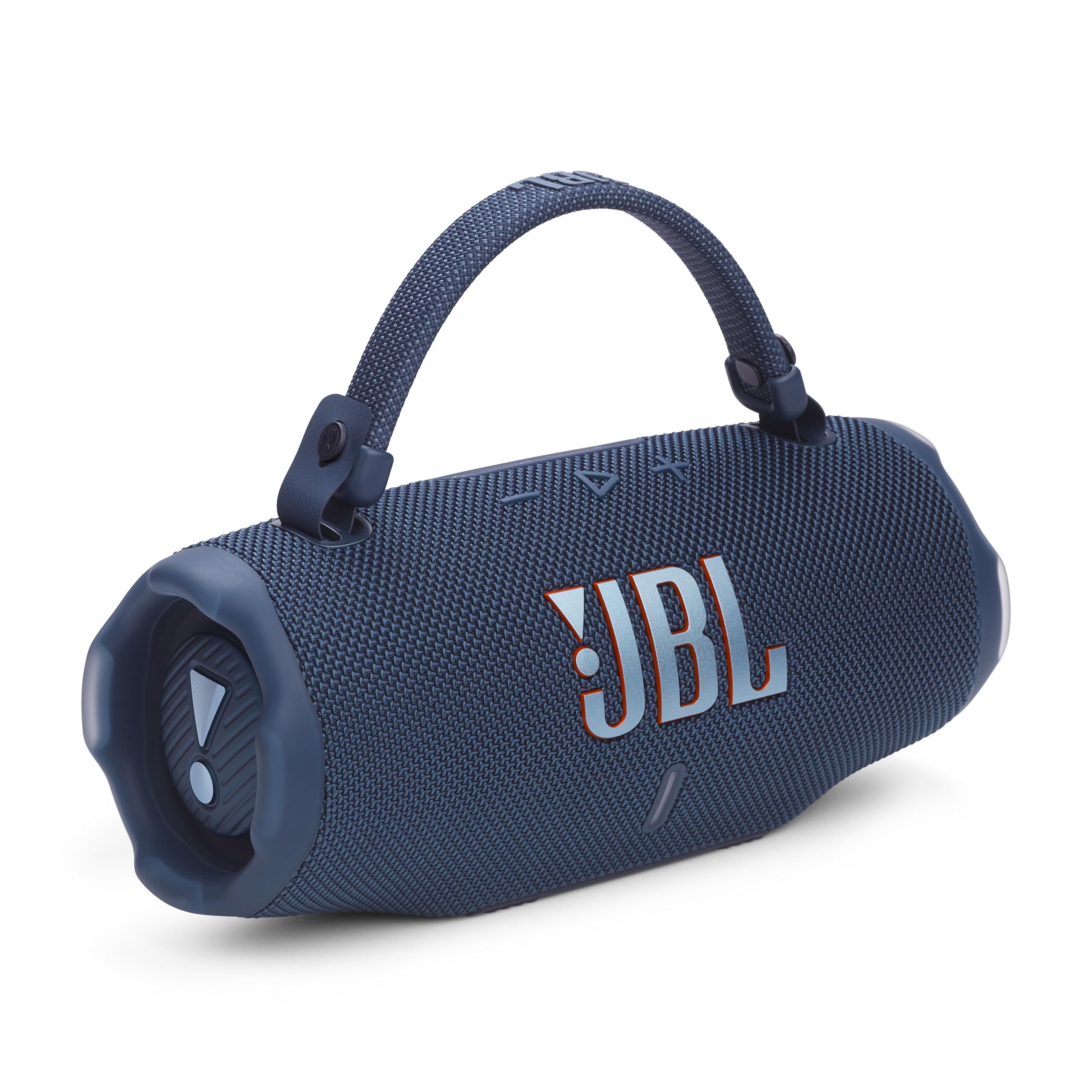
In use. Over Bluetooth, the Charge 6 sounds punchy and detailed, with a fairly even frequency response and a slight skew toward the low end. Switching to a wired USB-C connection opened up the soundstage and added detail, a feature most rivals lack. One full charge entertained a crowd for a whole weekend. At quiet, background volume the sound loses some of its direct, expansive character, so this speaker wants to be played at moderate to loud levels.
Who it is for. Anyone who wants one speaker for the backyard, the beach, a trip, and the living room. The IP68 rating means rain, sand, and a dunk in the pool are not a worry, and the handle makes it easy to carry. It also works as a power bank and supports Auracast, so it can join a large group of compatible speakers, and two Charge 6 units can pair in stereo.
Pros
- 24 to 28 hours of battery, far beyond the Harman's 8 hours
- IP68 rating for dust and water protection
- Hi-res 24-bit/96 kHz audio over USB-C, plus Auracast and stereo pairing
- Balanced, energetic sound from 45 W of power
Cons
- No speakerphone or voice assistant
- Playtime Boost extends battery life but reduces bass
- Only SBC and AAC codecs, and it does not work with older JBL Party Mode speakers
- No USB-C cable in the box, and at $149 it costs nearly five times the JLab
Best Budget: JLab Go Party Bluetooth Portable Speaker
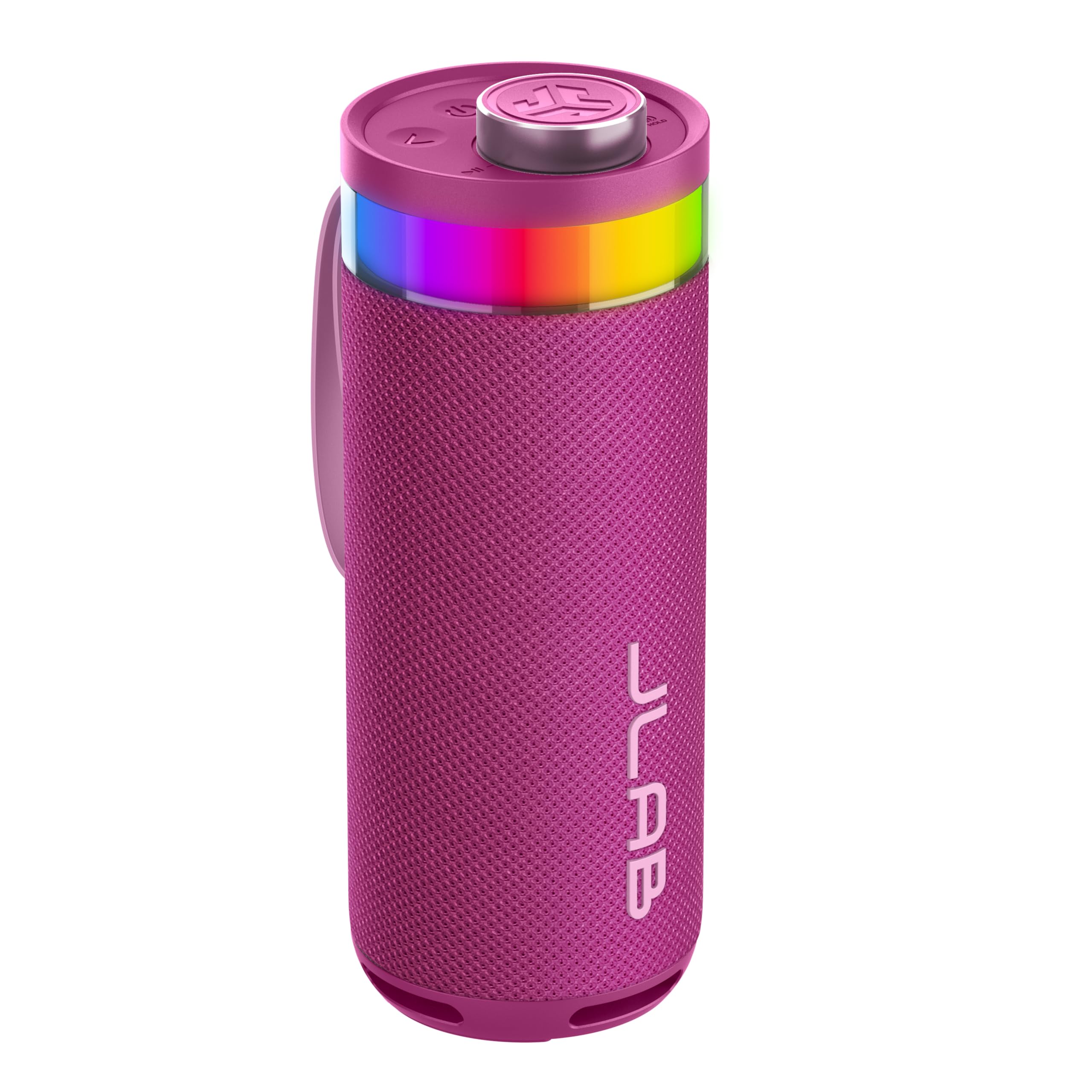
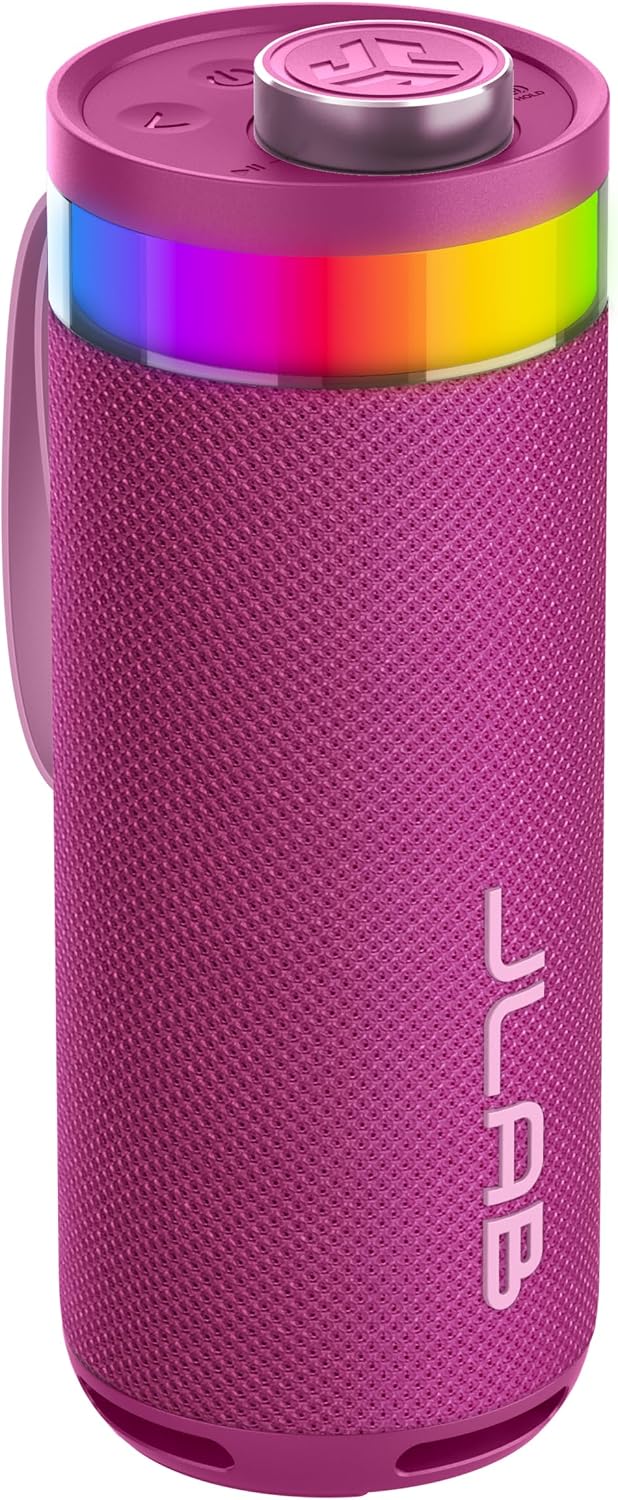
At $31.49, the JLab Go Party is the cheapest speaker in this guide by a wide margin, and it still includes an IP56 rating, an app with a custom EQ, and a party-pairing mode. That is a rare feature list at this price.
Key specs. The Go Party has an IP56 rating, which means it shrugs off splashes and pool-party mishaps but is not meant to be submerged. It has a passive radiator at the base, an RGB LED light panel on top, and physical controls for power, track skip, and EQ, plus a real volume dial. The JLab app offers a custom EQ and presets, and a few preset EQs are available on the speaker itself. LabSync pairs two speakers as a Caster and a Receiver. It comes in black, blue, and pink, and Amazon also lists a Mulberry color.
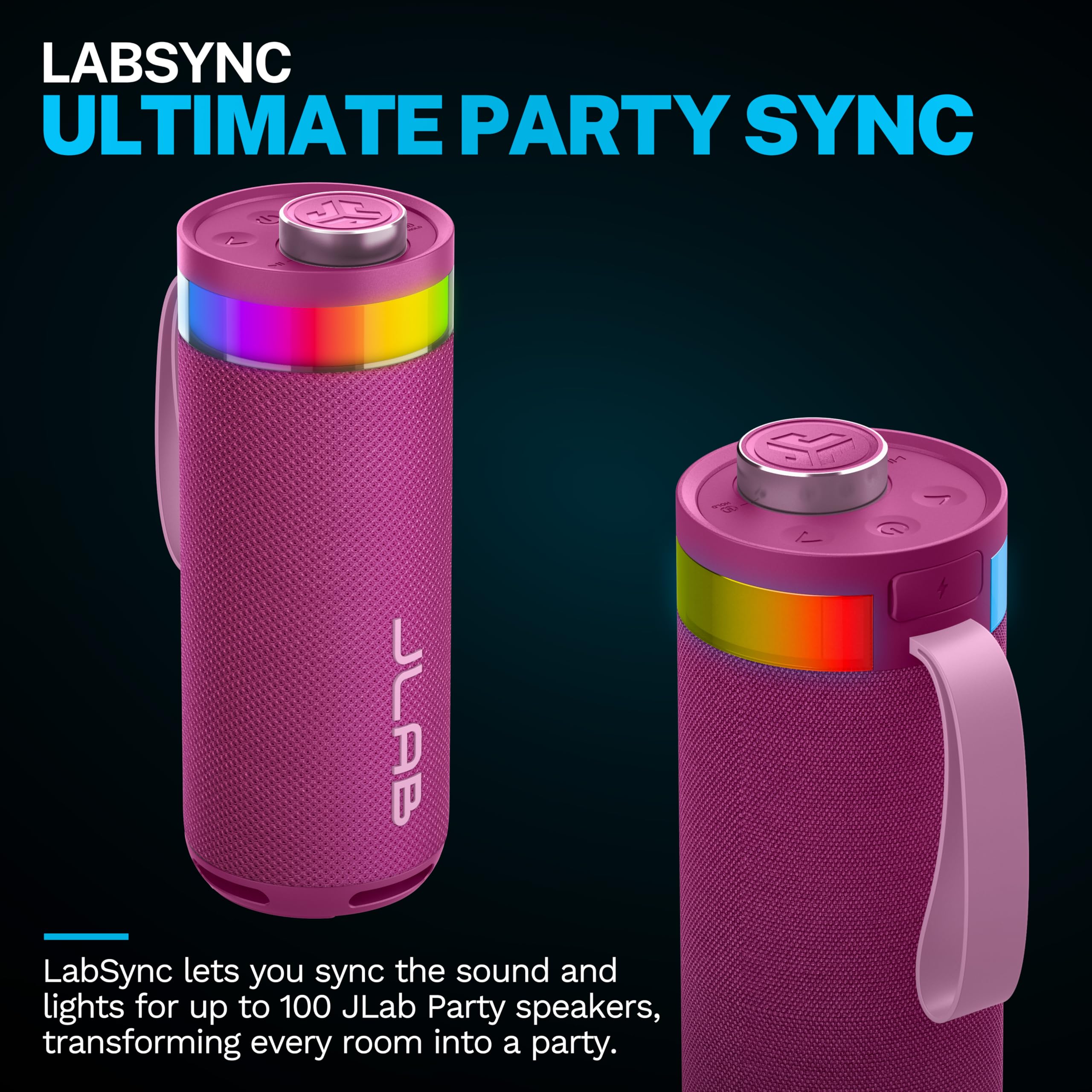
In use. The sound is what you would expect for the money: some muffling and soft bass, and it is not a speaker for critical listening. The custom EQ in the app noticeably improves it, so spend five minutes there before judging it. LabSync took us three attempts to pair, so do not count on a quick setup for a party. The plastic finish and fabric mesh front look a little dated in black, and it is heavier than rivals in its class. The volume dial, though, is a small pleasure that pricier speakers skip.
Who it is for. Kids, dorm rooms, a first speaker, or a casual party where the lights matter as much as the audio. It is also a sensible "throw it in the bag" speaker for people who do not want to worry about a pricey model getting splashed.
Pros
- $31.49 price undercuts nearly everything with these features
- IP56 rating handles splashes and poolside use
- App EQ, preset EQs, and LabSync speaker pairing
- RGB light panel and a physical volume dial
Cons
- Bass is soft and sound can be muffled, not for audiophiles
- LabSync setup was fiddly in our testing
- Plasticky build and a heavier body than rivals
- IP56 is below the IP68 of the JBL, and it is not submersible
Best for Home Listening: Harman Kardon Onyx Studio 9 Wireless
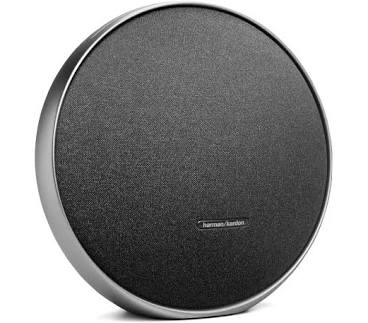
The Harman Kardon Onyx Studio 9 earns its spot by producing the most bass weight of the three. It sounds substantially larger than its mid-size body suggests, and it is an excellent choice for a kitchen, bedroom, or living room.
Key specs. It delivers 50 W through one 120 mm woofer, three tweeters, and a passive radiator, and uses Bluetooth 5.3. Controls on the speaker include power, volume up and down, play/pause, Bluetooth, and Auracast. The app offers presets named Signature Sound, Vocal, Energetic, and Chill, plus a Customize mode with a seven-band EQ that adjusts up to plus or minus 12 dB. Automatic room self-tuning adapts the sound to wherever you set it down. The battery is 4,722 mAh, rated for 8 hours, and a USB-C output can charge a phone. The speaker weighs 3.3 kg and is roughly the size of a 12-inch vinyl record, with a discreet shelf-style handle.
In use. The bass is massive for a speaker this size, mids are flat but assertive, and the stereo spread is wide. It gets loud even sitting on a tabletop. Battery life ran about 6 to 7 hours at loud volume in our testing, shorter than the 8 hours rated, and the app's battery meter drops from 20 percent to 10 percent within minutes, so there is little warning before it shuts off. It charges through a figure-8 mains cable, and there is no quick-release charging base, so you unplug the cable to move it.
Who it is for. Someone who wants a speaker for the home, not the beach. It has no weather-resistance rating, so keep it away from the pool, and at 3.3 kg it is not something you will casually carry on a hike. Indoors, with a plug nearby, it delivers the richest bass here. The $165 price reflects a third-party retailer listing; the official price is $299.95, so shop around before paying more than that street figure.
Pros
- Big, full bass for a mid-size speaker
- Seven-band EQ with plus or minus 12 dB range and room self-tuning
- 50 W of power and a wide stereo spread
- USB-C output charges a phone
Cons
- No weather-resistance rating, unsuited to outdoor or poolside use
- Shortest battery life here: 8 hours rated, about 6 to 7 in our testing, with an inaccurate meter
- Heavy at 3.3 kg and Bluetooth-only
- Costs the most of the three at $165
How We Chose
We started with the questions that matter in real life. How long does it play on a charge? Will it survive water and dust? How does it sound at the volumes people actually use? Can you carry it? And what does it cost compared with what you get?
Each speaker was tested in the same way. We listened to bass-heavy tracks, vocals, and acoustic music at low, medium, and loud volumes, noting distortion, bass control, and how much detail survived at the top of the dial. We ran each speaker's battery test at loud volume and compared the result with the manufacturer rating. We checked every physical control and every app feature, and we judged build quality, weight, and carrying comfort. Price was weighed against all of it.
Disqualifiers were simple. A speaker had to be a true portable Bluetooth model, so smart speakers that require Wi-Fi and soundbars were out. We also set aside any model with an unreliable app or controls that fought the user.
What to Look For
Battery life. Rated battery numbers are best-case, usually at moderate volume. Look at the rated figure as an upper limit, and expect less at party volume. In our testing the Harman fell short of its 8-hour rating, so give yourself headroom if you plan an all-day event.
Water and dust resistance. The IP rating tells you what the speaker can survive. IP56 handles splashes, while IP68 covers dust and submersion. If the speaker will be near a pool, beach, or rainy campsite, an IP rating is not optional.
Sound character and EQ. Bass weight, clarity, and loudness are the heart of the purchase. A good app EQ lets you correct a speaker's weaknesses, as the JLab shows, while room self-tuning like the Harman's helps in a home. Decide whether you want punch, balance, or detail, and shop accordingly.
Size, weight, and handle. A 2.17 lb speaker with a handle goes everywhere. A 3.3 kg speaker belongs to a room. Be honest about how often you will move it.
Connectivity and extras. Bluetooth version, codecs, wired audio, party pairing, Auracast, and power-bank functions all vary. Hi-res wired playback over USB-C is a real upgrade for a desk or living-room setup, while stereo pairing is worth having if you may add a second speaker later. Decide which of these you will use, and do not pay for the rest.
Bottom Line
For a weekend camper or pool-deck host who needs a speaker to last through two full days without a charger, pick the JBL Charge 6. Its IP68 rating and 24 to 28 hours of battery mean you can stop thinking about the speaker and just play music.
For a parent buying a first speaker for a teenager, or anyone who wants a throwaway-safe speaker at budget-tier pricing, pick the JLab Go Party at $31.49. The IP56 rating handles spills and splashes, and the app EQ rescues the sound.
For a home listener who wants to fill a 12-inch-record-sized corner of the living room with real bass, pick the Harman Kardon Onyx Studio 9. Its 50 W output and seven-band EQ with a plus or minus 12 dB range give it a richer low end than either rival, as long as it stays near an outlet and off the patio.
Portable speakers are finally good enough that the right choice depends more on where you will use it than on how much you spend. Buy for the room, or the beach, you actually have.
-- Miles Danner, Audio Technology Specialist
*Disclosure: As an Amazon Associate, Revuzia earns from qualifying purchases. Prices and availability are accurate as of publication and may change.*