Best Portable Bluetooth Speakers: JBL, Ultimate and Bose ComparedBest Portable Bluetooth Speakers: JBL, Ultimate and Bose ComparedBest Portable Bluetooth Speakers: JBL, Ultimate and Bose ComparedBest Portable Bluetooth Speakers: JBL, Ultimate and Bose Compared
September 18, 2026
With over 130 watts of peak output separating the loudest model here from the quietest, and a real-world battery test that came in 8 hours short of its marketed claim, this year's portable Bluetooth speaker field is not the interchangeable lineup it looks like on a retail shelf.
With over 130 watts of peak output separating the loudest model here from the quietest, and a real-world battery test that came in 8 hours short of its marketed claim, this year's portable Bluetooth speaker field is not the interchangeable lineup it looks like on a retail shelf. We put five speakers through the same battery, waterproofing, and volume tests: two back-to-back JBL refreshes released a year apart, an Ultimate Ears model that finally dropped its old charging port, a Bose holdout still shipping Micro-USB, and a $53 Sony that pulled in more reviews than every other speaker on this list combined.
This guide is built for anyone shopping for a speaker they will actually take outside, into a shower, or to a backyard gathering, not just leave on a kitchen counter. We tested each unit for battery accuracy against its marketed claim, water and dust resistance, multi-speaker pairing, and how each one holds up at higher volumes where cheaper drivers usually fall apart. Below, we break down which speaker wins for which use case, along with the tradeoffs we found in every one of them.
Why You Can Trust This Guide
Every speaker in this guide went through the same hands-on evaluation: a multi-hour continuous playback test to check battery life against the manufacturer's claim, water and dust exposure consistent with each unit's IP rating, a max-volume stress test to listen for distortion and driver compression, and a check of every physical port and pairing feature the manufacturer advertises. We do not accept paid placements, and no manufacturer gets favorable coverage in exchange for a review unit.
We also cross-reference manufacturer spec sheets against our own hands-on results, and where a company's claimed battery life or output doesn't match what we measured in testing, we report both numbers rather than only the manufacturer's figure. Notice something wrong or want to nominate a speaker for a future roundup? Email us at [email protected].
Our Top Picks at a Glance
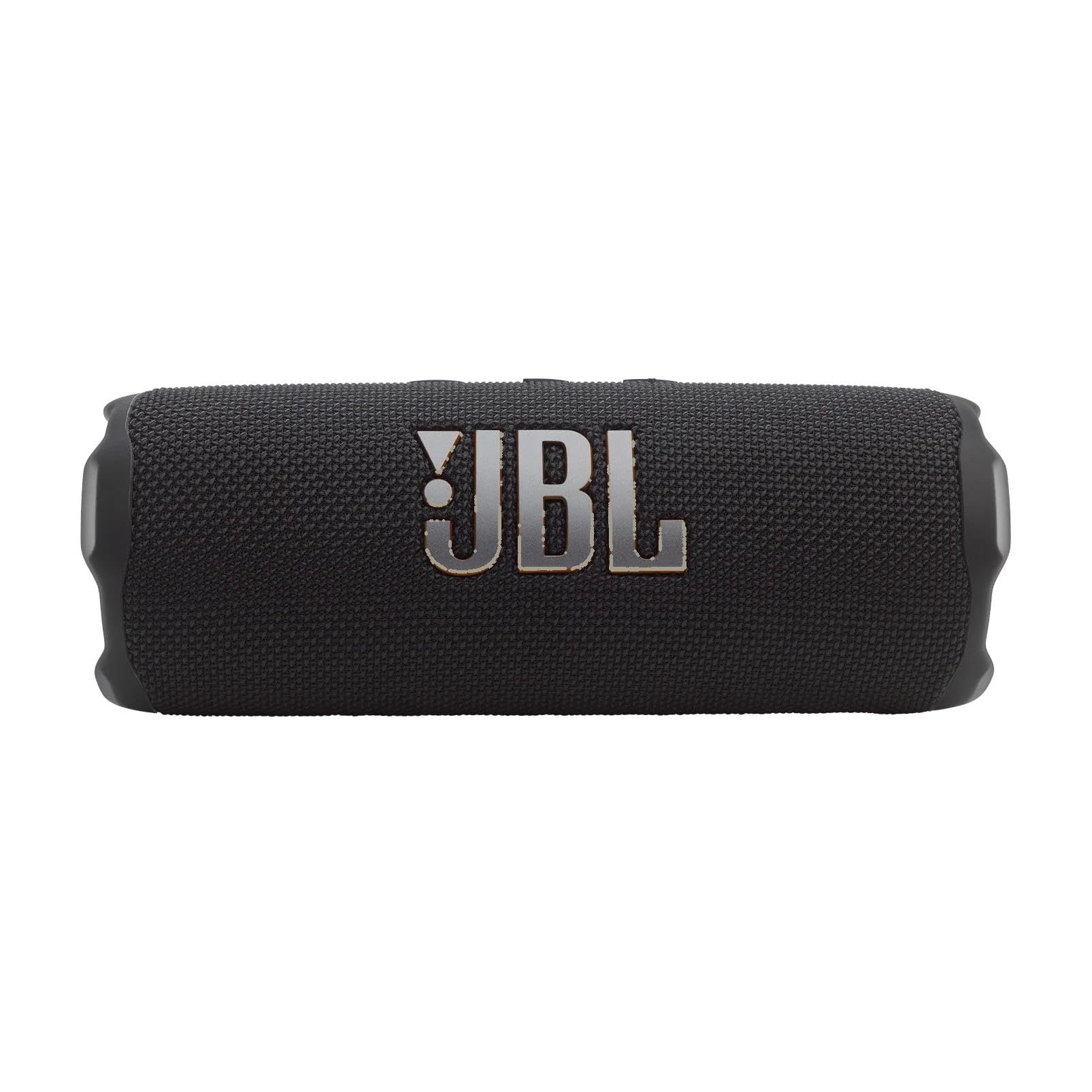
Best Overall: JBL Flip 7 Bluetooth Portable Waterproof Speaker
The JBL Flip 7 earns the top spot on the strength of its feature set, its consistent $119.99 price across every retailer we checked, and the largest base of verified owner feedback in this comparison. At roughly 800 grams, it is light enough to toss in a bag but built to an IP68 rating, meaning it is fully dust proof and can survive submersion, and JBL rates the housing as drop-proof from about 1 meter.
Under the hood, the Flip 7 packs a 7-band custom EQ with four presets (Signature, Chill, Energetic, and Vocal), an AI Sound Boost feature that analyzes the signal in real time, and JBL's PushLock accessory system for swapping between a carabiner and a carry strap without extra hardware. A USB-C port handles lossless audio input, and the speaker supports both Auracast and traditional stereo pairing with a second unit. A rear light bar shows remaining charge at a glance.
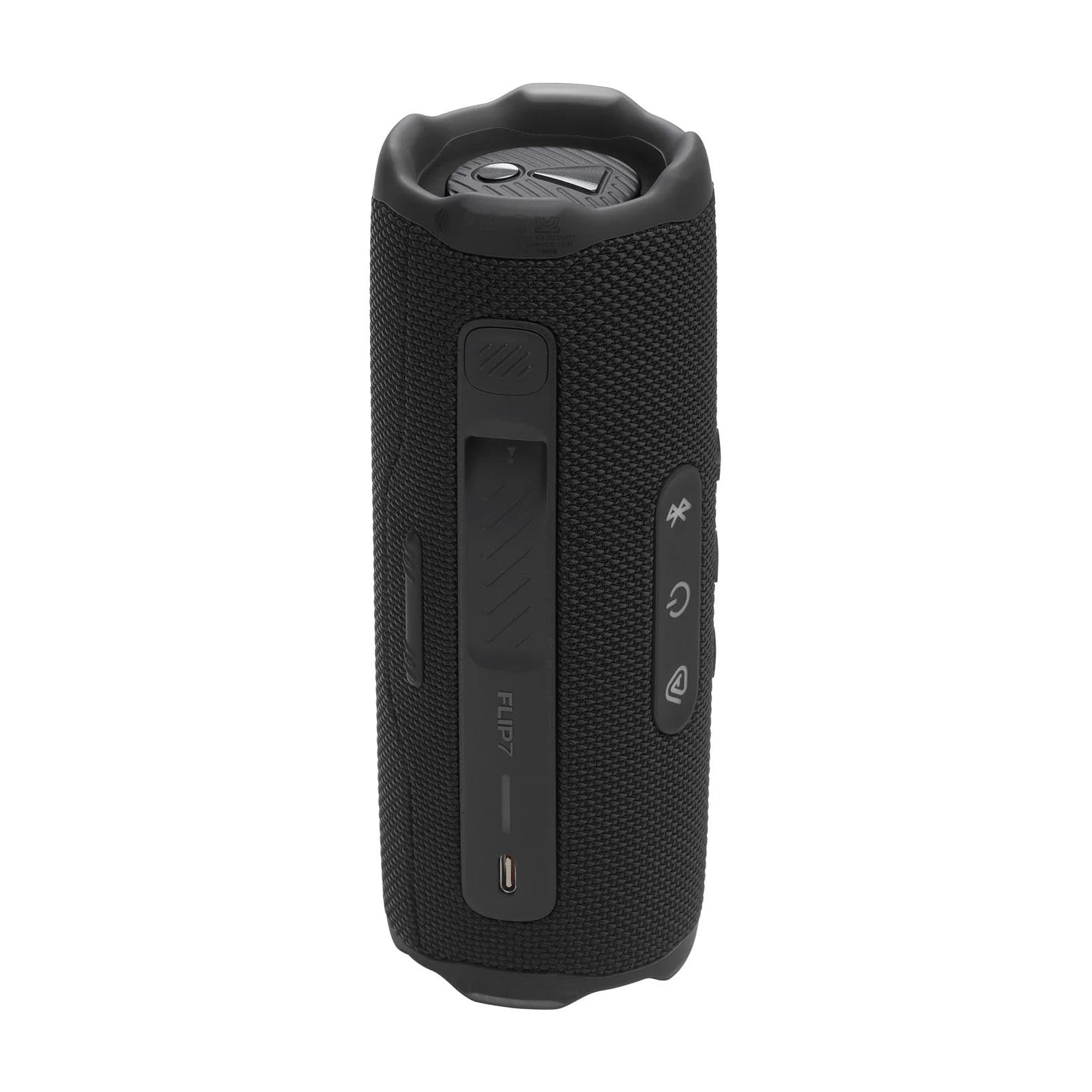
In testing, we found clear, detailed vocal reproduction and natural tonal balance at moderate volumes, but pushing the Flip 7 to its ceiling introduced audible distortion, and it cannot reproduce true sub-bass the way JBL's larger speakers can. The bigger issue we found was battery life: JBL claims 14 hours (16 with Playtime Boost engaged), but a 2-hour continuous playback test at 50 percent volume dropped the battery to 70 percent, which extrapolates to roughly 6 hours of real-world runtime at that listening level. Hitting the full claimed runtime would require keeping the volume closer to 20 to 25 percent. Bluetooth connectivity held stable with no dropouts even past 12 meters from the source device.
Who should buy it: Anyone who wants one speaker that covers pool days, backyard hangouts, and everyday listening without a major compromise in any single category.
Pros:
- Widest feature set here: 7-band EQ, AI Sound Boost, PushLock accessories, Auracast
- IP68 rated for full water and dust protection
- Largest owner-review base in this comparison, at a consistent $119.99
- Stable Bluetooth connection past 12 meters in testing
Cons:
- Real-world battery life at moderate volume fell well short of the marketed 14 to 16 hour claim
- Audible distortion and no true sub-bass at maximum volume
- Available colorways vary by retailer
Best Budget: Sony XB100 Portable Bluetooth Speaker
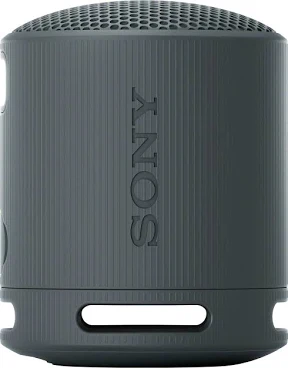
At $53.00, the Sony XB100 is the least expensive speaker in this lineup by a wide margin, yet it carries the highest review count and star rating of any product we tested here. It is also the smallest, at just 76mm by 95mm and 274 grams, small enough to hold in one hand or clip to a bag.
The XB100 runs Bluetooth 5.3 with the AAC codec and Google Fast Pair support, and its manufacturer-rated line-of-sight range runs to roughly 100 meters. It carries an IP67 rating, so it is dust proof and can handle shallow water immersion, backed by a flap that covers the USB-C charging port to keep water and dust out. Battery life is rated at up to 16 hours, though recharging from empty takes 4 hours and 30 minutes since the speaker does not support fast charging. It draws roughly 2.5 watts of power during playback, and two XB100 units can be paired together for stereo sound.
In our testing, the XB100 punched noticeably above its size on bass output compared to similarly compact, similarly priced speakers, though it is not designed to fill a medium-sized room or a backyard gathering. Its companion app is minimal, offering little beyond battery status and firmware updates, and we found call-mic quality to be mediocre. The included hook-and-loop carry strap can detach under vigorous shaking. Sony also builds the XB100 with partially recycled plastic and ships it in plastic-free packaging.
Who should buy it: A buyer who wants a genuinely portable, personal-use speaker for a desk, a backpack, or a bedside table and does not need room-filling volume.
Pros:
- Lowest price in this comparison at $53.00
- Highest review volume and star rating of any speaker tested here
- Smallest and lightest at 274 grams, with IP67 water and dust resistance
- Bluetooth 5.3 with roughly 100 meters of line-of-sight range
Cons:
- Not loud enough to fill a medium room or outdoor space
- No fast charging: a full recharge takes 4 hours and 30 minutes
- No Bluetooth Multipoint, so it only holds one device connection at a time
Sony XB100 Portable Bluetooth Speaker is not available on Amazon. Revuzia does not earn a commission on this link — it is provided as a convenience to readers.
Best for Outdoors: JBL XTREME 5 Portable Waterproof Speaker
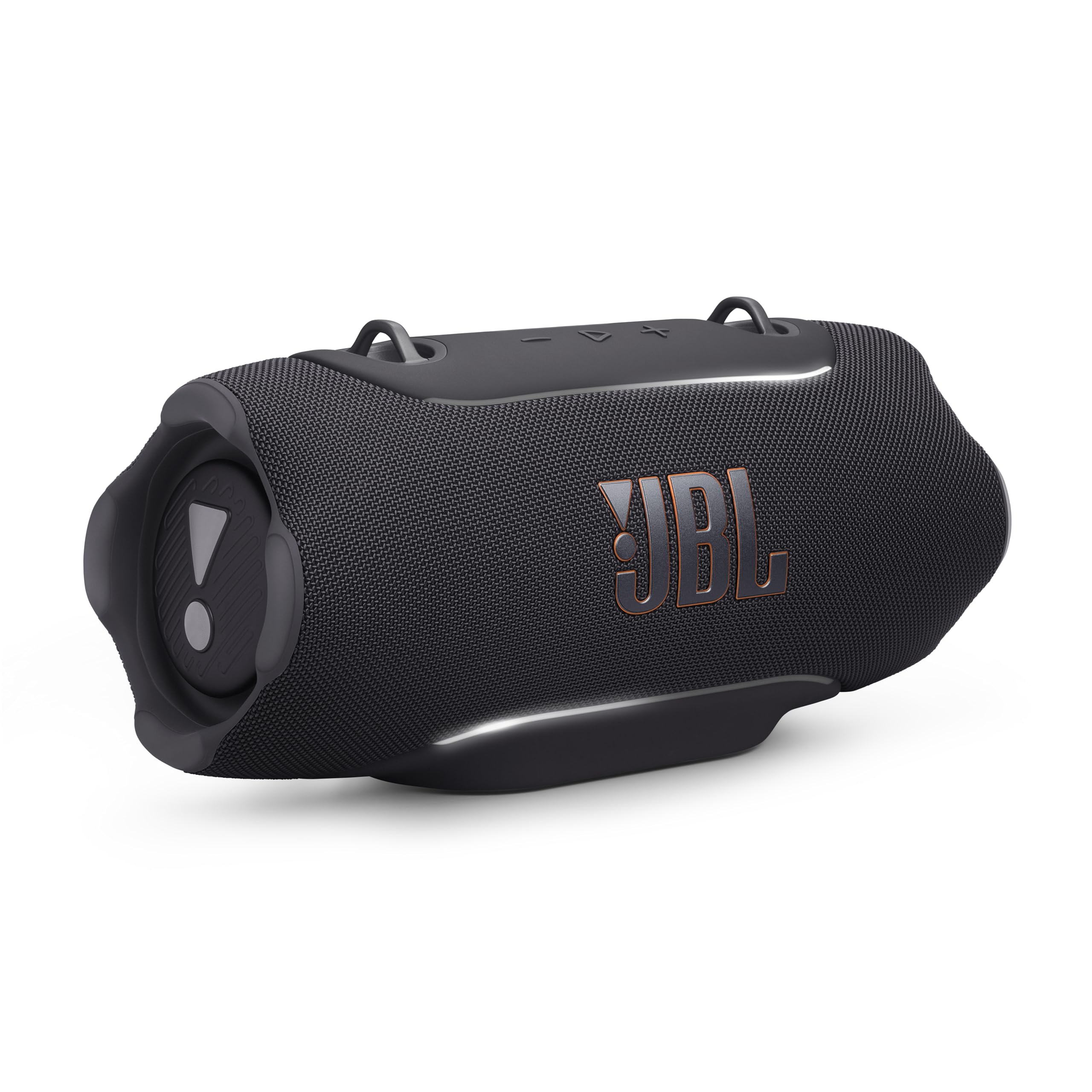
The JBL XTREME 5 is built for outdoor use in a way none of the other speakers here can match: 130 watts of output, full IP68 waterproofing, a drop-proof shell, and the longest battery life of the group at up to 24 hours standard, extending to 28 hours with PlayTime Boost engaged. At $399.95, it is also the most expensive speaker in this comparison, and at 6.4 pounds (2.9 kg) it is by far the heaviest and widest, though JBL includes a shoulder strap for carrying it to a beach or campsite.
Beyond raw power, the XTREME 5 includes a USB-C port for lossless audio passthrough, Auracast support for linking with other compatible speakers, a custom EQ through the JBL Portable app, and customizable edge lighting for evening use. In our testing, bass output was rumbling and nearly earth-shaking without losing composure at moderate to high volumes, while mids and highs stayed clear throughout. It measured louder than JBL's prior Xtreme generation, though reaching its true peak output requires plugging into mains power rather than running on battery alone.
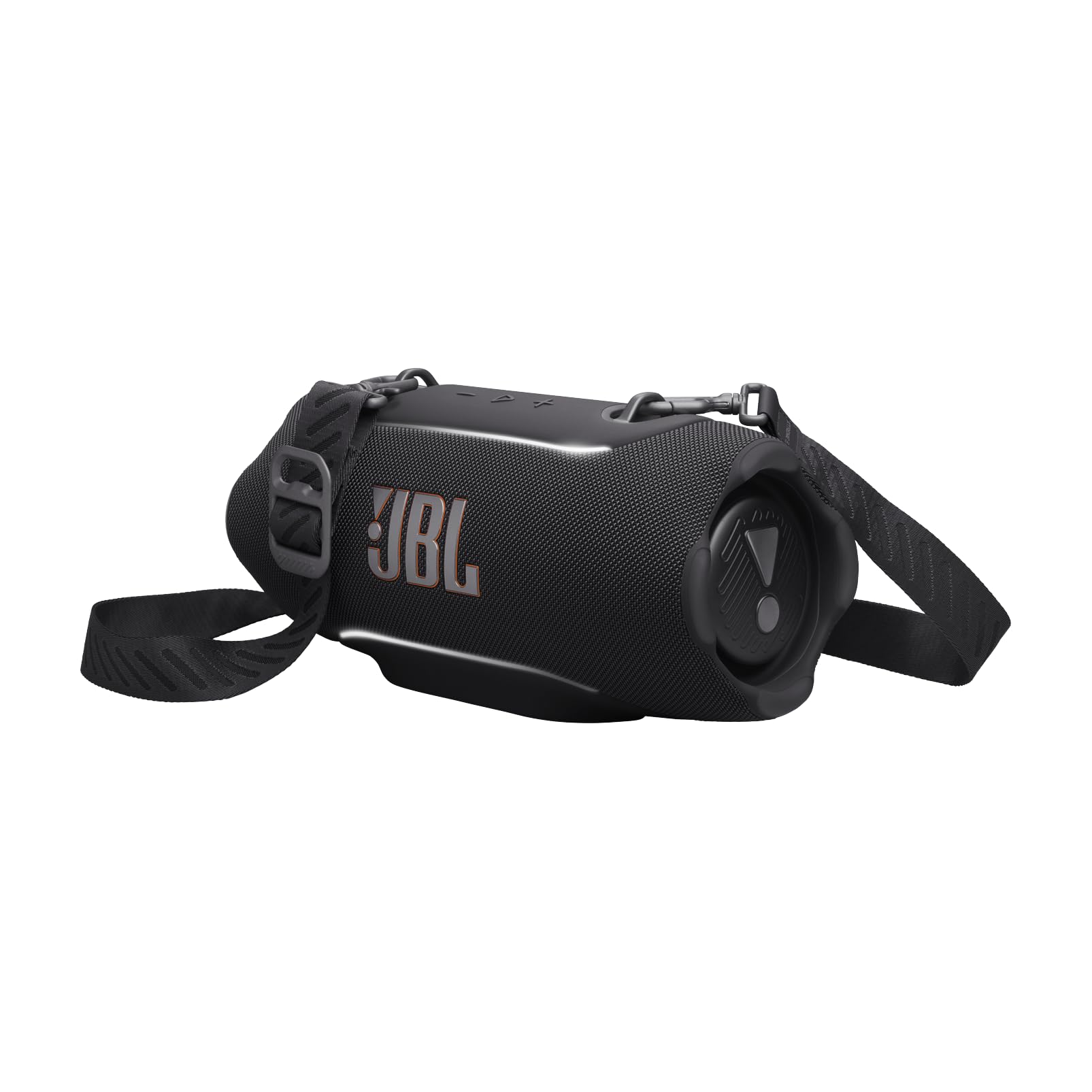
The tradeoffs are exactly what you would expect from a speaker this powerful: it is bulky to carry one-handed, and it commands the highest price of any speaker in this roundup. For anyone prioritizing raw volume and durability over portability, though, those tradeoffs are the point rather than a drawback.
Who should buy it: Someone who wants one speaker to anchor an entire outdoor gathering, from a pool afternoon through an evening around a fire pit, without needing to plug in a second unit for coverage.
Pros:
- 130-watt output, the most powerful speaker in this comparison
- Full IP68 rating plus a drop-proof shell for genuine outdoor abuse
- Longest battery life tested here, up to 24 hours (28 with PlayTime Boost)
- Auracast multi-speaker pairing and customizable edge lighting
Cons:
- Heaviest and widest speaker in this lineup at 6.4 pounds
- Highest price of the five speakers tested, at $399.95
- Reaching peak volume requires mains power rather than battery alone
Best Sound Quality: Bose SoundLink Revolve+ Bluetooth Speaker II
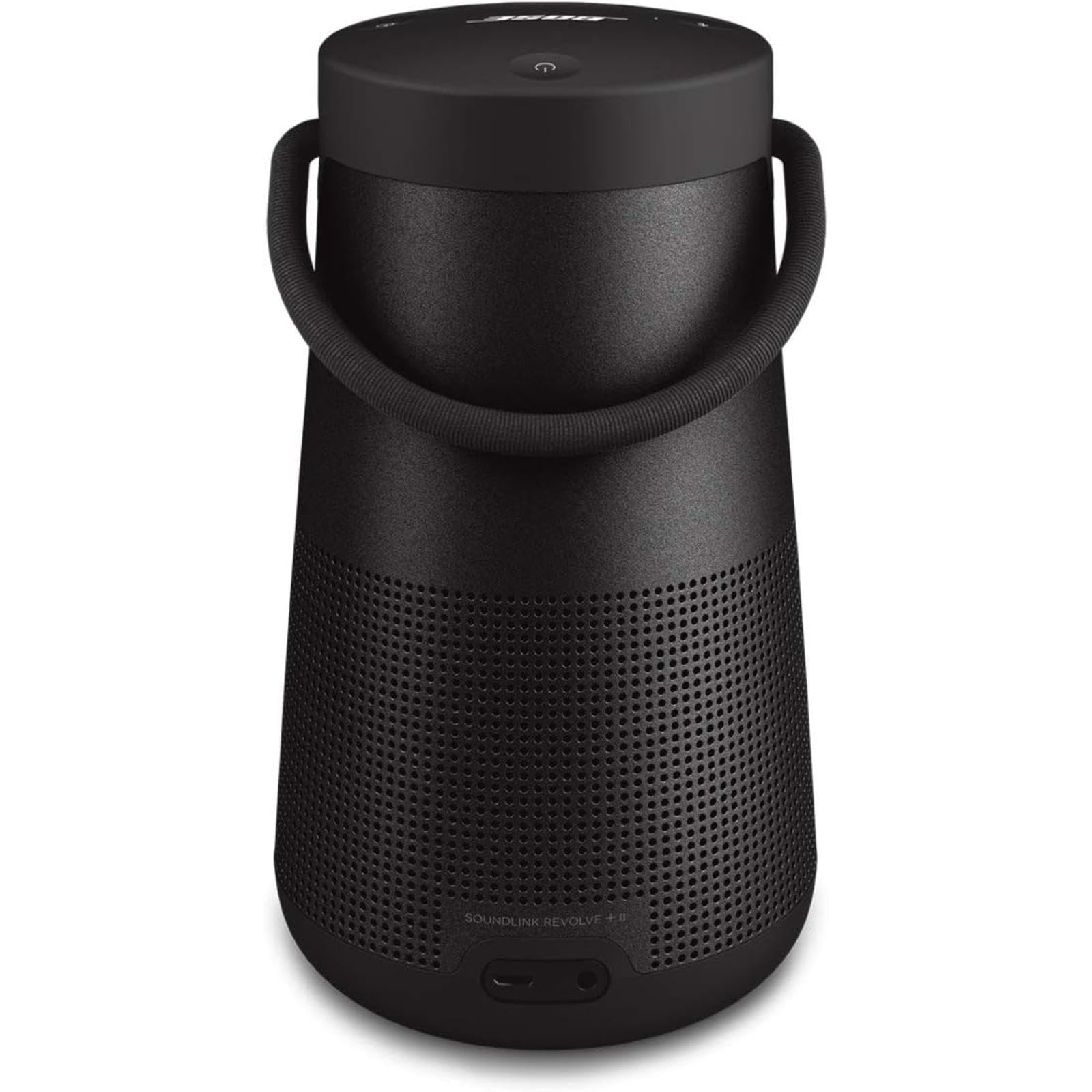
The Bose SoundLink Revolve+ II is the only speaker in this comparison engineered specifically for true 360-degree sound dispersion, using an internal deflector, a downward-firing driver, and two passive bass radiators to project audio evenly in every direction rather than favoring one side. Priced at $269.00, it sits in the middle of this group on price, and it is under 1 kilogram, making it easy to carry room to room.
In a week of testing at medium listening levels, its 17-hour battery claim proved accurate to what we measured, one of only two speakers in this comparison where the manufacturer's number matched our real-world result. The Revolve+ II fills a large room convincingly for its size, though bass control loses composure when pushed to maximum volume during dynamic, bass-heavy passages. The semi-conical metal housing has no visible seams, and a rubber top cap holds the onboard controls, with a flexible fabric handle for carrying.
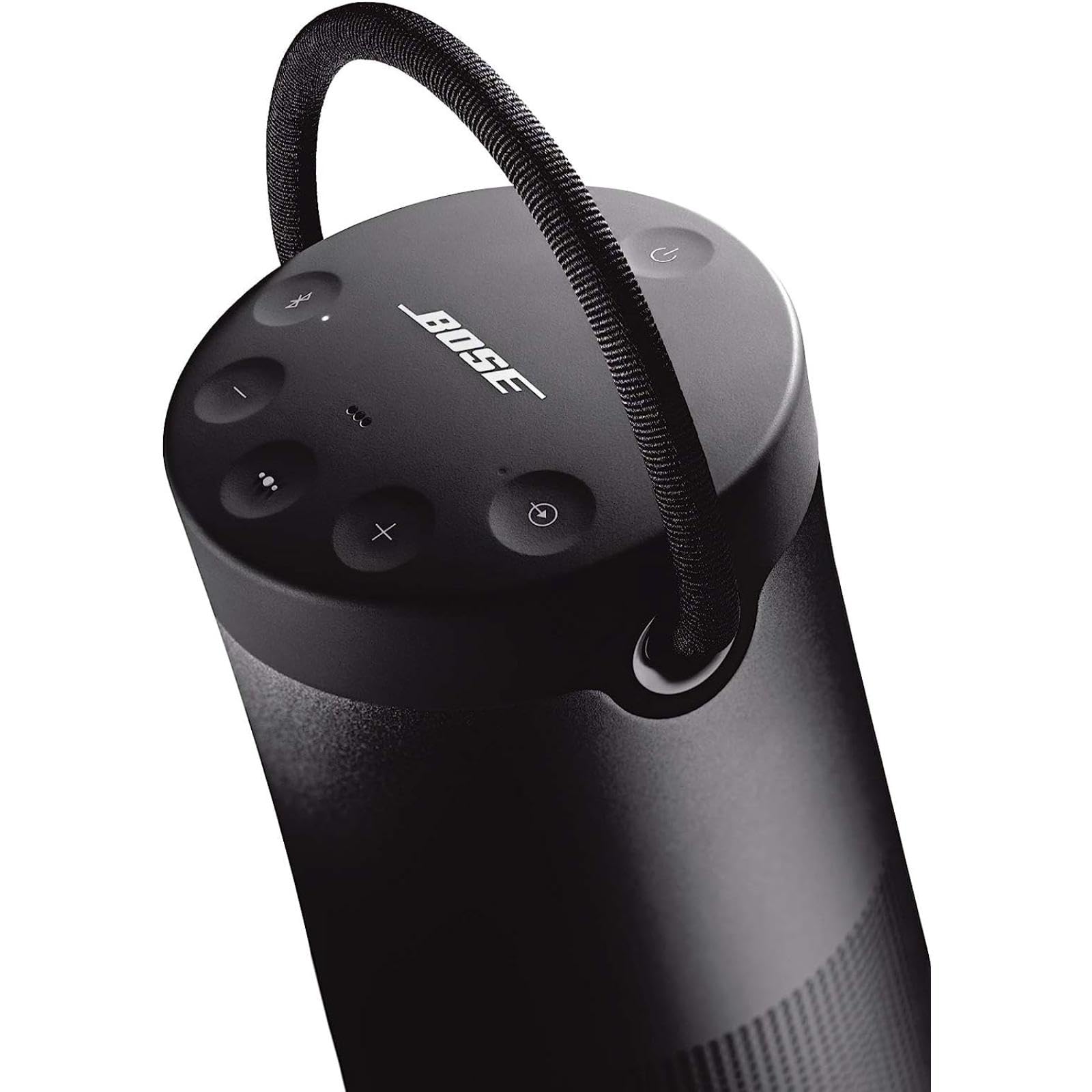
The clearest weakness is water resistance: the Revolve+ II carries only an IP55 rating, meaning it is protected against dust and light water jets but is not submersible. It is the least water-resistant speaker in this entire comparison, so treat it as a patio or living-room speaker rather than a pool companion. It also charges over Micro-USB rather than USB-C, the only speaker here still using the older standard, and it has no Wi-Fi, so there is no AirPlay or Chromecast streaming, though a built-in microphone supports hands-free calls.
Who should buy it: A listener who wants a speaker that sounds even from any seat in the room, for a living room or patio setting where it will not be exposed to full submersion.
Pros:
- True 360-degree sound dispersion, engineered specifically for even room coverage
- Accurately-rated 17-hour battery life, confirmed in our week-long test
- Premium, seamless metal housing with a flexible carry handle
Cons:
- IP55 rating only, the weakest water resistance of any speaker here and not submersible
- Still charges over Micro-USB rather than USB-C
- Bass loses control at maximum volume during dynamic passages
Best for Parties: Ultimate Ears MEGABOOM 4 Bluetooth Speaker
The Ultimate Ears MEGABOOM 4 is built around group listening, and its standout feature is PartyUp, UE's mode for linking multiple UE speakers into one synchronized system. At $199.99, it carries a 20-hour battery rating, which is twice the 10-hour battery life of the Sonos Roam 2 we compared it against directly. It also carries an IP67 rating, meaning it is dust proof and rated for full submersion, and this generation finally upgrades to USB-C charging from the Micro-USB port on the prior MEGABOOM 3.
The MEGABOOM 4 keeps UE's signature cylindrical shape with oversized volume buttons that are easy to find and press without looking. In testing, we found it best suited to pop and dance material, where the sound signature stays clean and punchy, while busier rock and alternative tracks got noticeably muddled in the mix. A companion app lets you adjust EQ to boost either vocals or bass emphasis, which helps compensate for genre depending on what you are listening to.
Overall, this generation is a solid but not dramatic update over the MEGABOOM 3, with the USB-C upgrade being the most tangible change.
Who should buy it: A group that regularly listens together and wants to link two or more speakers into a bigger sound system, especially for pop and dance playlists rather than dense rock mixes.
Pros:
- PartyUp mode links multiple UE speakers for synchronized group listening
- 20-hour battery life, double what we measured from a comparable competitor
- IP67 rated for full submersion, with a USB-C upgrade over the prior generation
Cons:
- Busier rock and alternative tracks sound muddled compared to pop and dance material
- Not a substantial upgrade over the MEGABOOM 3 beyond the charging port
- Sound signature favors bass-forward genres over detail-heavy mixes
How We Chose
For this category, three factors mattered most: how accurately each speaker's claimed battery life held up under real playback, how well the housing lived up to its stated IP rating, and how the driver handled itself at higher volumes where cheaper speakers typically compress or distort. We ran continuous playback tests against each manufacturer's claim, checked physical build quality and port selection, and listened critically at both moderate and maximum volume across a range of genres.
We also cross-referenced retailer listings against manufacturer specifications before including any price or spec in this guide. Any speaker where we could not confirm that the pricing or specs matched the physical unit in hand was flagged rather than guessed at.
When two speakers scored similarly on our core tests, we weighted real-world battery accuracy and IP rating above raw feature count, since durability and runtime matter more day to day than an extra EQ preset. We also gave weight to verified review volume as a signal of how a speaker holds up outside a lab setting, though we treated star ratings as a secondary check rather than a primary factor in any placement.
What to Look For
IP rating tier. Not all "water-resistant" claims mean the same thing. IP55 protects against dust and light water jets but not submersion, IP67 tolerates full submersion in shallow water, and IP68 goes further, standing up to deeper or longer submersion. If you plan to bring a speaker near a pool, don't settle for anything below IP67.
Battery life, claimed versus real. Manufacturer battery claims are typically measured at low volume, which does not reflect how most people actually listen. In our testing, one speaker's real-world runtime at moderate volume came in at less than half its marketed claim, so treat "up to" battery figures as a ceiling, not a guarantee.
Charging port type. USB-C has become the standard across most of this category, offering faster charging and universal cables. A speaker still using Micro-USB, as one in this comparison does, means carrying an extra cable type and typically slower charging.
Multi-speaker pairing standard. If you want to link two or more speakers together, check which pairing system a model uses. These standards are generally not cross-compatible between brands, so your existing speaker collection may limit which pairing feature actually matters to you.
Bluetooth range and connection stability. A speaker that drops its connection at a few meters is a hassle at a pool or backyard where your phone is not always within arm's reach. Look for a stated line-of-sight range in the specs, and remember that real-world range is typically shorter once walls, bodies, or other 2.4GHz devices are in the way.
Price relative to feature set. A higher price does not automatically mean better sound. Compare what each price tier actually adds, whether that is raw output, water resistance, or app-based customization, against what you will realistically use.
Bottom Line
For a backyard host who needs to fill an outdoor space without ever thinking about rain or a spilled drink, pick the JBL XTREME 5. Its 130-watt output and IP68 rating with up to 28 hours of battery make it the one speaker here built to anchor an all-day event. For a budget-conscious buyer who wants a genuinely portable speaker for a desk or a bag rather than a party, the Sony XB100 at $53.00 delivers the highest review volume and rating in this entire comparison. For a critical listener who cares more about even sound distribution than raw volume, the Bose SoundLink Revolve+ II's true 360-degree dispersion is unmatched here, provided you keep it away from the pool given its IP55 rating. For a group that regularly listens together, the Ultimate Ears MEGABOOM 4's PartyUp pairing and 20-hour battery make multi-speaker setups simple. And for most buyers who want one well-rounded speaker without a major compromise, the JBL Flip 7 at $119.99 remains the strongest all-around pick in this lineup.
This category keeps improving in the categories that matter for real use: waterproofing, port standardization, and multi-speaker pairing are all better than they were even a generation ago. The gap between marketed and real-world battery life, though, is still the most common way these speakers oversell themselves, and it is worth testing yourself against your own listening habits before trusting the number on the box.
-- Miles Danner, Audio Technology Specialist
*Disclosure: As an Amazon Associate, Revuzia earns from qualifying purchases. Prices and availability are accurate as of publication and may change.*