70,000 Satellites Are Coming. AI May Be the Only Way to Run Them.70,000 Satellites Are Coming. AI May Be the Only Way to Run Them.70,000 Satellites Are Coming. AI May Be the Only Way to Run Them.70,000 Satellites Are Coming. AI May Be the Only Way to Run Them.
August 3, 2026
Goldman Sachs projects that as many as 70,000 new low Earth orbit satellites could launch within the next five years, a figure that former SES chief technology officer Martin Halliwell argues in a Space.com op-ed makes the current model of human-managed satellite operations
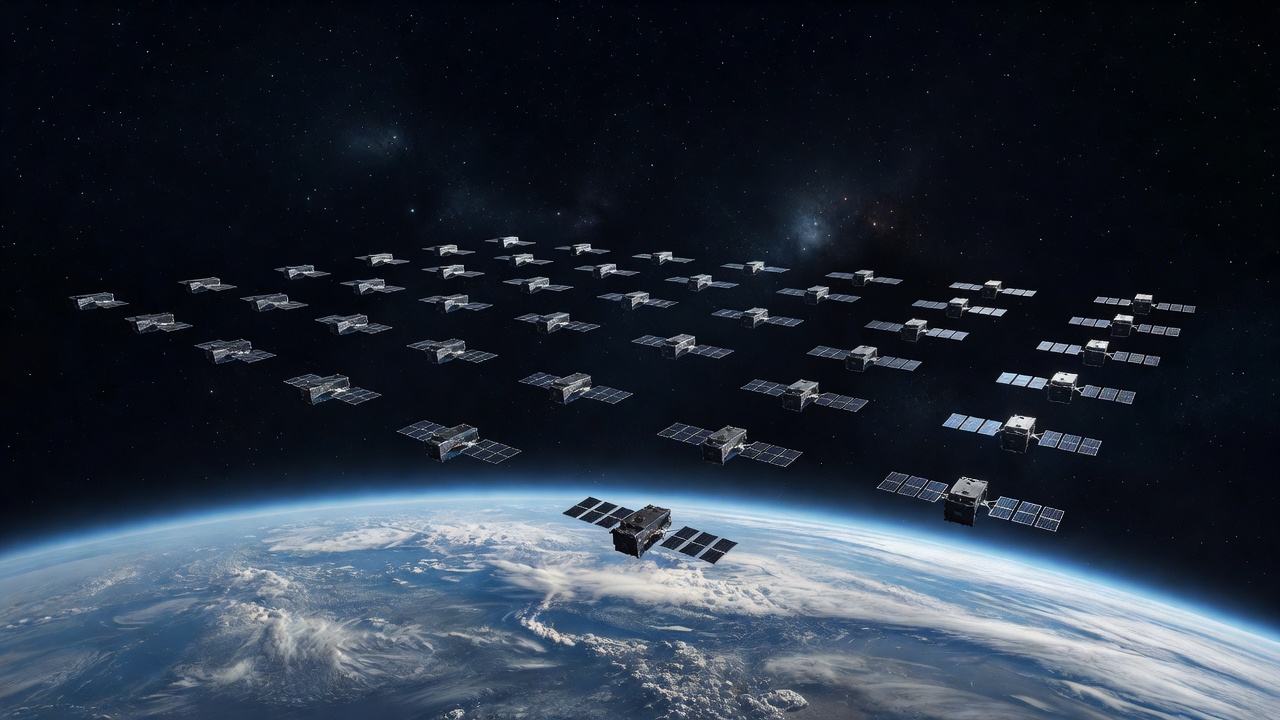
Goldman Sachs projects that as many as 70,000 new low Earth orbit satellites could launch within the next five years, a figure that former SES chief technology officer Martin Halliwell argues in a Space.com op-ed makes the current model of human-managed satellite operations structurally untenable. The disruptive piece is not the satellite count: it is that the legal and insurance frameworks written assuming a named human makes every network decision have no coherent answer for what happens when an AI mispoints a beam over a restricted zone. With roughly 16,000 active satellites already in orbit today and Novaspace projecting some 43,000 more built and launched over the next decade, the industry is moving toward a scale at which the gap between what AI can do and what regulators will permit it to do becomes the central operational problem.
What Happened
Writing for Space.com's Expert Voices section, Halliwell, now a partner at NewSpace Capital, one of the world's first private equity firms devoted exclusively to growth-stage space technology companies, laid out a case that the satellite industry is approaching an inflection point its governance systems were not designed to handle. Approximately 16,000 active satellites currently orbit Earth. Novaspace projects that around 43,000 satellites will be built and launched over the next decade. Goldman Sachs puts a sharper edge on the near-term picture: up to 70,000 new LEO (low Earth orbit) satellites launched in five years alone.
Halliwell draws a clean operational line from those figures. "A network of a few satellites can be managed from the ground," he writes. "A network of hundreds, or even thousands, cannot be managed in the same way." The argument is not that human operators are incompetent. It is that the arithmetic no longer works. Constellations at this scale generate decision volumes, at decision speeds, that exceed what any human operations team can process. The op-ed positions autonomous AI systems as the only viable path through that constraint, while acknowledging that the technology running ahead of the rules is precisely what makes the transition difficult.
Halliwell's operational credibility matters to how this argument lands. He served as CTO of SES, one of the world's largest satellite operators, from 2011 to 2019, before moving into a strategic advisory role there and eventually to NewSpace Capital. The op-ed is not a product pitch. It is a framework argument from someone who ran a major fleet when it was still manageable by conventional ground-based methods.
The Science Behind It
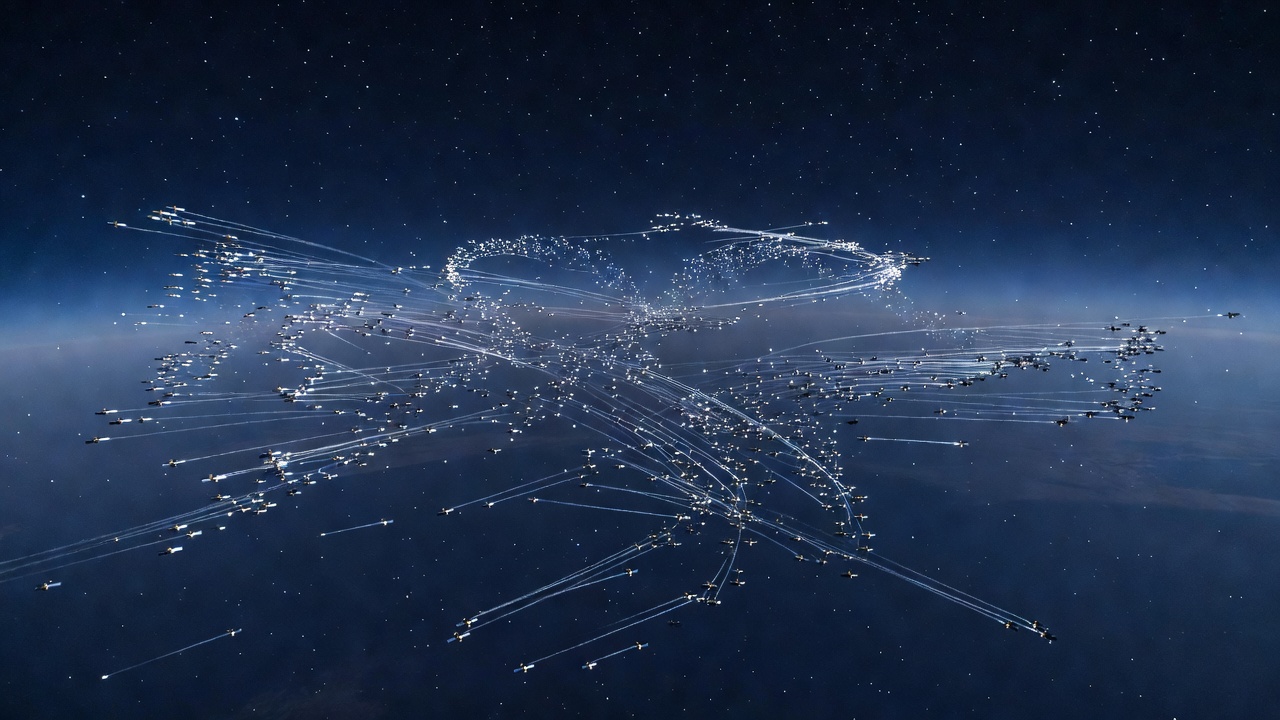
The technical argument Halliwell makes covers three distinct layers of where AI can intervene in satellite operations: data handling, network management, and spacecraft development itself.
On data handling, the current default architecture transmits raw satellite data to Earth, where it is cleaned, sorted, and analyzed before any actionable output is produced. Onboard AI processing would invert this. Instead of sending everything down and filtering on the ground, satellites would transmit only the results that matter. The reduction in data volume has practical consequences for bandwidth, latency, and cost, but Halliwell's primary argument is architectural: processing in orbit removes a round-trip from the decision loop.
That round-trip matters most in what Halliwell frames as the core latency constraint. "Some decisions must be made in seconds, without waiting for instructions from Earth," he writes. The physics of that constraint are real. Signals traveling between ground stations and satellites in low Earth orbit carry inherent delays, and at geosynchronous altitudes (approximately 35,786 kilometers up, where the delay is roughly 240 milliseconds each way) those delays become operationally significant for any process requiring rapid response. Dynamic beam steering -- the ability to redirect a satellite's transmission footprint in real time -- is one example Halliwell names explicitly, alongside per-beam power level adjustments and capacity reallocation in response to shifting demand. The use cases he cites are concrete: cities at peak usage hours, disaster zones requiring surge capacity, aircraft, ships, and military operations where demand patterns change faster than a human-approved reallocation cycle can track.
The third layer is spacecraft development. Halliwell describes AI systems capable of generating early-version structures, antennas, power systems, payloads, and mission plans for human engineers to review and refine. The framing is additive rather than substitutive: AI removes the requirement to begin from a blank page, not the requirement for engineering judgment. In manufacturing contexts, AI can identify production faults, predict schedule delays, and flag maintenance needs before they affect launch timelines.
Why This Mission Matters
"Space is a crucial enabling force in the modern world, touching just about every part of ordinary life," Halliwell writes, grounding what might otherwise read as an industry-internal debate in terms that extend to anyone using GPS navigation, weather forecasting, or broadband in an underserved region.
One argument Halliwell makes that reaches beyond operational efficiency is the resilience case. Ground-based control systems are potential attack targets, whether through cyberattack, physical disruption, or jamming. Moving data analysis and decision-making into orbit reduces the exposure of critical functions to those vulnerabilities. A constellation that can continue autonomous operations when ground links are degraded or severed is more robust than one that requires a ground loop for every network adjustment. In contexts where satellite communications support military operations, Halliwell notes that speed of decision "can decide the outcome," framing defense applications as higher-urgency than commercial ones.
The resilience argument connects directly to the cybersecurity requirements that come with it. Halliwell acknowledges that training environments for AI systems managing satellite networks would require strong cybersecurity protocols, strict access controls, and data isolation. Some models, he suggests, may need to be trained inside company or government networks to ensure sensitive operational data never leaves controlled environments. That requirement adds complexity and cost to adoption, but it also points toward a near-term implementation path: constrained, internally managed deployments before any broader rollout.
Competitive Landscape
The satellite industry context Halliwell writes from is one of the most rapidly consolidating sectors in aerospace. Constellation operators range from sovereign national programs to well-capitalized commercial ventures, and the management problem Halliwell identifies -- too many satellites, too many simultaneous decisions, not enough human operators -- applies across all of them regardless of ownership structure.
The implicit competitive dynamic Halliwell identifies is between operators willing to delegate routine network decisions to AI and those requiring human sign-off on every network change. He describes the latter as the current majority. The gap is not primarily technological; it is institutional. The rules governing satellite operations, the insurance frameworks that price liability for mispointing a beam or colliding with another object, and the confidence of regulators in AI decision-making were all written in an era when a named human was accountable for every significant action. "The technology itself is advancing quickly," he writes. "The harder task is creating the rules, safeguards and confidence needed to use it." Operators who solve that institutional problem first gain a structural advantage in managing the 43,000-satellite decade Novaspace projects.
Independent analyst commentary specifically on this announcement was not publicly available at publication time.
What Comes Next
Halliwell closes the op-ed with a precise statement of the industry's current position: "AI may soon be ready to run more of a satellite network. The question is how quickly the industry will be ready to let it." Technology readiness and institutional readiness are different problems on different timescales, and Halliwell's argument is that the second is now the binding constraint.
The non-technical barriers he identifies fall into three categories. Rules: the regulatory frameworks governing what decisions an autonomous system can make, at what confidence threshold, and with what human oversight requirements. Safeguards: the technical and procedural mechanisms that catch errors before they propagate, including cybersecurity controls, model validation, and graceful failure modes. Confidence: the accumulated operational track record that would allow insurers to price AI-managed satellite operations, regulators to permit broader autonomy, and operators to extend the decision envelope beyond tightly constrained use cases. Halliwell describes the transition as "likely to be gradual."
The satellite industry has navigated a version of this problem before, when constellations grew large enough to require automated collision avoidance. The difference now is scope: collision avoidance algorithms operate within tightly defined physical constraints, while AI-managed network operations touch decisions that carry direct commercial, strategic, and in some cases military consequences.
For a spectrum regulator or operations licensing authority, the operative question is concrete: every existing liability framework for satellite operations assumes a named human operator is accountable for significant network decisions, including beam direction, power levels, and capacity allocation. At 16,000 active satellites that assumption is already strained. At 70,000 LEO satellites it becomes functionally impossible to maintain without a new legal category for AI-authorized actions -- one that no current framework provides. The beam mispoint scenario Halliwell implies sits in a genuine regulatory vacuum, and closing that vacuum before constellation counts force the question is the actual work his op-ed is pointing toward.
-- Zara Velez, Emerging Technology Editor
Sources: Martin Halliwell, Space.com Expert Voices