Agility's Digit 5 Trades Running for 23 kg Warehouse Lifts and Safety
October 26, 2026
Agility Robotics' Digit 5 is built to lift 23 kg bins onto 1.75 m shelves, and co-founder Jonathan Hurst says the price is a robot that can no longer run or jump. It is defined by stopping: when a person approaches, it sets down its payload, sits on the floor and cuts motor
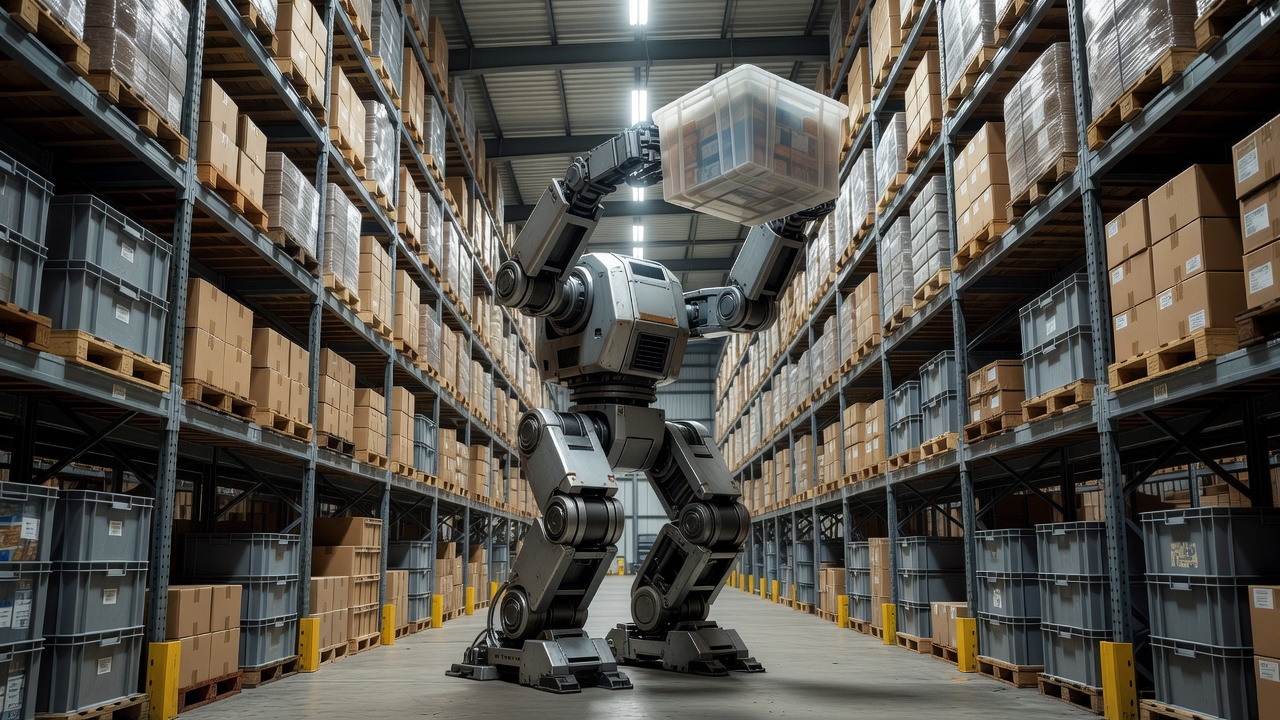
Agility Robotics' Digit 5 is built to lift 23 kg bins onto 1.75 m shelves, and co-founder Jonathan Hurst says the price is a robot that can no longer run or jump. It is defined by stopping: when a person approaches, it sets down its payload, sits on the floor and cuts motor power. Its other defining number is mass, over 120 kg. Hurst, who is also chief robot officer at Agility and a robotics professor at Oregon State University, laid out the trade-offs in a first-person essay published October 19, 2026 by IEEE Spectrum. For anyone tracking whether humanoids can move from demos to shift work, the design choices are the story.
What It Does
Agility chose bin handling as Digit's first job for specific reasons, according to Hurst. Two arms are needed for high lifts, and legs balance best in narrow spaces. The task also varies from site to site, so single-purpose automation has not addressed it. The requirements come from the NIOSH lifting guidelines (U.S. recommended limits for what human workers should lift), which set both the 23 kg bin weight and the 1.75 m shelf height Digit 5 must reach.
The headline specifications, as Hurst states them:
- Payload: 23 kg bins, lifted to 1.75 m shelves.
- Runtime: 90 minutes per charge, with a full recharge during a 9-minute break.
- Designed duty: 20 hours a day, "something no human can do," in Hurst's words.
- Mass: over 120 kg.
The 20-hour figure is a design target. Simple arithmetic on the 90-minutes-on, 9-minutes-off cycle gives roughly 91% uptime, or about 21.8 hours per 24, which is consistent with the claim.
The legs changed too. Earlier Digits used a "backward" ostrichlike leg configuration. Digit 5 switches to humanlike legs because the old ankle struck the ground during squats, and in the new design the knee and hip motors both contribute torque when standing up. The cost, per Hurst, is that Digit 5 "can no longer run or jump the way previous generations could."
The Technical Achievement
Digit 5 is heavy because the job demands it. The battery and cooling system occupy about 75% of the torso. Fans in the charging dock blow air through cooling channels in the torso to cool the battery, and the dock itself delivers 240 A at 48 V. Hurst says the thick cables "visibly wiggle" under the induced magnetic forces.
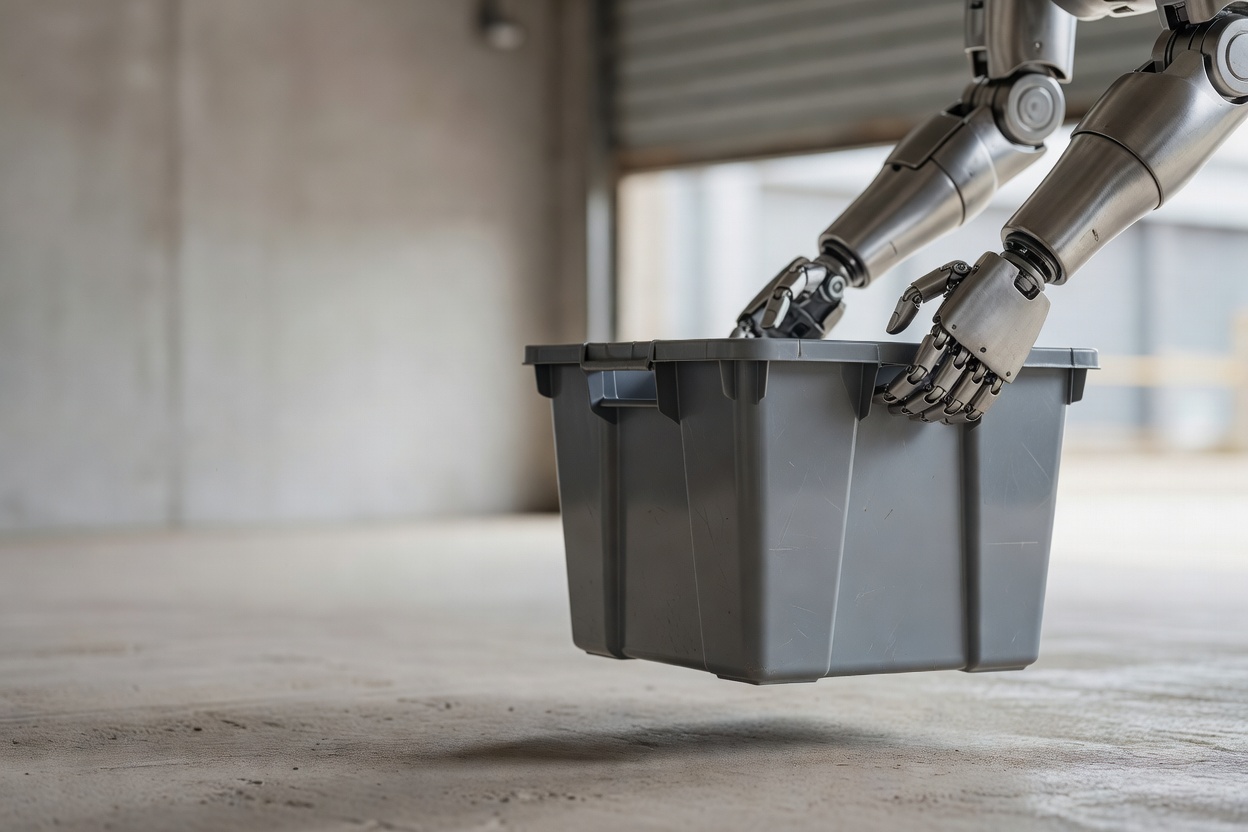
Safety added more mass. Agility spent 2 years on the problem of operating safely around people, and Hurst says it shaped the legs, the body, the safety-rated sensors in protective housings and the isolated safety computers. Each adds complexity, power draw, mass and size. Digit 4 deployments had to run behind physical barriers to satisfy insurance and regulatory demands. Hurst describes his reaction: "This seemed silly to me, because I've never felt that our robots were dangerous, but we have to prove that they're safe."
The answer is the stop-and-sit routine. An array of safety-rated sensors detects an approaching human, and the robot is programmed to set down its payload, sit and cut motor power before the person is close enough to touch it. Hurst says this is the only near-term approach Agility believes will "verifiably reduce risk." It is a design intent.
Other hardware details: interchangeable tool interfaces and a modular design allow gradual subsystem upgrades. Digit 4 added a head for antenna and camera placement, which Hurst says proved "surprisingly useful for human-robot interaction." The locomotion controller traces to Agility's earlier Cassie robot, whose hardware led to reinforcement-learning locomotion (a simulated robot learns by trial and error, and the resulting neural network then controls the physical machine).
Real-World Impact
Hurst reports that Agility mapped 10 use cases from Digit 4 early-validation deployments before designing Digit 5 from scratch. Digit 4 was deployed at GXO Logistics, which Agility describes as the world's first commercially deployed humanoid, a company claim. Hurst also says Amazon tested Digit 4 on bin moving and stacking.
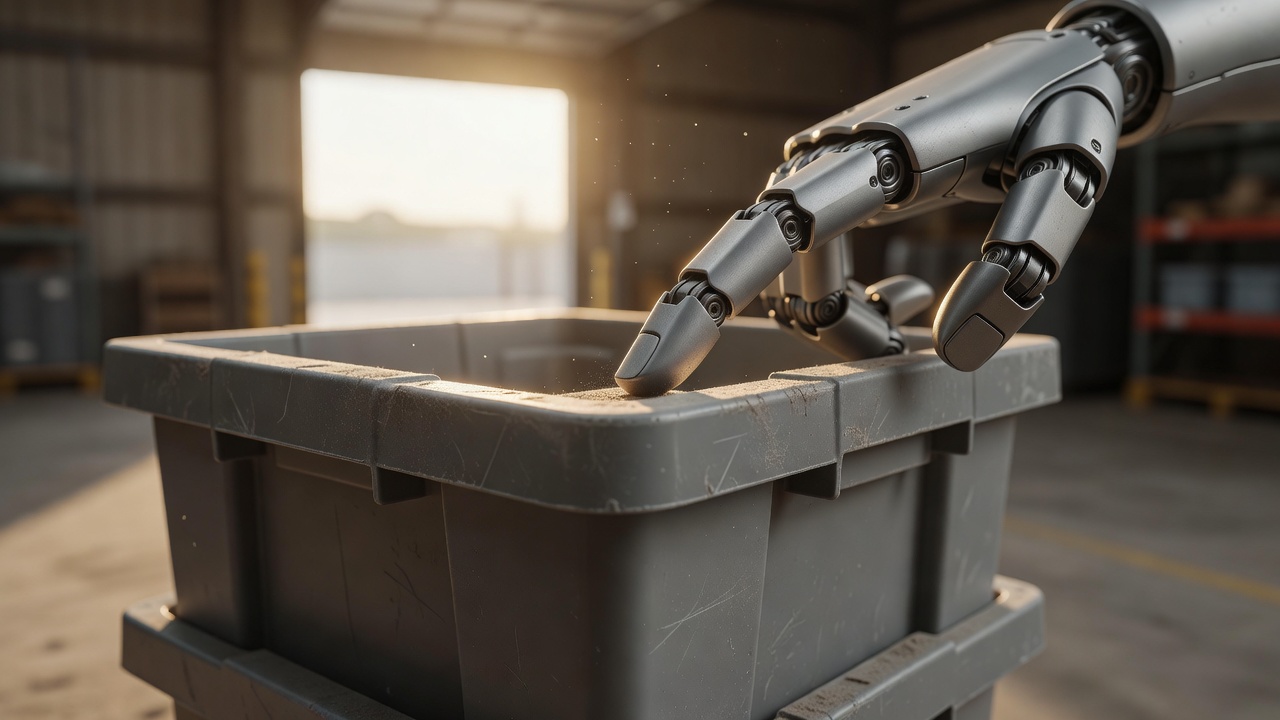
It cites more than 65,000 hours of real-world operation and more than 100,000 totes moved for GXO last year. It also reports Digit expanding to 2 more GXO sites, in North Carolina and Tennessee, and a planned AGCO factory deployment in 2027. GXO has more than 150,000 employees and more than 1,000 facilities, so the scale of any rollout is large relative to a pilot. Agility CEO Peggy Johnson said in that coverage: "GXO was the first customer to put Digit to work in live operations under a commercial agreement, and expanding to additional sites is the clearest signal that the value is real."
Hurst says only that it is "the largest, heaviest, most expensive robot Agility will ever build."
Competitive Landscape
Hurst names no rivals. He argues that a humanoid in a factory or warehouse "either can't lift the required weight or can't make it through the whole shift," and that without heavy sensor coverage "it's likely not safe to stand next to." He adds: "Other companies building humanoid robots have copied the human form without ever understanding its purpose." That is Agility's position, not an independent finding.
Other humanoid makers publish different priorities on their own sites:
- Boston Dynamics: calls Atlas "the world's first enterprise-grade, industrial humanoid robot," with field testing at a Hyundai facility, a robot that swaps its own battery, and planned work in part sequencing, machine tending and order building.
- Figure: markets Figure 03 as a general-purpose humanoid for the home, running its Helix AI.
- Unitree: lists the H1 with a 3.3 m/s speed it labels a "world record," a 0.864 kWh battery and a civilian-use positioning.
Agility's own route began with Cassie: 10 units sold at US$250,000 each to Harvard, Caltech, the University of Michigan, UC Berkeley and a handful of other research institutions.
What's Next
Production capacity is the next test. RoboFab, Agility's 70,000 sq ft facility in Salem, Ore., has a stated capacity of more than 10,000 Digit 5 robots a year. Agility says it aims to put "tens of thousands" of humanoid workers into the real world, and the AGCO factory deployment is planned for 2027, according to The Robot Report.
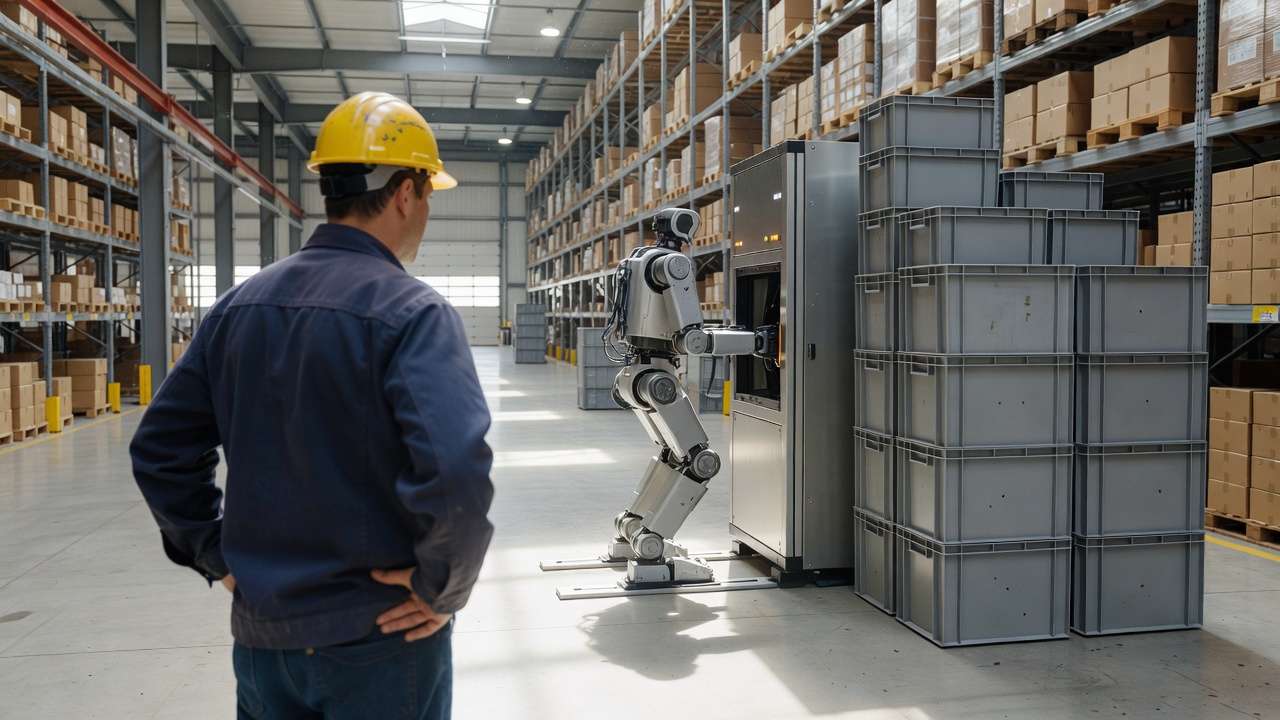
The task roadmap in the essay runs from bin carrying to item picking, machine tending, part preparation for assembly and shipping, and eventually assembly work. A Spectrum staff editor, Lucas Laursen, raised the open policy question in a comment on the essay, wondering how evolving standards "such as UL, CE, FCC, and of course IEEE standards will end up shaping our existing occupational safety regulations and liability frameworks for human workers." Laursen works for the publication that ran the essay, so this is a question, not independent analysis.
For a warehouse operations manager, the useful numbers are these: a robot that charges 9 minutes for every 90 worked can in theory cover about 21.8 hours a day, against one human shift of roughly 8. It handles 23 kg bins at 1.75 m, the NIOSH-based ceiling for human lifters.
The founder who spent years chasing a graceful biped now closes his essay with "Now I'm getting back to work to make it beautiful, too," which tells you the elegance was postponed, not abandoned. The irony is that the robot's most human-friendly feature is that it sits down and powers off when you approach. Whether customers read that as safety or as downtime will decide a lot about this machine.
-- Zara Velez, Emerging Technology Editor
Sources: Unitedstatesofamericasuperintelligence · Enidnews · Jonathan Hurst, IEEE Spectrum (Agility Robotics Digit 5)